
Title
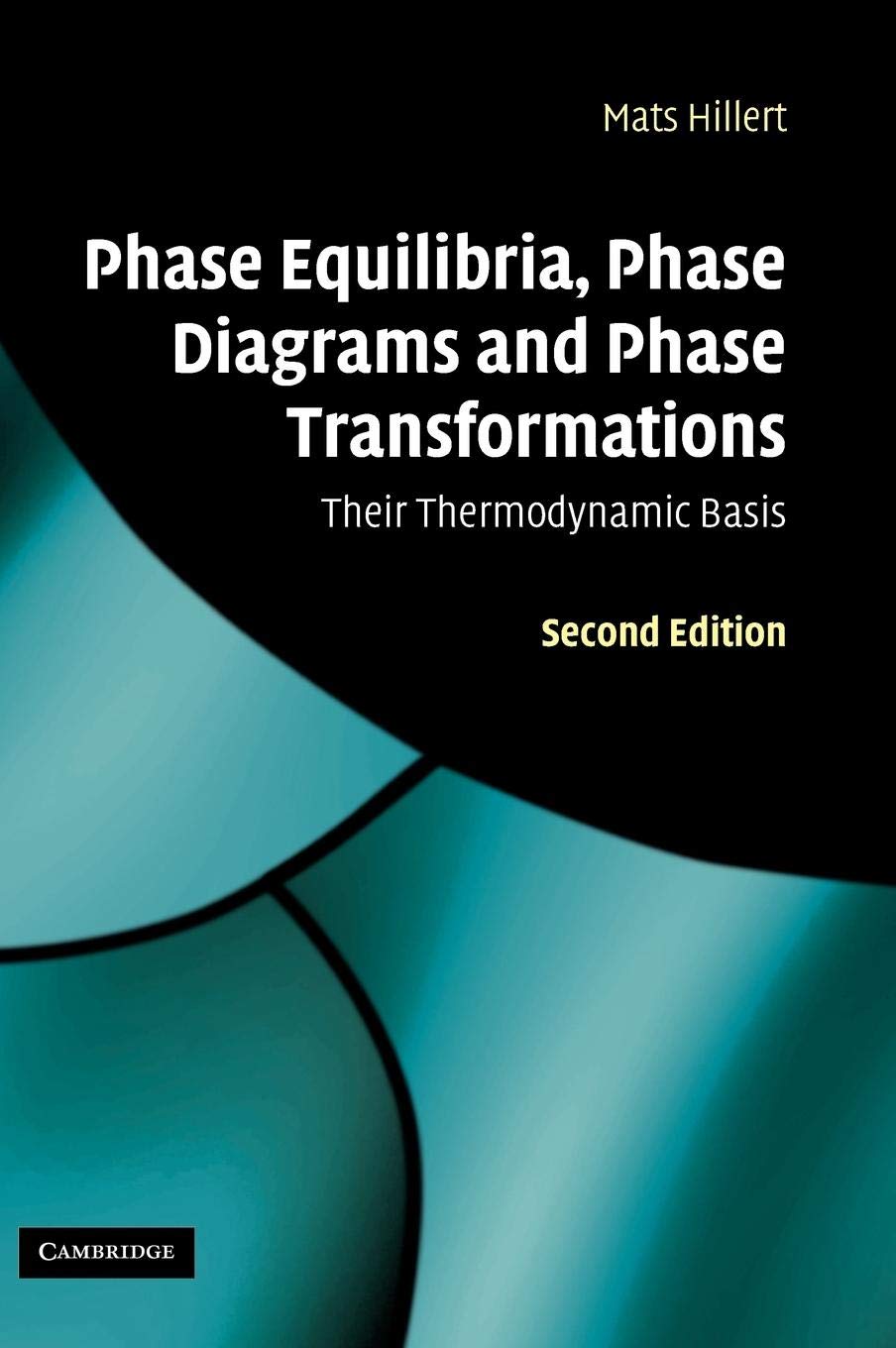
Phase Equilibria, Phase Diagrams And Phase Transformations: Their Thermodynamic Basis,Used
Sold by Ergodebooks, an authorized reseller.
Returns accepted within 30 days | support@ergodebooks.com
Shipping Information
- Free Standard Shipping — United States only
- Processing Time: 3–5 business days
- Estimated Delivery: 6–10 business days after dispatch
- Double-boxed, fully insured & discreetly packaged
- Tracking number sent via email once dispatched
Returns & Refund
Returns accepted within 30 days of delivery.
Damaged or Defective Item
Free return shipping + replacement or full refund
Wrong Item Received
Free return shipping + replacement or full refund
Change of Mind
Return shipping at customer's expense · 25% restocking fee applies
Payment Option

Computational Tools Allow Material Scientists To Model And Analyze Increasingly Complicated Systems To Appreciate Material Behavior. Accurate Use And Interpretation However, Requires A Strong Understanding Of The Thermodynamic Principles That Underpin Phase Equilibrium, Transformation And State. This Fully Revised And Updated Edition Covers The Fundamentals Of Thermodynamics, With A View To Modern Computer Applications. The Theoretical Basis Of Chemical Equilibria And Chemical Changes Is Covered With An Emphasis On The Properties Of Phase Diagrams. Starting With The Basic Principles, Discussion Moves To Systems Involving Multiple Phases. New Chapters Cover Irreversible Thermodynamics, Extremum Principles, And The Thermodynamics Of Surfaces And Interfaces. Theoretical Descriptions Of Equilibrium Conditions, The State Of Systems At Equilibrium And The Changes As Equilibrium Is Reached, Are All Demonstrated Graphically. With Illustrative Examples Many Computer Calculated And Worked Examples, This Textbook Is An Valuable Resource For Advanced Undergraduates And Graduate Students In Materials Science And Engineering.
⚠️ WARNING (California Proposition 65):
This product may contain chemicals known to the State of California to cause cancer, birth defects, or other reproductive harm.
For more information, please visit www.P65Warnings.ca.gov.
- Q: What is the binding type of the book? A: The book is a hardcover edition. This binding type provides durability and protection for the pages inside.
- Q: How many pages does this book have? A: This book contains five hundred twenty-six pages. It offers a comprehensive exploration of phase equilibria and thermodynamics.
- Q: What are the dimensions of the book? A: The book measures seven point zero one inches in length, one inch in width, and ten inches in height. These dimensions make it a manageable size for study.
- Q: How can I use this book for my studies? A: You can use this book as a primary resource for understanding thermodynamic principles. It includes worked examples and exercises that reinforce learning.
- Q: Is this book suitable for beginners? A: Yes, this book is suitable for advanced undergraduates and graduate students. It starts with basic thermodynamic principles before exploring complex systems.
- Q: Are there practical examples included in the book? A: Yes, the book includes illustrative examples and many computer-calculated scenarios. These practical examples help to clarify theoretical concepts.
- Q: How should I care for this book? A: To maintain the book's condition, keep it in a dry, cool place and avoid exposure to direct sunlight. This will prevent damage to the binding and pages.
- Q: Is this book safe for all ages? A: Yes, this book is appropriate for educational purposes and is aimed at students in higher education. It contains advanced scientific content.
- Q: What if the book arrives damaged? A: If the book arrives damaged, you should contact the seller for return or replacement options. Most sellers offer a satisfaction guarantee.
- Q: Is there a warranty for the book? A: Typically, books do not come with a warranty. However, returns may be possible if the book is defective or damaged.
- Q: How does this book compare to other thermodynamics textbooks? A: This book is unique as it integrates modern computational tools with traditional thermodynamic principles. It emphasizes phase diagrams more than many other texts.
- Q: Is this book focused on theoretical or practical applications? A: The book covers both theoretical foundations and practical applications. It provides a balanced approach to understanding phase transformations.
- Q: What topics are covered in the new chapters? A: The new chapters cover irreversible thermodynamics, extremum principles, and the thermodynamics of surfaces and interfaces. These topics are crucial for advanced studies.
- Q: Are there any exercises included in the book? A: Yes, the book includes worked examples and exercises designed to reinforce the material covered. These exercises are beneficial for self-study.
- Q: Can I find solutions to the exercises in the book? A: The book does not specify if solutions are provided, but typically, textbooks may have separate solution manuals or online resources.