
Title
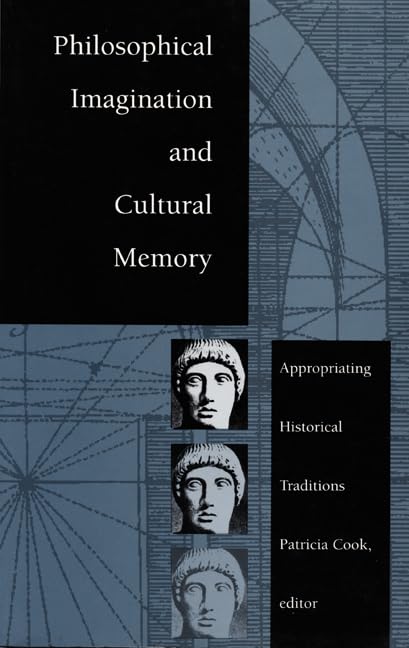
Philosophical Imagination and Cultural Memory: Appropriating Historical Traditions,Used
Sold by Ergodebooks, an authorized reseller.
Returns accepted within 30 days | support@ergodebooks.com
Shipping Information
- Free Standard Shipping — United States only
- Processing Time: 3–5 business days
- Estimated Delivery: 6–10 business days after dispatch
- Double-boxed, fully insured & discreetly packaged
- Tracking number sent via email once dispatched
Returns & Refund
Returns accepted within 30 days of delivery.
Damaged or Defective Item
Free return shipping + replacement or full refund
Wrong Item Received
Free return shipping + replacement or full refund
Change of Mind
Return shipping at customer's expense · 25% restocking fee applies
Payment Option

Does philosophy have a future? Postmodern thought, with its rejection of claims to absolute truth or moral objectivity, would seem to put the philosophical enterprise in jeopardy. In this volume some of today's most influential thinkers face the question of philosophy's future and find an answer in its past. Their efforts show how historical traditions are currently being appropriated by philosophy, how some of the most provocative questions confronted by philosophers are given their impetus and direction by cultural memory.Unlike analytic philosophy, a discipline supposedly liberated from any manifestation of cultural memory, the movement represented by these essays demonstrates how the inquiries, narratives, traditions, and events of our cultural past can mediate some of the most interesting exercises of the presentday philosophical imagination. Attesting to the power of historical tradition to enhance and redirect the prospects of philosophy these essays exemplify a new mode of doing philosophy. The product of a National Endowment for the Humanities Summer Institute in 1990, it is the task of this book to show that history can be reclaimed by philosophy and resurrected in postmodernity.Contributors. George Allan, Eva T. H. Brann, Arthur C. Danto, Lynn S. Joy, George L. Kline, George R. Lucas, Jr., Alasdair MacIntyre, Robert C. Neville, John Rickard, Stanley Rosen, J. B. Scheenwind, Donald Phillip Verene
⚠️ WARNING (California Proposition 65):
This product may contain chemicals known to the State of California to cause cancer, birth defects, or other reproductive harm.
For more information, please visit www.P65Warnings.ca.gov.
- Q: What is the page count of the book? A: The book contains two hundred fifty-eight pages. This length provides a comprehensive exploration of philosophical thought and cultural memory.
- Q: What type of binding does this book have? A: This book is published in paperback binding. This makes it flexible and lightweight for easy handling and reading.
- Q: What are the dimensions of the book? A: The book measures six inches in length, nine and a half inches in height, and three-quarters of an inch in width. These dimensions make it portable and easy to store.
- Q: Who is the author of this book? A: The author is Patricia Cook. She contributes to the discussion on philosophy and cultural memory through this volume.
- Q: What themes does this book explore? A: This book explores themes of philosophical imagination and cultural memory. It discusses how historical traditions shape contemporary philosophical inquiries.
- Q: Is this book suitable for beginners in philosophy? A: Yes, the book is accessible to beginners. It presents important philosophical questions in a way that is engaging and thought-provoking.
- Q: What kind of philosophical perspectives are included in the book? A: The book includes perspectives from influential thinkers like Alasdair MacIntyre and Arthur C. Danto. These contributions enrich the discussion on philosophy's future.
- Q: How can I use this book for academic purposes? A: You can use this book as a resource for understanding cultural memory in philosophy. It's suitable for essays, discussions, and further research.
- Q: What type of audience would appreciate this book? A: This book is appreciated by students, educators, and anyone interested in philosophy and cultural studies. It invites diverse audiences to engage with philosophical discourse.
- Q: How should I care for this book? A: To keep the book in good condition, store it in a dry place away from direct sunlight. Avoid bending the spine to maintain its structural integrity.
- Q: Is this book appropriate for high school students? A: Yes, this book is appropriate for high school students. It challenges their thinking and introduces them to complex philosophical ideas.
- Q: What if the book arrives damaged? A: If the book arrives damaged, you should contact the seller for a return or exchange. Most sellers have policies in place for damaged goods.
- Q: Does this book include any illustrations or images? A: No, this book does not include illustrations or images. It focuses on text to convey philosophical arguments and discussions.
- Q: Can I find a digital version of this book? A: Yes, a digital version is often available, depending on the publisher's offerings. Check online retailers or libraries for eBook options.
- Q: Is there a specific reading level recommended for this book? A: This book is recommended for readers with a high school reading level and above. Its complex ideas are best understood with a foundation in philosophy.
- Q: Does this book reference modern philosophical debates? A: Yes, the book references modern philosophical debates while connecting them to historical traditions. This interplay enhances the reader's understanding of current issues.