
Title
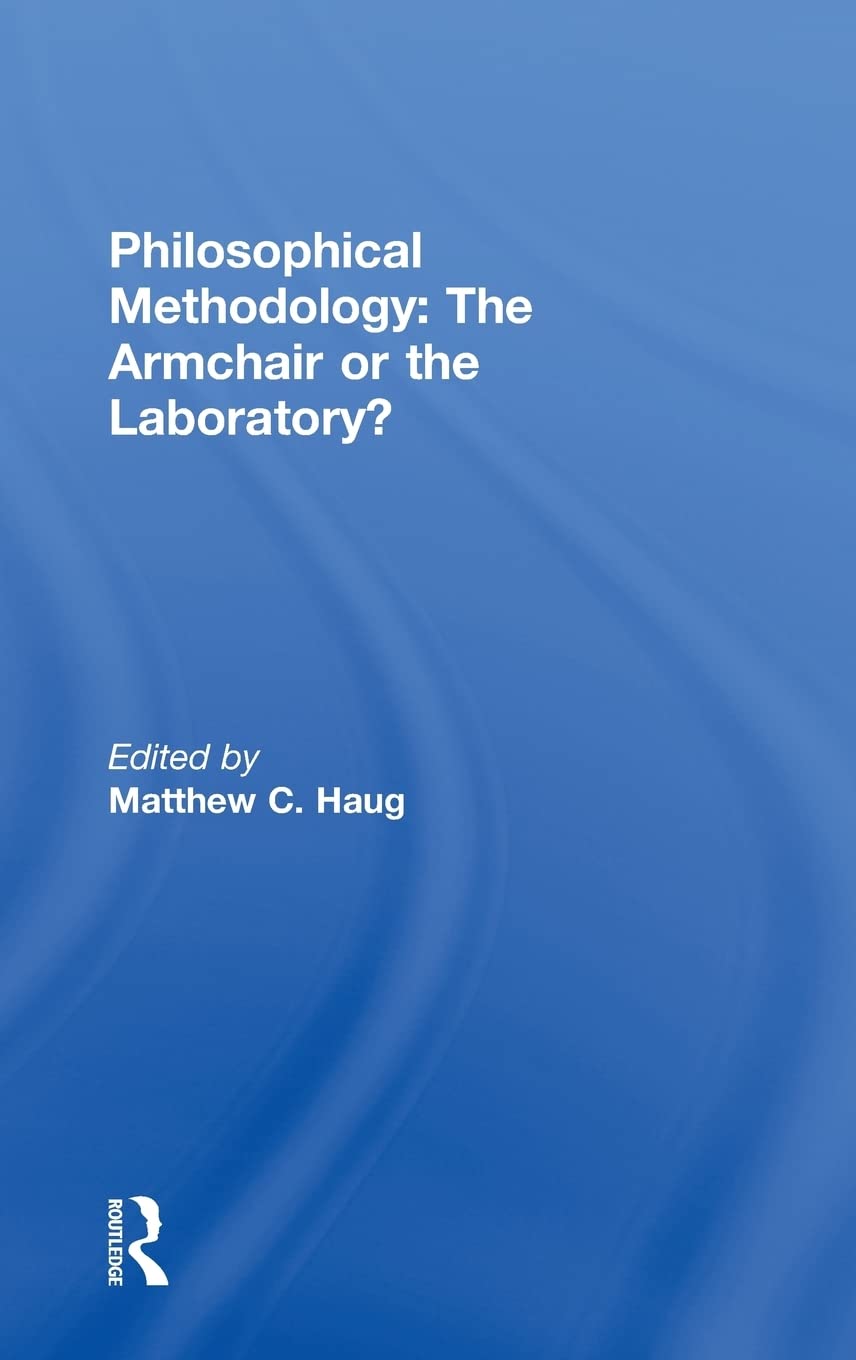
Philosophical Methodology: The Armchair or the Laboratory?,Used
Sold by Ergodebooks, an authorized reseller.
Returns accepted within 30 days | support@ergodebooks.com
Shipping Information
- Free Standard Shipping — United States only
- Processing Time: 3–5 business days
- Estimated Delivery: 6–10 business days after dispatch
- Double-boxed, fully insured & discreetly packaged
- Tracking number sent via email once dispatched
Returns & Refund
Returns accepted within 30 days of delivery.
Damaged or Defective Item
Free return shipping + replacement or full refund
Wrong Item Received
Free return shipping + replacement or full refund
Change of Mind
Return shipping at customer's expense · 25% restocking fee applies
Payment Option

What methodology should philosophers follow? Should they rely on methods that can be conducted from the armchair? Or should they leave the armchair and turn to the methods of the natural sciences, such as experiments in the laboratory? Or is this opposition itself a false one? Arguments about philosophical methodology are raging in the wake of a number of often conflicting currents, such as the growth of experimental philosophy, the resurgence of interest in metaphysical questions, and the use of formal methods.This outstanding collection of speciallycommissioned chapters by leading international philosophers discusses these questions and many more. It provides a comprehensive survey of philosophical methodology in the most important philosophical subjects: metaphysics, epistemology, philosophy of language, philosophy of mind, phenomenology, philosophy of science, ethics, and aesthetics.A key feature of the collection is that philosophers discuss and evaluate contrasting approaches in each subject, offering a superb overview of the variety of methodological approaches both naturalistic and nonnaturalistic in each of these areas. They examine important topics at the heart of methodological argument, including the role of intuitions and conceptual analysis, thought experiments, introspection, and the place that results from the natural sciences should have in philosophical theorizing.The collection begins with a fascinating exchange about philosophical naturalism between Timothy Williamson and Alexander Rosenberg, and also includes contributions from the following philosophers: Lynne Rudder Baker, Matt Bedke, Greg Currie, Michael Devitt, Matthew C. Haug, Jenann Ismael, Hilary Kornblith, Neil Levy, E.J. Lowe, Kirk Ludwig, Marie McGinn, David Papineau, Matthew Ratcliffe, Georges Rey, Jeffrey W. Roland, Barry C. Smith, Amie L. Thomasson, Valerie Tiberius, Jessica Wilson, and David W. Smith.
⚠️ WARNING (California Proposition 65):
This product may contain chemicals known to the State of California to cause cancer, birth defects, or other reproductive harm.
For more information, please visit www.P65Warnings.ca.gov.