
Title
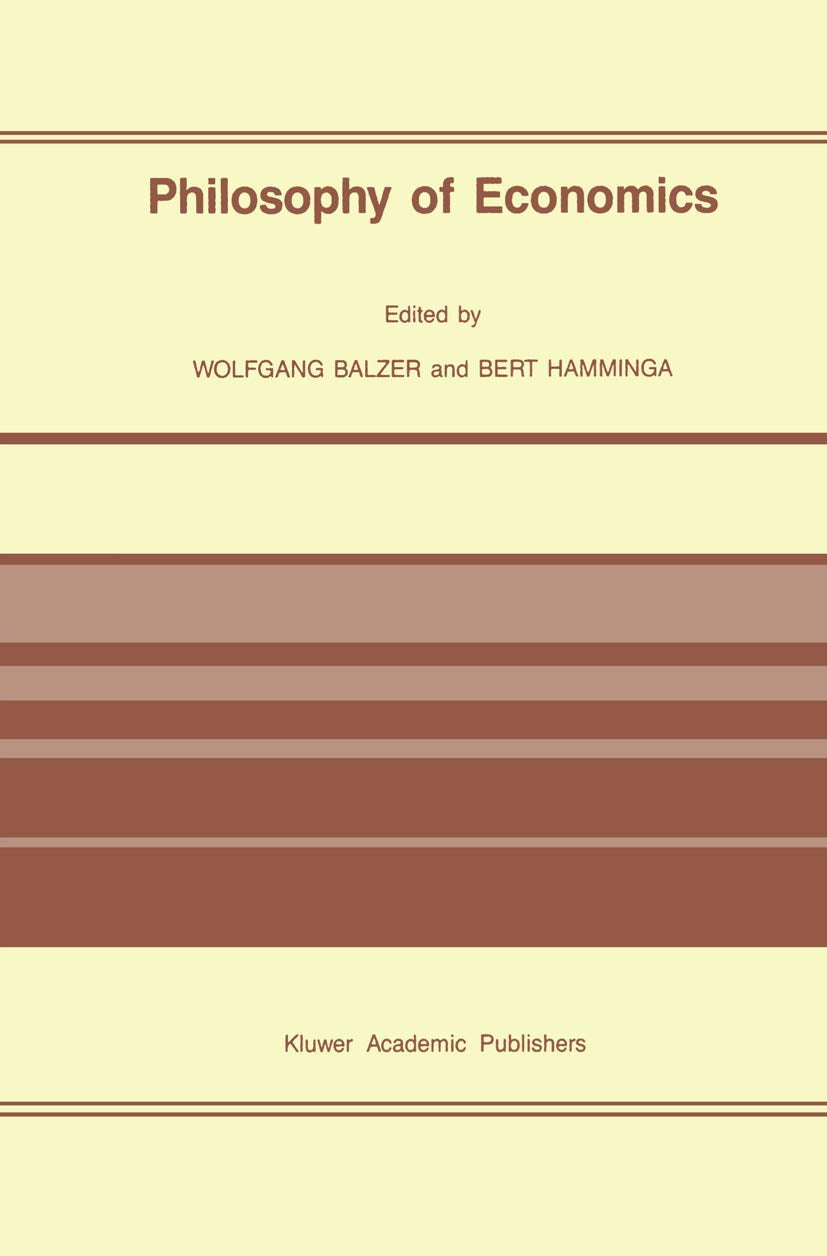
Philosophy of Economics (Erkenntis S),New
Sold by Ergodebooks, an authorized reseller.
Returns accepted within 30 days | support@ergodebooks.com
Shipping Information
- Free Standard Shipping — United States only
- Processing Time: 3–5 business days
- Estimated Delivery: 6–10 business days after dispatch
- Double-boxed, fully insured & discreetly packaged
- Tracking number sent via email once dispatched
Returns & Refund
Returns accepted within 30 days of delivery.
Damaged or Defective Item
Free return shipping + replacement or full refund
Wrong Item Received
Free return shipping + replacement or full refund
Change of Mind
Return shipping at customer's expense · 25% restocking fee applies
Payment Option

The last decade witnessed an unprecedented annual growth of the literature dealing with the philosophy of economics,as well as the first signs of an institutionalization (conferences, an international journal) of the philosophy of economics as a scientific subject in itself in particular in the U.S. In 1981 a meeting took place with participants mainly of European 'continental' origin. In July 1987, we organized a second conference 'Philosophy of Economics II' at Tilburg Uni versity, The Netherlands, mainly aiming at the establishment of first contacts between the middleEuropean group and researchers from the U.S. The present volume contains the papers presented at this conference. Philosophical thought on economics in recent years split up in many different streams, two of which are represented in the larger part of this volume. The first of these streams was formed by a group of researchers mainly from middleEurope, who make empirical studies of the logical structures of the different theories as they find them presented in economic literature. Two methods prevail here. First, the structuralist method, as exemplified in the writings of Sneed, Stegmiiller and others, of describing the object of a theory as a set of ('partial potential') models. Such models consist of sets and relationships between these sets, which represent the concepts used in the theory.
⚠️ WARNING (California Proposition 65):
This product may contain chemicals known to the State of California to cause cancer, birth defects, or other reproductive harm.
For more information, please visit www.P65Warnings.ca.gov.