
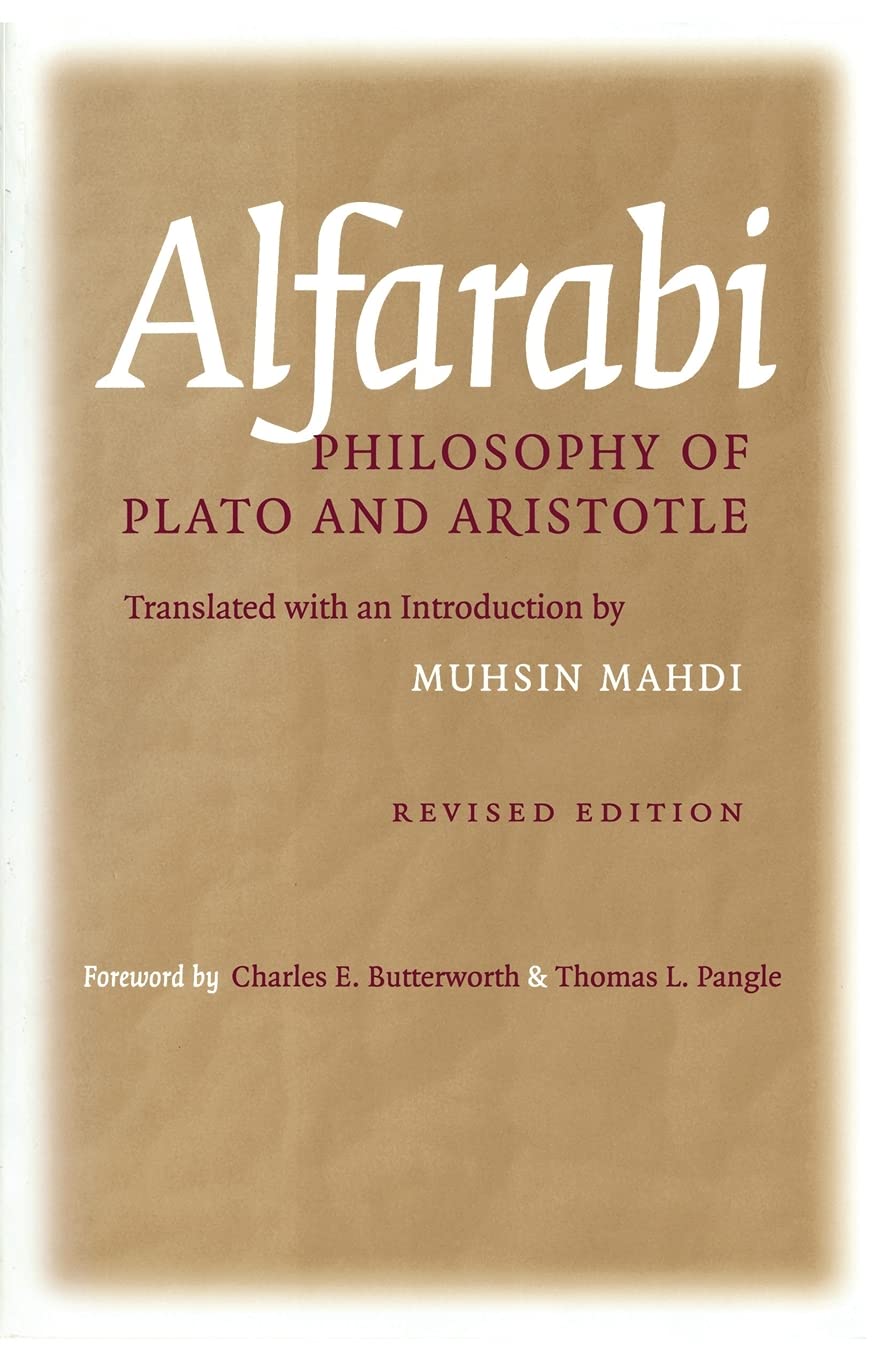
Title
Philosophy Of Plato And Aristotle (Agora Editions)
Sold by Ergodebooks, an authorized reseller.
Returns accepted within 30 days | support@ergodebooks.com
Shipping Information
- Free Standard Shipping — United States only
- Processing Time: 3–5 business days
- Estimated Delivery: 6–10 business days after dispatch
- Double-boxed, fully insured & discreetly packaged
- Tracking number sent via email once dispatched
Returns & Refund
Returns accepted within 30 days of delivery.
Damaged or Defective Item
Free return shipping + replacement or full refund
Wrong Item Received
Free return shipping + replacement or full refund
Change of Mind
Return shipping at customer's expense · 25% restocking fee applies
Payment Option

Alfarabi Is Now Considered To Be The Founder Of Muslim Philosophy, And Proves To Be Not Simply The Bridge For Carrying Over The Thought Of Aristotle And Plato Into Western Thought But A Man Of Great Originality.... Muhsin Mahdi Makes Clear That Alfarabi Is Not A Popularizer But A Man Of Great Subtlety Of Thought And One Who Discerns The Significance Of Plato Unmixed With Neoplatonic Philosophy.Choicethis Longawaited Reissue Of The 1969 Cornell Edition Of Alfarabi'S Philosophy Of Plato And Aristotle Contains Muhsin Mahdi'S Substantial Original Introduction And A New Foreword By Charles E. Butterworth And Thomas L. Pangle.The Three Parts Of The Book, Attainment Of Happiness, Philosophy Of Plato, And Philosophy Of Aristotle, Provide A Philosophical Foundation For Alfarabi'S Political Works.
⚠️ WARNING (California Proposition 65):
This product may contain chemicals known to the State of California to cause cancer, birth defects, or other reproductive harm.
For more information, please visit www.P65Warnings.ca.gov.
- Q: How many pages does the book have? A: The book has one hundred ninety-two pages. This length provides a concise yet comprehensive exploration of Alfarabi's philosophy.
- Q: What is the binding type of this book? A: This book is paperback bound. The paperback format makes it lightweight and easy to handle.
- Q: What are the dimensions of the book? A: The book measures five point five one inches in length, zero point four five inches in width, and eight point five inches in height. These dimensions make it a portable read.
- Q: Who is the author of this book? A: The author of this book is Alfarabi. He is recognized as a pivotal figure in Muslim philosophy.
- Q: What topics are covered in the book? A: The book covers topics such as the attainment of happiness, the philosophy of Plato, and the philosophy of Aristotle. These themes provide insight into Alfarabi's philosophical foundations.
- Q: Is this book suitable for beginners in philosophy? A: Yes, this book is suitable for beginners. It presents philosophical concepts in an accessible way, making it a great introduction.
- Q: What is the recommended reading level for this book? A: The recommended reading level is high school and above. The content is designed for readers with a basic understanding of philosophy.
- Q: Can this book be used in a classroom setting? A: Yes, this book can be used in a classroom setting. Its structured content is ideal for discussions on philosophical themes.
- Q: How should I store this book? A: Store this book in a cool, dry place away from direct sunlight. This helps preserve its condition over time.
- Q: What care does the book need to remain in good condition? A: Keep the book away from moisture and avoid bending the spine. Gentle handling will keep it in good shape.
- Q: What if the book arrives damaged? A: If the book arrives damaged, you should contact the seller for a return or exchange. Most sellers have policies in place for such issues.
- Q: Is there a warranty for this book? A: No, there is no warranty for this book. However, return policies may apply depending on the seller.
- Q: Can I find this book in libraries? A: Yes, you can often find this book in academic and public libraries. Its relevance to philosophy makes it a common choice.
- Q: What makes this book a good choice for philosophy enthusiasts? A: This book is a good choice because it offers original insights into Alfarabi's interpretations of Plato and Aristotle. It is well-regarded in philosophical literature.
- Q: Is there a new foreword in this edition? A: Yes, this edition includes a new foreword by Charles E. Butterworth and Thomas L. Pangle. This adds valuable context to the original text.
- Q: Does this book include an introduction? A: Yes, the book includes a substantial original introduction by Muhsin Mahdi. This introduction helps frame Alfarabi's philosophical contributions.