
Title
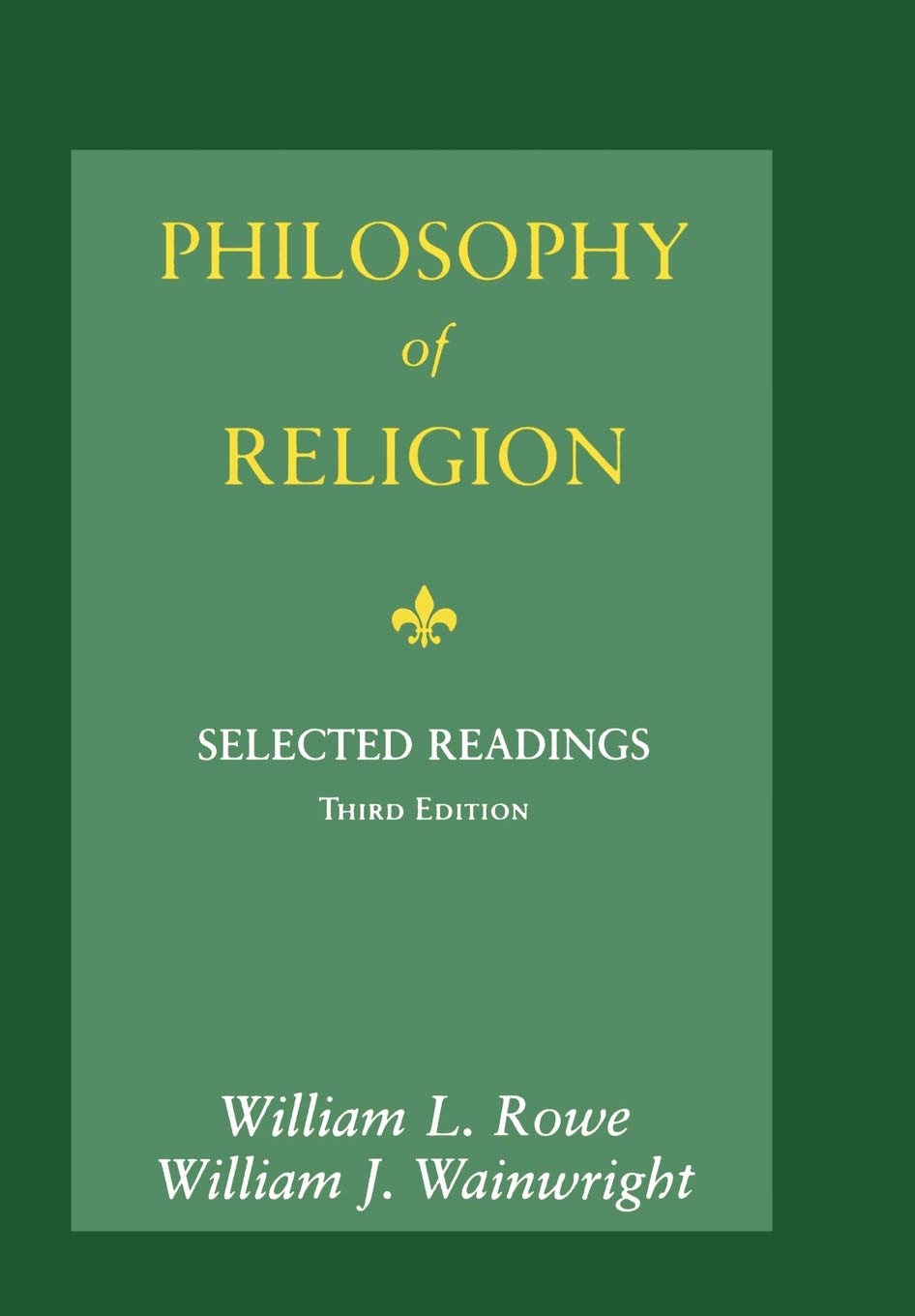
Philosophy of Religion: Selected Readings,Used
Sold by Ergodebooks, an authorized reseller.
Returns accepted within 30 days | support@ergodebooks.com
Shipping Information
- Free Standard Shipping — United States only
- Processing Time: 3–5 business days
- Estimated Delivery: 6–10 business days after dispatch
- Double-boxed, fully insured & discreetly packaged
- Tracking number sent via email once dispatched
Returns & Refund
Returns accepted within 30 days of delivery.
Damaged or Defective Item
Free return shipping + replacement or full refund
Wrong Item Received
Free return shipping + replacement or full refund
Change of Mind
Return shipping at customer's expense · 25% restocking fee applies
Payment Option

This third edition of Philosophy of Religion offers a wide variety of readings designed to introduce students to important issues in the philosophy of religion. The authors have coupled new readingsincluding essays by Robert M. Adams, Peter Van Inwagen, and William P. Alstonwith readings from classical philosophers, offering students an even more comprehensive and wellfocused text. Many of the essays are particularly accessible to beginning philosophy students. New essays cover religious pluralism, teleological and moral arguments for God's existence, and the problem of evil. Philosophy of Religion, 3/e is an excellent choice for use as a main text or as a supplement for introductory courses in philosophy and religion.
⚠️ WARNING (California Proposition 65):
This product may contain chemicals known to the State of California to cause cancer, birth defects, or other reproductive harm.
For more information, please visit www.P65Warnings.ca.gov.
- Q: What is the binding type of this book? A: This book has a paperback binding. This makes it lightweight and flexible, ideal for students and casual readers.
- Q: How many pages does this book have? A: This book contains five hundred twelve pages. It provides a comprehensive exploration of various philosophical topics.
- Q: What are the dimensions of this book? A: The dimensions of this book are nine point six one inches in length, six point seven inches in width, and one point three inches in height. These sizes make it convenient for reading and carrying.
- Q: Who is the author of this book? A: The author of this book is William L. Rowe. He is known for his contributions to the field of philosophy, particularly in the philosophy of religion.
- Q: What topics are covered in this book? A: This book covers a range of topics including religious pluralism, moral arguments for God's existence, and the problem of evil. It's designed to engage students with both contemporary and classical perspectives.
- Q: Is this book suitable for beginners in philosophy? A: Yes, this book is suitable for beginners. Many essays are accessible and cater to those new to philosophical concepts.
- Q: How can I use this book in my studies? A: You can use this book as a main text or as a supplementary resource for introductory courses. It provides diverse readings that enhance understanding of philosophical debates.
- Q: Is this book appropriate for high school students? A: Yes, this book is appropriate for high school students. Its accessible language and engaging topics make it ideal for younger audiences exploring philosophy.
- Q: How should I store this book? A: Store this book in a cool, dry place to maintain its condition. Keeping it upright on a shelf can also help prevent damage to the spine.
- Q: Can I clean this book if it gets dirty? A: Yes, you can clean this book gently. Use a dry cloth to wipe the cover and avoid using water or cleaning fluids.
- Q: What should I do if the book arrives damaged? A: If the book arrives damaged, you should contact the seller for a return or exchange. Most sellers have policies in place for damaged items.
- Q: Is there a warranty for this book? A: No, there is generally no warranty for books. However, check with the seller for their return policy.
- Q: How can I find more books like this one? A: You can explore other titles by Oxford University Press or search for books in the philosophy category. Recommendations from educators can also guide you.
- Q: What makes this book different from other philosophy books? A: This book stands out by combining new essays with classical readings, providing a well-rounded perspective on philosophical issues.
- Q: Is this book part of a series? A: No, this book is not part of a series. It serves as a standalone resource for understanding key philosophical concepts.
- Q: Does this book include contributions from well-known philosophers? A: Yes, it includes essays from notable philosophers like Robert M. Adams and William P. Alston. Their perspectives enrich the text.