
Title
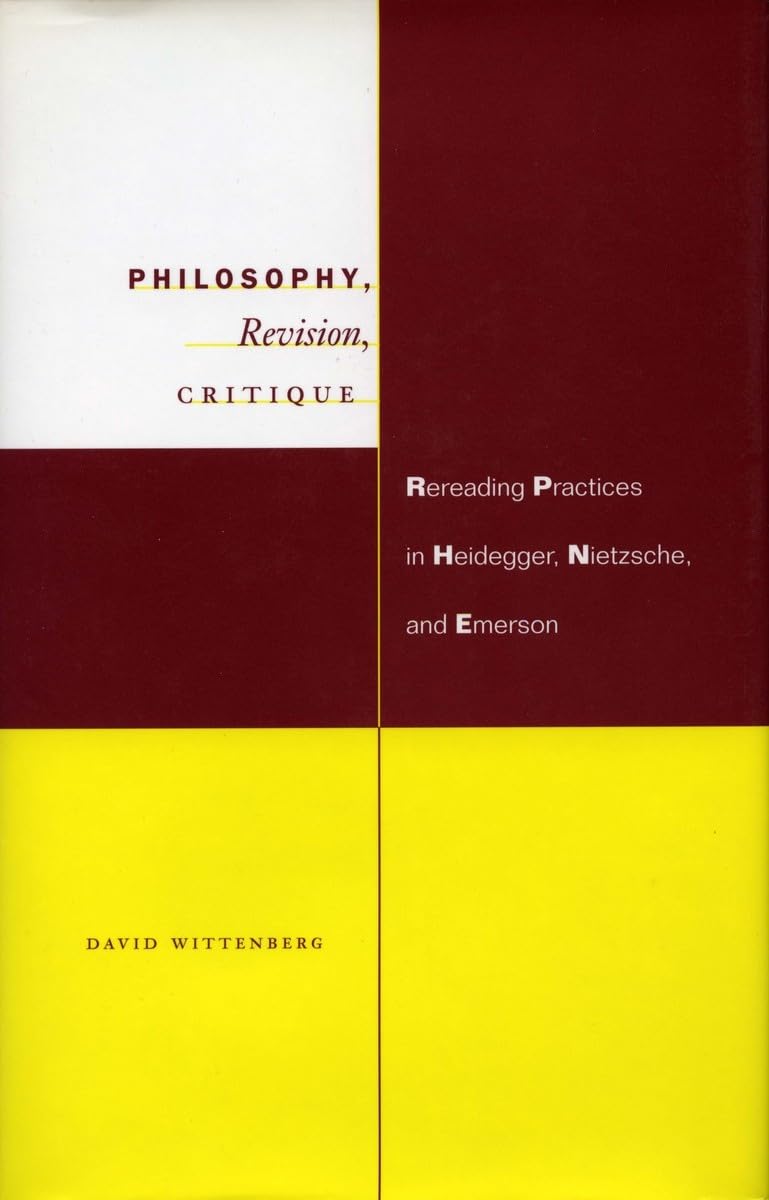
Philosophy, Revision, Critique: Rereading Practices In Heidegger, Nietzsche, And Emerson,Used
Sold by Ergodebooks, an authorized reseller.
Returns accepted within 30 days | support@ergodebooks.com
Shipping Information
- Free Standard Shipping — United States only
- Processing Time: 3–5 business days
- Estimated Delivery: 6–10 business days after dispatch
- Double-boxed, fully insured & discreetly packaged
- Tracking number sent via email once dispatched
Returns & Refund
Returns accepted within 30 days of delivery.
Damaged or Defective Item
Free return shipping + replacement or full refund
Wrong Item Received
Free return shipping + replacement or full refund
Change of Mind
Return shipping at customer's expense · 25% restocking fee applies
Payment Option

Philosophers have almost always relegated the topic of revision to the sidelines of their discipline, if they have thought about it at all. This book contends that acts of revision are central and indispensable to the project of philosophizing and that philosophy should be construed essentially as a practice of rereading and rewriting. The book focuses chiefly on Heideggers highly influential interpretation of Nietzsche, conducted in lectures during the 1930s and 1940s and published in 1961. The author closely analyzes the rhetorical means by which Heidegger repositions Nietzsches thinking within a broad history of metaphysics, even as Heidegger positions his own reinterpretation as that historys more proper reading.The author argues that Heideggers revisionist project recasts the philosophical text as paralipsis, a special kind of ironic statement that when properly received by the philosophical rereader, expresses what the text did not and could not say. The study of such paraliptical revisionism within the philosophical canon offers a new way of understanding the basic historicity of the philosophical text, a text that is critically indistinguishable from its own future history of interpretations. Philosophy itself is revision, a deeply historicist rereading practice, a continuous reappropriation of its own improper textual past.In addition to being the first booklength published study of Heideggers interpretation of Nietzsche, the book also examines the work of HansRobert Jauss, Harold Bloom, and other critics of revision. In particular, Ralph Waldo Emersons early essays on history, read both with and against Heideggers analysis of metaphysics, demonstrate why the historical intervention achieved by revisionist reading is not only a formal and thematic alteration of the past, but also a rhetorical coercion of future interpretive tendencies. No philosophical reader is simply a user or victim of revisionist methods: in rereading philosophical pasts, the reader is the very mechanism by which such interpretive tendencies are first formed into problems or thoughts within the philosophical canon.
⚠️ WARNING (California Proposition 65):
This product may contain chemicals known to the State of California to cause cancer, birth defects, or other reproductive harm.
For more information, please visit www.P65Warnings.ca.gov.