
Title
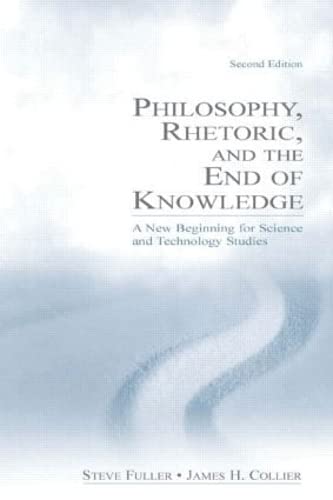
Philosophy, Rhetoric, And The End Of Knowledge: A New Beginning For Science And Technology Studies,Used
Sold by Ergodebooks, an authorized reseller.
Returns accepted within 30 days | support@ergodebooks.com
Shipping Information
- Free Standard Shipping — United States only
- Processing Time: 3–5 business days
- Estimated Delivery: 6–10 business days after dispatch
- Double-boxed, fully insured & discreetly packaged
- Tracking number sent via email once dispatched
Returns & Refund
Returns accepted within 30 days of delivery.
Damaged or Defective Item
Free return shipping + replacement or full refund
Wrong Item Received
Free return shipping + replacement or full refund
Change of Mind
Return shipping at customer's expense · 25% restocking fee applies
Payment Option

In this second edition of Steve Fuller's original work Philosophy, Rhetoric, and the End of Knowledge: A New Beginning for Science and Technology Studies, James Collier joins Fuller in developing an updated and accessible version of Fuller's classic volume. The new edition shifts focus slightly to balance the discussions of theory and practice, and the writing style is oriented to advanced students. It addresses the contemporary problems of knowledge to develop the basis for a more publicly accountable science. The resources of social epistemology are deployed to provide a positive agenda of research, teaching, and political action designed to bring out the best in both the ancient discipline of rhetoric and the emerging field of science and technology studies (STS). The authors reclaim and integrate STS and rhetoric to explore the problems of knowledge as a social processproblems of increasing public interest that extend beyond traditional disciplinary resources. In so doing, the differences among disciplines must be questioned (the exercise of STS) and the disciplinary boundaries must be renegotiated (the exercise of rhetoric).This book innovatively integrates a sophisticated theoretical approach to the social processes of creating knowledge with a developing pedagogical apparatus. The thought questions at the end of each chapter, the postscript, and the appendix allow the reader to actively engage the text in order to discuss and apply its theoretical insights. Creating new standards for interdisciplinary scholarship and communication, the authors bring numerous disciplines into conversation in formulating a new kind of rhetoric geared toward greater democratic participation in the knowledgemaking process.This volume is intended for students and scholars in rhetoric of science, science studies, philosophy, and communication, and will be of interest in English, sociology, and knowledge management arenas as well.
⚠️ WARNING (California Proposition 65):
This product may contain chemicals known to the State of California to cause cancer, birth defects, or other reproductive harm.
For more information, please visit www.P65Warnings.ca.gov.