
Title
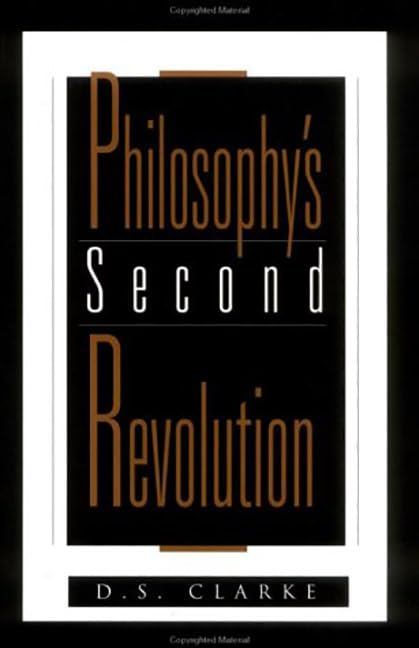
Philosophy'S Second Revolution: Early And Recent Analytic Philosophy,Used
Sold by Ergodebooks, an authorized reseller.
Returns accepted within 30 days | support@ergodebooks.com
Shipping Information
- Free Standard Shipping — United States only
- Processing Time: 3–5 business days
- Estimated Delivery: 6–10 business days after dispatch
- Double-boxed, fully insured & discreetly packaged
- Tracking number sent via email once dispatched
Returns & Refund
Returns accepted within 30 days of delivery.
Damaged or Defective Item
Free return shipping + replacement or full refund
Wrong Item Received
Free return shipping + replacement or full refund
Change of Mind
Return shipping at customer's expense · 25% restocking fee applies
Payment Option

Since its inception in ancient Greece, Western philosophy has undergone two revolutionary breaks with its past: the first was initiated by Descartes with his 'method of doubt' that led to the questioning of basic assumptions of classical philosophy; the second arose at the beginning of the twentieth century, and is associated with the movement now known as analytic philosophy.D.S. Clarke explains some of the crucial issues raised by the second philosophical revolution, and especially the differences between the early phase of analytic philosophy, covering roughly the first half of the twentieth century, and the new phase which commenced about 1960.As Philosophy's Second Revolution surveys the direction of modern philosophy, it is able to combine discussion of cuttingedge topics with an introductory survey of analytic philosophy for those with little background in logic or history of philosophy.Professor Clarke traces the historical background of the analytic movement from its origins, through its development by applications of logic to philosophical problems and by 'ordinary language' philosophers. He then concentrates on the post1960 phase, with its rejection of earlier views dominated by Wittgenstein's methods. The new phase features the development of a materialist metaphysics, the attempt to assimilate philosophy to the natural sciences, and the attempt to reinstate normative ethics as a guide to conduct.Clarke defends the first phase against aspects of the second phase, arguing that contemporary materialism rests on the mistaken view that mental language has factstating functions, and that normative ethics imposes on moral reasoning a false intellectualist model.
⚠️ WARNING (California Proposition 65):
This product may contain chemicals known to the State of California to cause cancer, birth defects, or other reproductive harm.
For more information, please visit www.P65Warnings.ca.gov.