
Title
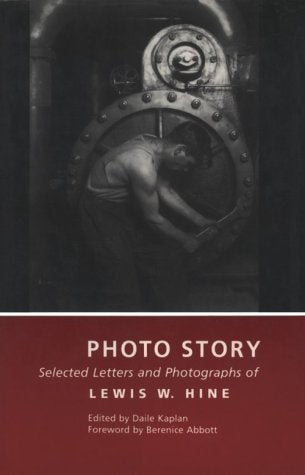
Photo Story: Selected Letters and Photographs of Lewis W. Hine,Used
Sold by Ergodebooks, an authorized reseller.
Returns accepted within 30 days | support@ergodebooks.com
Shipping Information
- Free Standard Shipping — United States only
- Processing Time: 3–5 business days
- Estimated Delivery: 6–10 business days after dispatch
- Double-boxed, fully insured & discreetly packaged
- Tracking number sent via email once dispatched
Returns & Refund
Returns accepted within 30 days of delivery.
Damaged or Defective Item
Free return shipping + replacement or full refund
Wrong Item Received
Free return shipping + replacement or full refund
Change of Mind
Return shipping at customer's expense · 25% restocking fee applies
Payment Option

Lewis Wickes Hine (18741940) was a pivotal figure in the history of American photography. Instrumental in developing the social documentary genre, he is probably best known today for his photographs of immigrants at Ellis Island, child laborers, and European war refugees, and for his later celebrations of industrial worker a series he referred to as Work Portraits. As early as 1914 Hine also coined the term photo story to describe creative assemblages of photographs and text. These were designed to make powerful educational and artistic statements on the printed page twenty years before the editors of Life magazine 'invented' the format.Photo Story broadens the perspective on Hine by charting his pioneering role as both a social documentary photographer and photojournalist. Daile Kaplan includes material from his earliest years, 190412, as he made the transition from teacher to photographer at the Ethical Culture School in New York; through the spring of 1918, as he photographed war refugees and relief programs for the American Red Cross throughout Europe; to 192039, as he chronicled the construction of the Empire State Building and completed Work Portraits for corporations and federal agencies. The book features previously unpublished credos, diary entries, and letters exchanged with such important figures of the photographic, art, and social welfare communities as Beaumont Newhall, Walter Rosenblum, Berenice Abbott, Elizabeth McCausland, Roy Stryker, and Paul U. Kellogg. The letters to his longtime collaborator Kellogg, the editor of the Survey Graphic, form the book's centerpiece.Often witty and lyrical, the letters reveal Hine's early influences in the social welfare community; his views about Alfred Stieglitz and the PhotoSecession (a group of art photographers, led by Stieglitz, who eschewed social photographs for softfocus, moodmanipulating images); and his perception of his own photographs as 'art.' The correspondence sheds light on his decision to become a freelance photographer and pursue the Work Portraits; his attempts to be hired by the Farm Security Administration's photographs division; his debt to Newhall, Abbott, and McCausland for rediscovering him in the late 1930s and mounting the Riverside Museum retrospective; and his financial struggles in the postwar years.
⚠️ WARNING (California Proposition 65):
This product may contain chemicals known to the State of California to cause cancer, birth defects, or other reproductive harm.
For more information, please visit www.P65Warnings.ca.gov.
- Q: What is the size of the book? A: The book measures six and a half inches in length, nine and a half inches in height, and three-quarters of an inch in width.
- Q: How many pages does the book have? A: The book contains two hundred and fifty-six pages filled with photographs and letters.
- Q: What type of binding does the book have? A: The book features a hardcover binding, providing durability and a premium feel.
- Q: Who is the author of the book? A: The author is Lewis W. Hine, renowned for his contributions to social documentary photography.
- Q: What is the category of this book? A: The book falls under the Photography and Video category, focusing on historical photographic narratives.
- Q: How do I read this book? A: You can read this book by flipping through its pages and engaging with the photographs and texts presented.
- Q: Is this book suitable for children? A: Yes, this book can be suitable for older children interested in photography and history, but parental guidance is recommended.
- Q: Is this book a good resource for photography students? A: Yes, the book provides valuable insights into documentary photography and the historical context of Lewis W. Hine's work.
- Q: How should I store this book? A: Store the book upright on a shelf in a cool, dry place to prevent damage from moisture and heat.
- Q: Can I clean this book if it gets dirty? A: Yes, you can gently wipe the cover with a soft, dry cloth to remove dust and fingerprints.
- Q: What if the book arrives damaged? A: If the book arrives damaged, you should contact the seller for return or replacement options.
- Q: Is there a warranty for this book? A: Typically, books do not come with a warranty, but check the seller's return policy for specific details.
- Q: How does this book compare to other photography books? A: This book offers unique insights into Lewis W. Hine's life and work, making it distinct from general photography books.
- Q: Is this book recommended for casual readers? A: Yes, casual readers with an interest in photography or history may find this book engaging and informative.
- Q: Are there any notable features in the book? A: Yes, the book includes previously unpublished letters and photographs, enhancing its educational value.
- Q: How can I get a copy of this book? A: You can purchase a copy from various online retailers or bookstores that carry photography titles.