
Title
Photographing Custer'S Battlefield: The Images Of Kenneth F. Roahen,Used
Sold by Ergodebooks, an authorized reseller.
Returns accepted within 30 days | support@ergodebooks.com
Shipping Information
- Free Standard Shipping — United States only
- Processing Time: 3–5 business days
- Estimated Delivery: 6–10 business days after dispatch
- Double-boxed, fully insured & discreetly packaged
- Tracking number sent via email once dispatched
Returns & Refund
Returns accepted within 30 days of delivery.
Damaged or Defective Item
Free return shipping + replacement or full refund
Wrong Item Received
Free return shipping + replacement or full refund
Change of Mind
Return shipping at customer's expense · 25% restocking fee applies
Payment Option

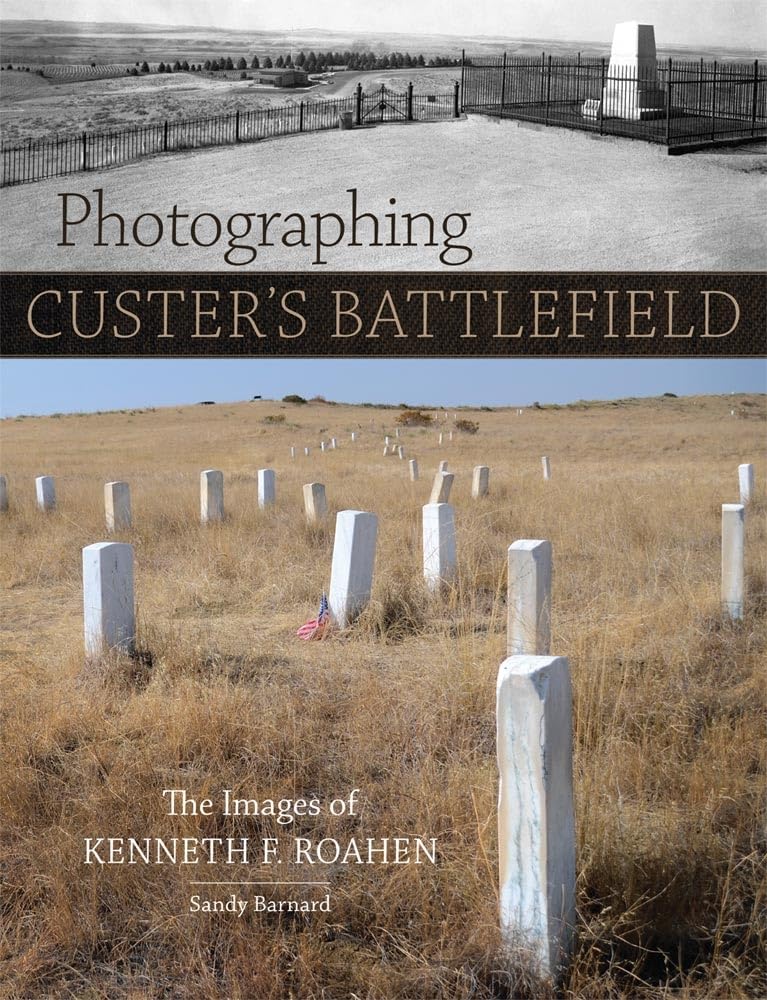
In the 140 years since the defeat of George Armstrong Custer and his troops at the Battle of the Little Big Horn, scholars and other visitors have combed the site of todays Little Bighorn Battlefield National Monument for evidence that might clarify the controversial events of June 1876. In Photographing Custers Battlefield, Sandy Barnard, an expert on Custer and the Little Big Horn, presents the work of the sites most dedicated photographer, U.S. Fish and Game agent Kenneth F. Roahen (18881976), revealing further mysteries of the battlefield and showing how it has changed.Barnard opens by introducing readers to Roahen, who spent the last phase of his career and his retirement years in Montana, where he made it his personal mission from the 1930s to the 1970s to photograph what was then called Custer Battlefield. Among Roahens most useful images are his photographs of the Crows Nest, the Morass, and Girards Knollplaces whose precise locations have long been debated. He also made a series of pioneering aerial photographs of the Little Big Horn and its surrounding landscape.When paired with Barnards modernday photographs, maps, and thorough analysis, Roahens images provide valuable information for visitors to the monument as well as for historians, biologists, engineers, and other government employees who interpret, preserve, and protect the battlefield and its surrounding terrain. In addition to showing sites associated with the fighting, Roahens photographs depict midtwentiethcentury roadwork, archaeological surveys and restorations, and construction of the visitor center, park housing, and maintenance facilities. Barnards matching photographs, taken in 2012 and 2013, help to identify additional subtle but significant landscape modifications.The numerous debates surrounding the Battle of the Little Big Horn have made ontheground evidence especially important. Roahens photographic legacy, explored here in more than 300 historic and contemporary images, offers fresh insight into the battlefields everchanging landscape, helping visitors old and new to better understand the history beneath their feet.
⚠️ WARNING (California Proposition 65):
This product may contain chemicals known to the State of California to cause cancer, birth defects, or other reproductive harm.
For more information, please visit www.P65Warnings.ca.gov.