
Title
Photography And Science (Exposures)
Sold by Ergodebooks, an authorized reseller.
Returns accepted within 30 days | support@ergodebooks.com
Shipping Information
- Free Standard Shipping — United States only
- Processing Time: 3–5 business days
- Estimated Delivery: 6–10 business days after dispatch
- Double-boxed, fully insured & discreetly packaged
- Tracking number sent via email once dispatched
Returns & Refund
Returns accepted within 30 days of delivery.
Damaged or Defective Item
Free return shipping + replacement or full refund
Wrong Item Received
Free return shipping + replacement or full refund
Change of Mind
Return shipping at customer's expense · 25% restocking fee applies
Payment Option

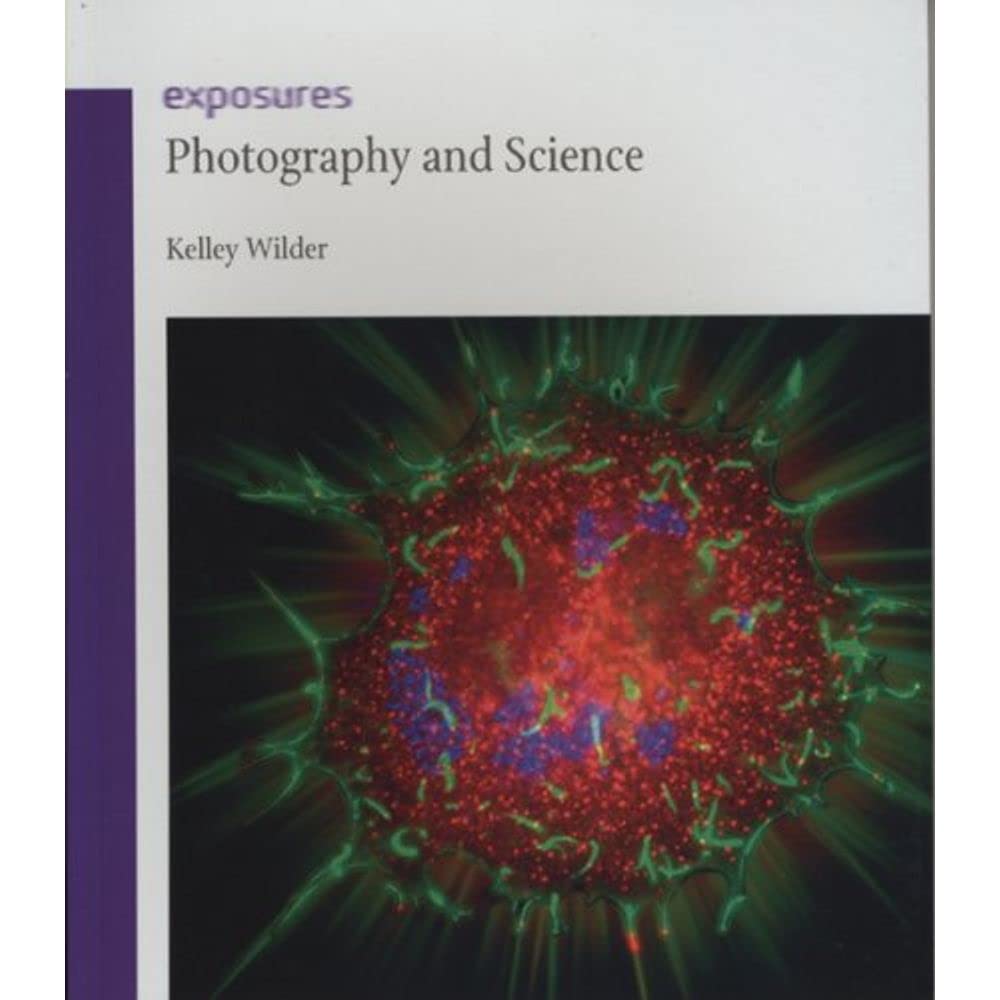
How Do We Know What An Amoeba Looks Like? How Can Doctors See The Details Of Our Skeletons And Internal Organs? What Enables Us To See An Exploding Star In Another Galaxy? All Of These Things Are Made Possible Through The Innovations Of Photography. Kelley Wilder Now Provides A Primer On The Remarkably Fruitful Applications Of Photography To Science, As She Explores The Multiple Facets Of This Complex Relationship.Kelley Wilder Draws Upon Her Extensive Background In Alternative Process Photography, Museum Practice, Art History, And History Of Science To Produce A Wideranging And Illuminating Investigation Into The Intersection Of Photography And Science. Photography And Science Describes How Photography First Established Its Legitimacy Through Its Close Association With Key Scientific Ideas And Practices, Such As Objectivity, Observation, Archiving, And Experimentation. Wilder Then Charts How Photography Returned The Favor By Serving As A Powerful Influence In Various Scientific Disciplines, Such As Biology And Astronomy. The Book Digs Into The Controversial Debates Over Photographys Success In The Sciences, Its Use In Practical Fields Such As Medical Imaging And Xraying, And The Complicated Relationship Between Scientific Theory And Art Practice.Augmenting This Fascinating Study Are Eighty Photographs Of Scientific Subjects And Experiments, Many Of Which Are Published Here For The First Time. A Thoughtprovoking, Broadbased Examination, Photography And Science Will Be An Essential Addition To The Bookshelves Of Scientists, Photographers, And Art Historians Alike.
⚠️ WARNING (California Proposition 65):
This product may contain chemicals known to the State of California to cause cancer, birth defects, or other reproductive harm.
For more information, please visit www.P65Warnings.ca.gov.
- Q: What is the size of the book 'Photography and Science'? A: The book measures seven point five two inches in length, zero point five one inches in width, and eight point six seven inches in height.
- Q: How many pages does 'Photography and Science' have? A: The book contains one hundred forty four pages, providing a comprehensive exploration of photography's role in science.
- Q: What type of binding does 'Photography and Science' have? A: This book is published in paperback binding, making it lightweight and easy to handle.
- Q: Who is the author of 'Photography and Science'? A: The author of the book is Kelley Wilder, who has extensive expertise in photography and the history of science.
- Q: What subjects does 'Photography and Science' cover? A: The book explores the relationship between photography and science, covering subjects like biology, astronomy, and medical imaging.
- Q: Is 'Photography and Science' suitable for all age groups? A: Yes, the book is suitable for a wide range of readers, including scientists, photographers, and art historians.
- Q: How can I apply the knowledge from 'Photography and Science'? A: Readers can apply the insights by understanding the impact of photography in scientific practices and enhancing their appreciation of both fields.
- Q: Is there a specific audience for 'Photography and Science'? A: While it's aimed at professionals and enthusiasts in science and photography, it is also accessible to casual readers interested in these topics.
- Q: How should I store 'Photography and Science'? A: Store the book in a cool, dry place to protect it from moisture and direct sunlight, which can damage the pages.
- Q: Can 'Photography and Science' be used as an educational resource? A: Yes, it serves as an excellent educational resource for courses related to photography, art history, and the history of science.
- Q: What if I receive a damaged copy of 'Photography and Science'? A: If you receive a damaged copy, you should contact the seller or publisher to inquire about their return or replacement policy.
- Q: Are there any notable photographs included in 'Photography and Science'? A: Yes, the book includes eighty photographs of scientific subjects, many of which are published for the first time.
- Q: Does 'Photography and Science' discuss the ethics of photography in science? A: Yes, it delves into the controversial debates surrounding photography's role and its ethical implications in scientific practices.
- Q: Is 'Photography and Science' a good fit for beginners? A: Yes, it is written in an accessible manner, making it suitable for beginners interested in photography and science.
- Q: What themes are explored in 'Photography and Science'? A: The book explores themes of objectivity, observation, and the influence of photography on various scientific disciplines.