
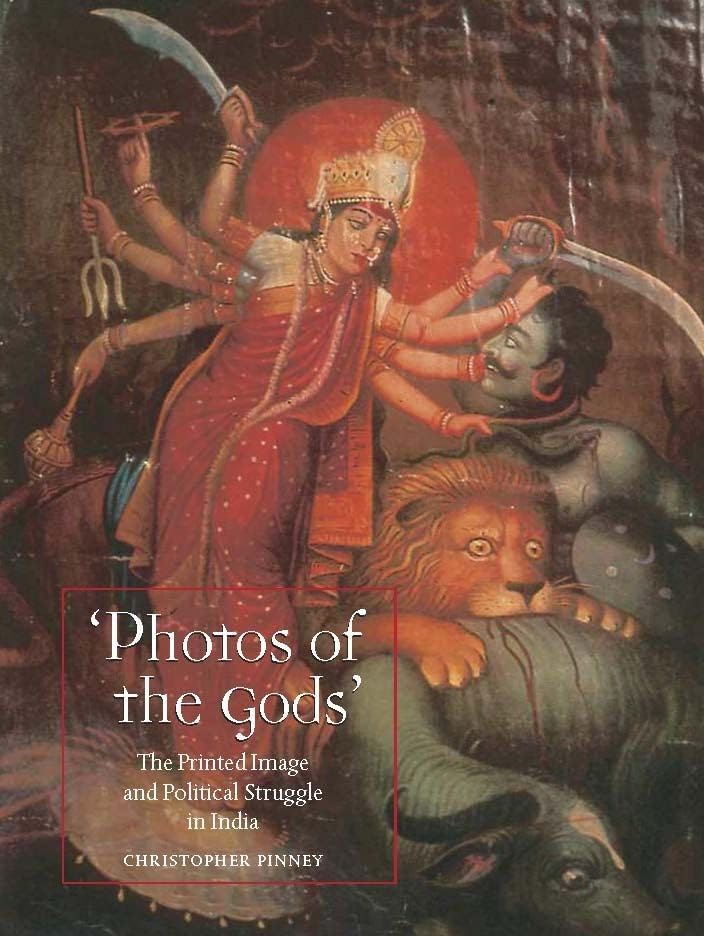
Title
Photos Of The Gods: The Printed Image And Political Struggle In India
Sold by Ergodebooks, an authorized reseller.
Returns accepted within 30 days | support@ergodebooks.com
Shipping Information
- Free Standard Shipping — United States only
- Processing Time: 3–5 business days
- Estimated Delivery: 6–10 business days after dispatch
- Double-boxed, fully insured & discreetly packaged
- Tracking number sent via email once dispatched
Returns & Refund
Returns accepted within 30 days of delivery.
Damaged or Defective Item
Free return shipping + replacement or full refund
Wrong Item Received
Free return shipping + replacement or full refund
Change of Mind
Return shipping at customer's expense · 25% restocking fee applies
Payment Option

Massproduced Images Have Long Been Produced And Used In India By Religious And Nationalist Movements The Emergence Of Indianrun Chromolithograph Presses In The Late 1870S Initiated A Vast Outpouring That Have Come To Dominate Many Of Indias Public And Domestic Spaces.Drawing On Years Of Archival Research, Interviews With Artists And Publishers, And The Ethnographic Study Of Their Rural Consumers, Christopher Pinney Traces The Intimate Connections Between The Production And Consumption Of These Images And The Struggle Against Colonial Rule. The Detailed Output Of Individual Presses And Artists Is Set Against The Intensification Of The Nationalist Struggle, The Constraints Imposed By Colonial State Censorship, And Fifty Years Of Indian Independence. The Reader Is Introduced To Artists Who Trained Within Colonial Art Schools, Others Whose Skills Reflect Their Membership Of Traditional Painting Castes, And Yet Others Who Are Selftaught Former Sign Painters.Photos Of The Gods Is The First Comprehensive History Of Indias Popular Visual Culture. Combining Anthropology, Political And Cultural History, And The Study Of Aesthetic Systems, And Using Many Intriguing And Unfamiliar Images, The Book Shows That The Current Predicament Of India Cannot Be Understood Without Taking Into Account This Complex, Fascinating, And Until Now Virtually Unseen, Visual History.
⚠️ WARNING (California Proposition 65):
This product may contain chemicals known to the State of California to cause cancer, birth defects, or other reproductive harm.
For more information, please visit www.P65Warnings.ca.gov.
- Q: How many pages does this book have? A: This book has two hundred thirty-nine pages. It provides an in-depth exploration of India's popular visual culture.
- Q: What type of binding does this book have? A: This book is available in paperback binding. This makes it lightweight and easy to handle.
- Q: Who is the author of this book? A: The author of this book is Christopher Pinney. He is known for his extensive research in the field of visual culture.
- Q: What is the size of this book? A: The dimensions of the book are seven point five two inches in length, zero point six inches in width, and nine point seven six inches in height. This compact size makes it easy to fit on shelves.
- Q: What category does this book fall under? A: This book falls under the category of Arts and Photography. It explores the intersection of art and politics in India.
- Q: Is this book suitable for academic study? A: Yes, this book is suitable for academic study. It combines anthropology, political and cultural history, making it a valuable resource.
- Q: How can I use this book for research? A: You can use this book for research by referencing its detailed accounts of visual culture in India. It's particularly useful for studies in art history and anthropology.
- Q: Is this book appropriate for casual reading? A: Yes, this book is appropriate for casual reading. Its engaging narrative makes it accessible to a broad audience.
- Q: What topics are covered in this book? A: This book covers topics such as colonialism, nationalism, and the evolution of visual culture in India. It provides a comprehensive historical context.
- Q: How should I store this book to keep it in good condition? A: Store this book in a cool, dry place to keep it in good condition. Avoid direct sunlight to prevent fading of the cover and pages.
- Q: Can I clean the cover of this book? A: Yes, you can clean the cover of the book gently with a dry cloth. Avoid using water or cleaning solutions to prevent damage.
- Q: What if the book arrives damaged? A: If the book arrives damaged, you should contact the seller within a specified return period. Most sellers will offer a replacement or refund.
- Q: Is this book safe for kids? A: Yes, this book is generally safe for older children interested in art and history. However, parental guidance is advised for younger readers due to some complex themes.
- Q: How does this book compare to other art history books? A: This book offers a unique perspective by focusing on India's visual culture and its political implications. It stands out for its ethnographic approach.
- Q: Does this book include illustrations or images? A: Yes, this book includes many intriguing and unfamiliar images. These visuals enhance the reader's understanding of the content.