
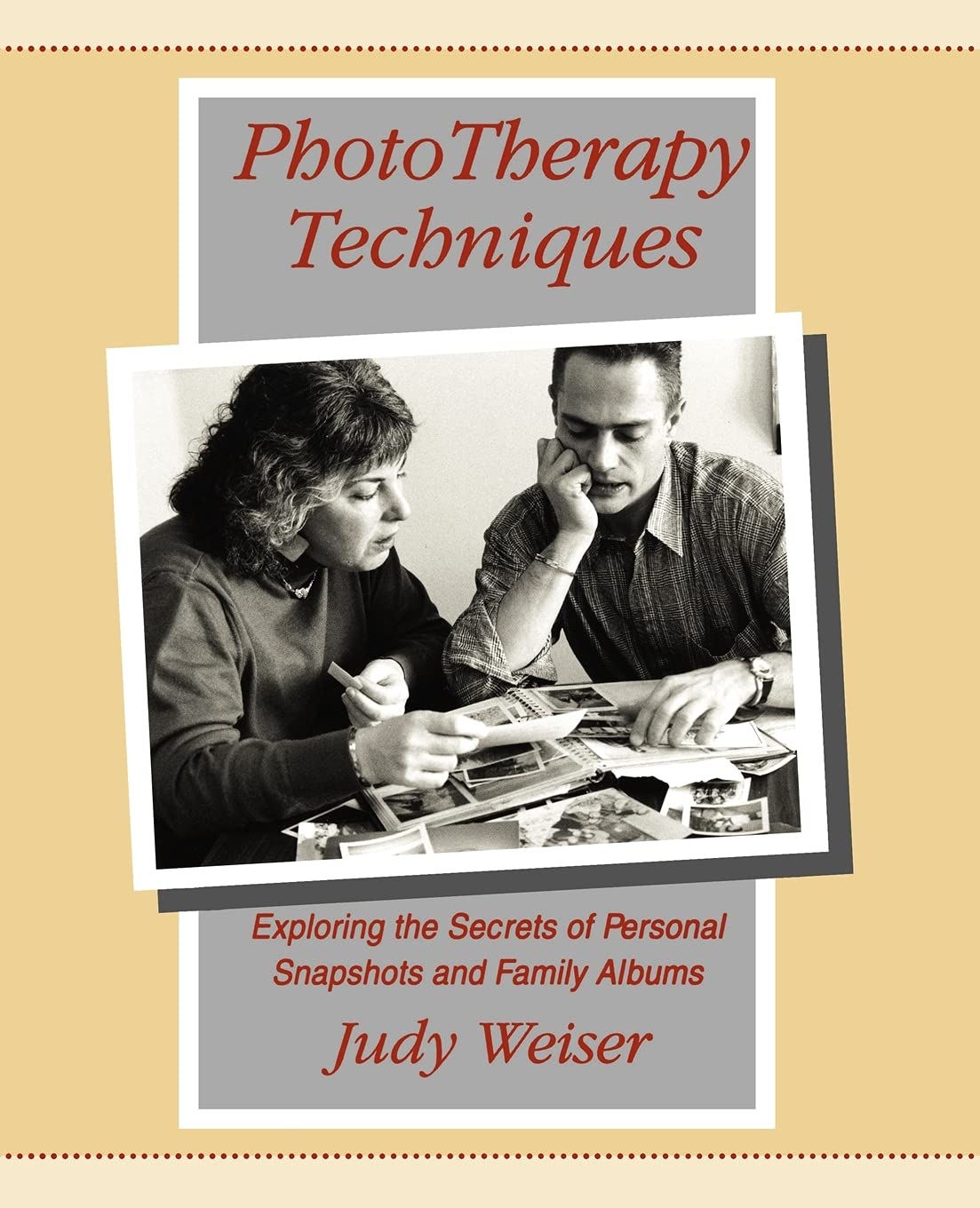
Title
Phototherapy Techniques: Exploring The Secrets Of Personal Snapshots And Family Albums (2Nd Edition)
Sold by Ergodebooks, an authorized reseller.
Returns accepted within 30 days | support@ergodebooks.com
Shipping Information
- Free Standard Shipping — United States only
- Processing Time: 3–5 business days
- Estimated Delivery: 6–10 business days after dispatch
- Double-boxed, fully insured & discreetly packaged
- Tracking number sent via email once dispatched
Returns & Refund
Returns accepted within 30 days of delivery.
Damaged or Defective Item
Free return shipping + replacement or full refund
Wrong Item Received
Free return shipping + replacement or full refund
Change of Mind
Return shipping at customer's expense · 25% restocking fee applies
Payment Option

Phototherapy Techniques: Exploring The Secrets Of Personal Snapshots And Family Albums Is The Most Comprehensive Introduction To The Field Of Phototherapy Available. Emphasizing The What, Why, And How Of These Practical Techniques, This Book Has Long Been Considered An Excellent Substitute For A Training Workshop!Written By Canadian Psychologist, Art Therapist, Consultant, Trainer, And Phototherapy Pioneer Judy Weiser, This Book (Now In Second Edition) Explains And Demonstrates Each Of The Major Techniques Involved, And Provides Theoretical Rationale From Both Psychology And Art Therapy Contexts. It Also Includes Many Photoillustrated Client Examples, Case Transcripts, And Practical Experiential Starter Exercises So That Readers Can Immediately Begin Using These Techniques In Their Own Practice.This Book Is About Photography As Personallysymbolic Communication, Rather Than Art Exploring What A Photograph Is About Emotionally, In Addition To What Shows On Its Surface Visually. Thus These Techniques Require No Previous Experience With Cameras Or Photographic Art And They Can Therefore Be Used Successfully By Therapists Of All Theoretical Orientations, Work Settings, Or Client Specializations.Often Used As A Text For University Courses As Well As For Continuing Education Licensing Credits For Numerous Mental Health Professions, This Book Is A Must For Not Only Therapists And Counselors, But Also Anyone Interested In Coaching, Personal Development, Art Therapy, Social Change, Diversity Training, Conflict Resolution, Special Education, Community Development, Visual Literacy, Visual Anthropology/Sociology, Visualbased Research, And Even Scrapbooking!Though Longconsidered A Classic For Teaching How To Use Photos In Peoplehelping Work, This Book Is Still Even More Relevant In This Digital Age Of Mobile Phone Pictures And Online Sharing (Because It Is About The Heart Part Of These Images Rather Than Their Art Part!!) And Thus Not At All Dependent Upon Which Kind Of Technology Created Them!*For More Information, See Her Website Phototherapy & Therapeutic Photography Techniques, At: Www.Phototherapycentre.Com
⚠️ WARNING (California Proposition 65):
This product may contain chemicals known to the State of California to cause cancer, birth defects, or other reproductive harm.
For more information, please visit www.P65Warnings.ca.gov.
- Q: What is the page count of this book? A: This book has three hundred eighty-four pages. It provides an in-depth exploration of PhotoTherapy techniques and includes numerous client examples.
- Q: What are the dimensions of the book? A: The book measures seven point five two inches in length, zero point eight seven inches in width, and nine point two five inches in height. These dimensions make it a convenient size for reading and reference.
- Q: What binding does this book have? A: This book is available in paperback binding. Paperback is lightweight and flexible, making it easy to handle and read.
- Q: Who is the author of this book? A: The author of this book is Judy Weiser. She is a Canadian psychologist and a pioneer in the field of PhotoTherapy.
- Q: What is the main focus of the book? A: The main focus of the book is on exploring photography as a form of personally-symbolic communication. It emphasizes the emotional aspects of photographs rather than their artistic value.
- Q: How can I apply the techniques from this book? A: You can apply the techniques by following the practical exercises provided in the book. It offers experiential 'starter' exercises that can be implemented in your own practice.
- Q: Is this book suitable for beginners? A: Yes, this book is suitable for beginners. It requires no previous experience with cameras or photography, making it accessible for anyone interested in PhotoTherapy.
- Q: Can therapists of any orientation use this book? A: Yes, therapists of all theoretical orientations can use this book. It is designed to be applicable across various work settings and client specializations.
- Q: What should I do if I want to learn more about PhotoTherapy? A: You can visit Judy Weiser's website at www.phototherapy-centre.com for more information about PhotoTherapy and related techniques.
- Q: Is this book used for educational purposes? A: Yes, this book is often used as a text for university courses. It is also accepted for Continuing Education licensing credits for various mental health professions.
- Q: How do I keep this book in good condition? A: To keep this book in good condition, store it in a dry place and avoid exposing it to direct sunlight. Regularly check for any wear and handle it gently.
- Q: Are there any safety concerns with this book? A: No, there are no specific safety concerns associated with this book. It is intended for educational and therapeutic use.
- Q: What if the book arrives damaged? A: If the book arrives damaged, you should contact the seller for return or replacement options. Most retailers have policies in place to handle such situations.
- Q: Does this book include case examples? A: Yes, this book includes many photo-illustrated client examples and case transcripts. These real-life examples help illustrate the techniques discussed.
- Q: Is this book relevant in the digital age? A: Yes, this book is highly relevant in the digital age. It focuses on the emotional significance of images, which remains important despite technological advancements.
- Q: Can I use this book for personal development? A: Yes, this book can be used for personal development. It is beneficial for those interested in coaching, art therapy, and visual-based research.