
Title
Physiological Adaptations For Breeding In Birds,Used
Sold by Ergodebooks, an authorized reseller.
Returns accepted within 30 days | support@ergodebooks.com
Shipping Information
- Free Standard Shipping — United States only
- Processing Time: 3–5 business days
- Estimated Delivery: 6–10 business days after dispatch
- Double-boxed, fully insured & discreetly packaged
- Tracking number sent via email once dispatched
Returns & Refund
Returns accepted within 30 days of delivery.
Damaged or Defective Item
Free return shipping + replacement or full refund
Wrong Item Received
Free return shipping + replacement or full refund
Change of Mind
Return shipping at customer's expense · 25% restocking fee applies
Payment Option

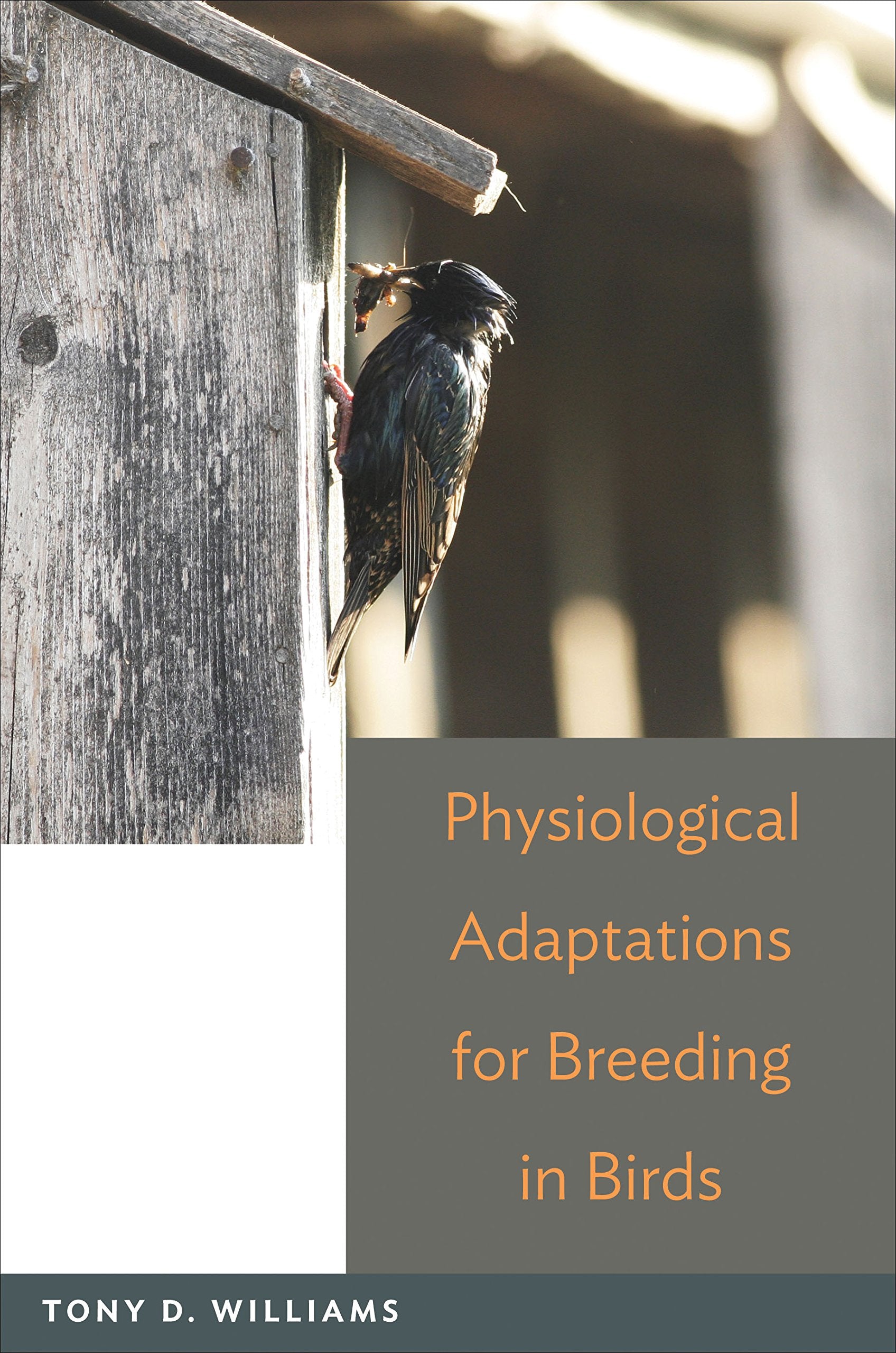
Physiological Adaptations for Breeding in Birds is the most current and comprehensive account of research on avian reproduction. It develops two unique themes: the consideration of female avian reproductive physiology and ecology, and an emphasis on individual variation in lifehistory traits. Tony Williams investigates the physiological, metabolic, energetic, and hormonal mechanisms that underpin individual variation in the key femalespecific reproductive traits and the tradeoffs between these traits that determine variation in fitness.The core of the book deals with the avian reproductive cycle, from seasonal gonadal development, through egg laying and incubation, to chick rearing. Reproduction is considered in the context of the annual cycle and through an individual's entire life history. The book focuses on timing of breeding, clutch size, egg size and egg quality, and parental care. It also provides a primer on female reproductive physiology and considers tradeoffs and carryover effects between reproduction and other lifehistory stages. In each chapter, Williams describes individual variation in the trait of interest and the evolutionary context for trait variation. He argues that there is only a rudimentary, and in some cases nonexistent, understanding of the physiological mechanisms that underpin individual variation in the major reproductive lifehistory traits, and that research efforts should refocus on these key unresolved problems by incorporating detailed physiological studies into existing longterm population studies, generating a new synthesis of physiology, ecology, and evolutionary biology.
⚠️ WARNING (California Proposition 65):
This product may contain chemicals known to the State of California to cause cancer, birth defects, or other reproductive harm.
For more information, please visit www.P65Warnings.ca.gov.