If you have any questions, you are always welcome to contact us. We'll get back to you as soon as possible, withing 24 hours on weekdays.
Customer service
All questions about your order, return and delivery must be sent to our customer service team by e-mail at yourstore@yourdomain.com
Sale & Press
If you are interested in selling our products, need more information about our brand or wish to make a collaboration, please contact us at press@yourdomain.com
Help
If you have any questions, you are always welcome to contact us. We'll get back to you as soon as possible, withing 24 hours on weekdays.
Customer service
All questions about your order, return and delivery must be sent to our customer service team by e-mail at yourstore@yourdomain.com
Sale & Press
If you are interested in selling our products, need more information about our brand or wish to make a collaboration, please contact us at press@yourdomain.com
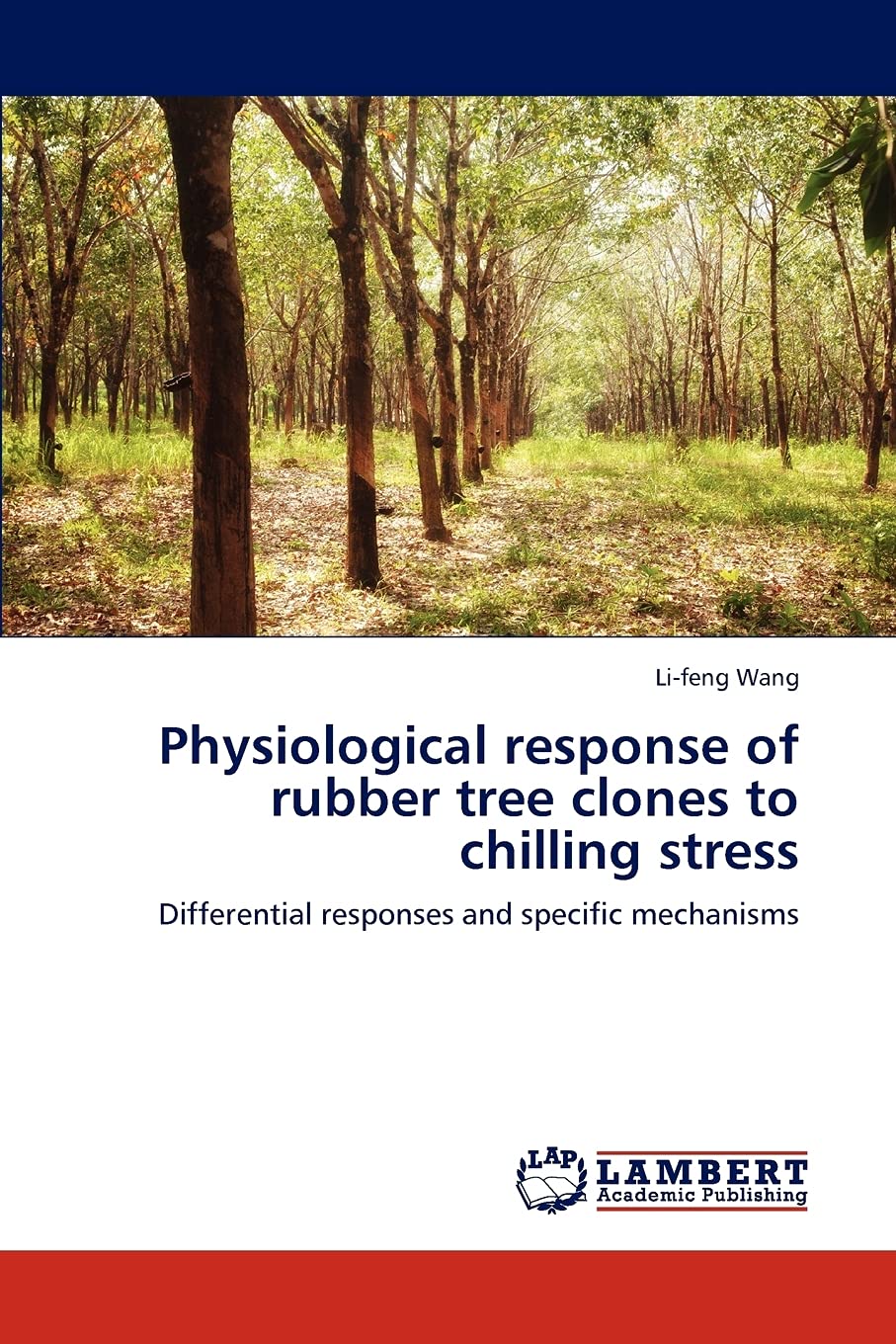
Rubber tree (Hevea brasiliensis Muell. Arg.), which originated in South America Amazon River basin, is a typical tropical rainforest plant in favor of environment with high temperature and humidity. Since its introduction to China, rubber tree could grow and develop normally. However, these areas were in the tropical northern margin (Northern latitude 1824 degree). Rubber tree frequently subjected to chilling injury. After 60 years of practice, unique and effective measurements were development in the cold planting cultivation of rubber trees in China. This book features as provide detail knowledge of chilling types and damage on tubber tree. The useful cultivation measurements and important chilling torlerant clones were showed. Furthermore, rubber clone seedlings with differential chilling tolerant abilities were subjected to artificial chilling treatment for measurement of its physiological indicators specific to antioxidant systems. This book provided a theoretical and practical basis for rubber clone breeding programme for chilling tolerance.
⚠️ WARNING (California Proposition 65):
This product may contain chemicals known to the State of California to cause cancer,
birth defects, or other reproductive harm.
For MAP (Minimum Advertised Price) violations and Intellectual Property (IP) or Trademark concerns, please contact:
support@ergodebooks.com
⚠️ California Proposition 65 Warning: Some products sold on this website may expose you to chemicals known to the State of California to cause cancer, birth defects, or other reproductive harm. For more information, visit www.P65Warnings.ca.gov.