
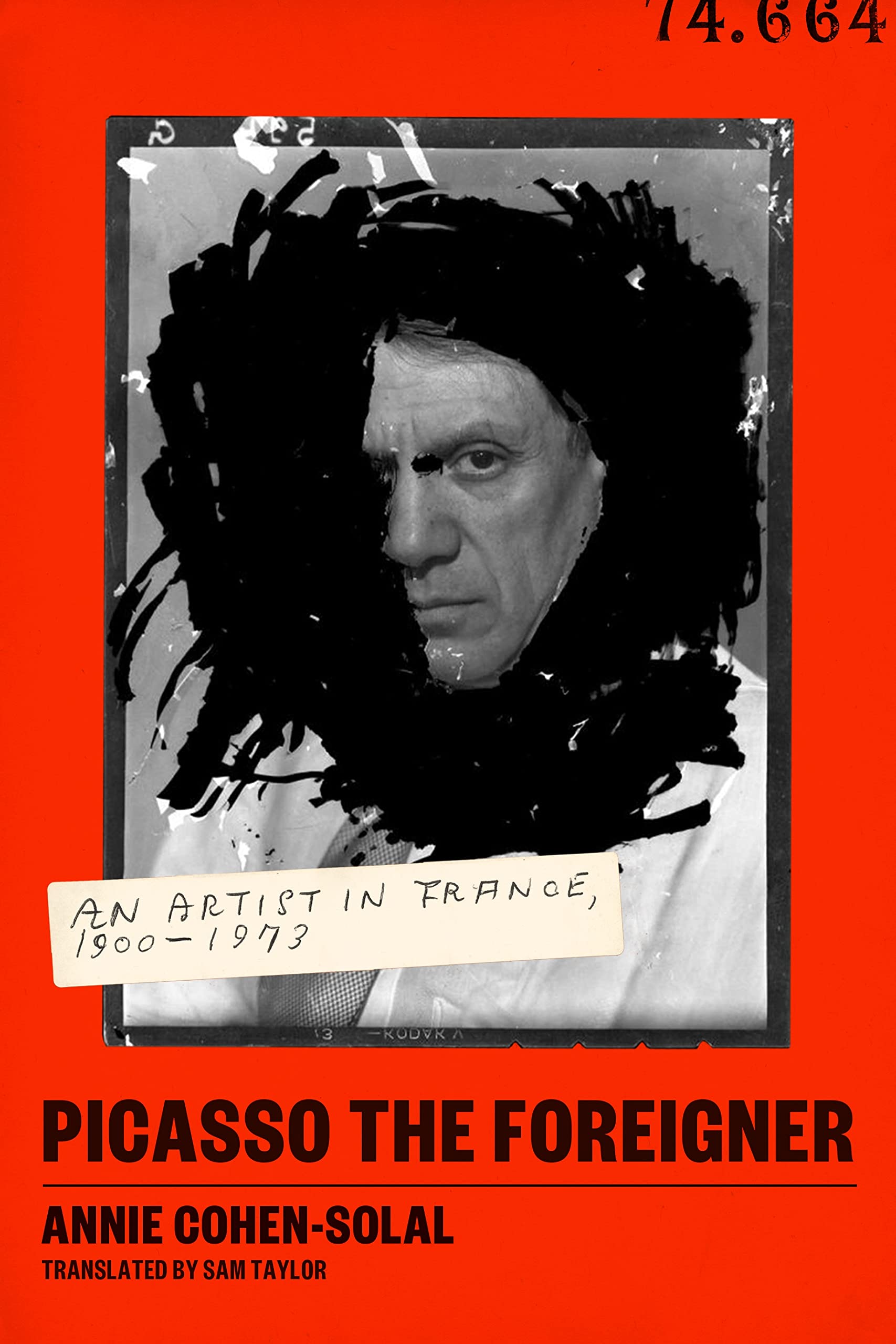
Title
Picasso The Foreigner: An Artist In France, 19001973
Sold by Ergodebooks, an authorized reseller.
Returns accepted within 30 days | support@ergodebooks.com
Shipping Information
- Free Standard Shipping — United States only
- Processing Time: 3–5 business days
- Estimated Delivery: 6–10 business days after dispatch
- Double-boxed, fully insured & discreetly packaged
- Tracking number sent via email once dispatched
Returns & Refund
Returns accepted within 30 days of delivery.
Damaged or Defective Item
Free return shipping + replacement or full refund
Wrong Item Received
Free return shipping + replacement or full refund
Change of Mind
Return shipping at customer's expense · 25% restocking fee applies
Payment Option

A New York Times Book Review Editors' Choiceabsorbing [And] Astute . . . Cohensolal Captures A Facet Of Picassos Character Long Overlooked. Hamilton Cain, The Wall Street Journala Beguiling Read, As Ingenious As It Is Ambitious . . . See Picasso And Paris Shimmering With New Light. Mark Braude, Author Of Kiki Man Ray: Art, Love, And Rivalry In 1920S Parisborn From Her Probing Inquiry Into Picassos Odyssey In France, Which Inspired A Museum Exhibition Of The Same Name, Historian Anniecohen Solals Picasso The Foreigner Presents A Bold New Understanding Of The Artists Career And His Relationship With The Country He Called Home.Winner Of The 2021 Prix Femina Essaibefore Picasso Became Picassothe Iconic Artist Now Celebrated As One Of Frances Leading Figureshe Was Constantly Surveilled By The French Police. Amid Political Tensions In The Spring Of 1901, He Was Flagged As An Anarchist By The Security Servicesthe First Of Many Entries In An Extensive Case File. Though He Soon Emerged As The Leader Of The Cubist Avantgarde, And Became Increasingly Wealthy As His Reputation Grew Worldwide, Picassos Art Was Largely Excluded From Public Collections In France For The Next Four Decades. The Genius Who Conceived Guernica In 1937 As A Visceral Statement Against Fascism Was Even Denied French Citizenship Three Years Later, On The Eve Of The Nazi Occupation. In A Country Where The Police And The Conservative Acadmie Des Beauxarts Represented Two Major Pillars Of The Establishment At The Time, Picasso Faced A Triple Stigmaas A Foreigner, A Political Radical, And An Avantgarde Artist.Picasso The Foreigner Approaches The Artists Career And Art From An Entirely New Angle, Making Extensive Use Of Fascinating And Longoverlooked Archival Sources. In This Groundbreaking Narrative, Picasso Emerges As An Artist Ahead Of His Time Not Only Aesthetically But Politically, One Who Ignored National Modes In Favor Of Contemporary Cosmopolitan Forms. Annie Cohensolal Reveals How, In A Period Encompassing The Brutality Of World War I, The Nazi Occupation, And Cold War Rivalries, Picasso Strategized And Fought To Preserve His Agency, Eventually Leaving Paris For Good In 1955. He Chose The South Over The North, The Provinces Over The Capital, And Craftspeople Over Academicians, While Simultaneously Achieving Widespread Fame. The Artist Never Became A Citizen Of France, Yet He Generously Enriched And Dynamized The Countrys Culture Like Few Other Figures In Its History. This Book, For The First Time, Explains How.Includes Color Images
⚠️ WARNING (California Proposition 65):
This product may contain chemicals known to the State of California to cause cancer, birth defects, or other reproductive harm.
For more information, please visit www.P65Warnings.ca.gov.
- Q: How many pages does this book have? A: This book has six hundred eight pages. It offers an in-depth exploration of Picasso's life and career in France.
- Q: What is the binding type of 'Picasso the Foreigner'? A: The binding type is hardcover. This ensures durability and a premium feel for readers.
- Q: What are the dimensions of this book? A: The dimensions are six point five five inches in length, one point seven five inches in width, and nine point five seven inches in height. This size is ideal for both display and reading.
- Q: Who is the author of 'Picasso the Foreigner'? A: The author is Annie Cohen-Solal. She is a historian who provides a unique perspective on Picasso's life.
- Q: Is this book suitable for young readers? A: This book is not specifically designed for young readers. It covers complex themes about politics and art, making it more suitable for adults.
- Q: What themes are explored in 'Picasso the Foreigner'? A: The book explores themes of identity, politics, and art history. It delves into Picasso's status as a foreigner and his influence on French culture.
- Q: How should I store this book to keep it in good condition? A: Store this book upright on a shelf in a cool, dry place. Avoid exposing it to direct sunlight to preserve the cover and pages.
- Q: Can I clean the cover of the book? A: Yes, you can gently wipe the cover with a soft, dry cloth. Avoid using water or cleaning solutions to prevent damage.
- Q: What should I do if the book arrives damaged? A: If the book arrives damaged, contact the seller for a return or exchange. Most sellers offer return policies for damaged items.
- Q: Is there a warranty for this book? A: Books typically do not come with a warranty. However, check with the seller regarding their return policy for any issues.
- Q: How does this book compare to other biographies of Picasso? A: This book offers a unique perspective by focusing on Picasso's foreignness and political struggles, differing from typical biographical narratives.
- Q: Is 'Picasso the Foreigner' a good choice for art history students? A: Yes, it is an excellent choice for art history students. The book provides in-depth insights into Picasso's impact on art and culture.
- Q: What makes this book a unique read about Picasso? A: This book is unique because it uses extensive archival sources to reveal overlooked aspects of Picasso's life, particularly his status as a foreigner.
- Q: Are there any illustrations in 'Picasso the Foreigner'? A: Yes, the book includes color images. These visuals complement the text and enhance the reader's understanding of Picasso's art.
- Q: What is the genre of 'Picasso the Foreigner'? A: The genre is history, specifically art history. It examines the life of Picasso within the broader context of French culture.
- Q: Does this book contain any awards or recognitions? A: Yes, it won the 2021 Prix Femina Essai, highlighting its significance and quality in the field of literature.