
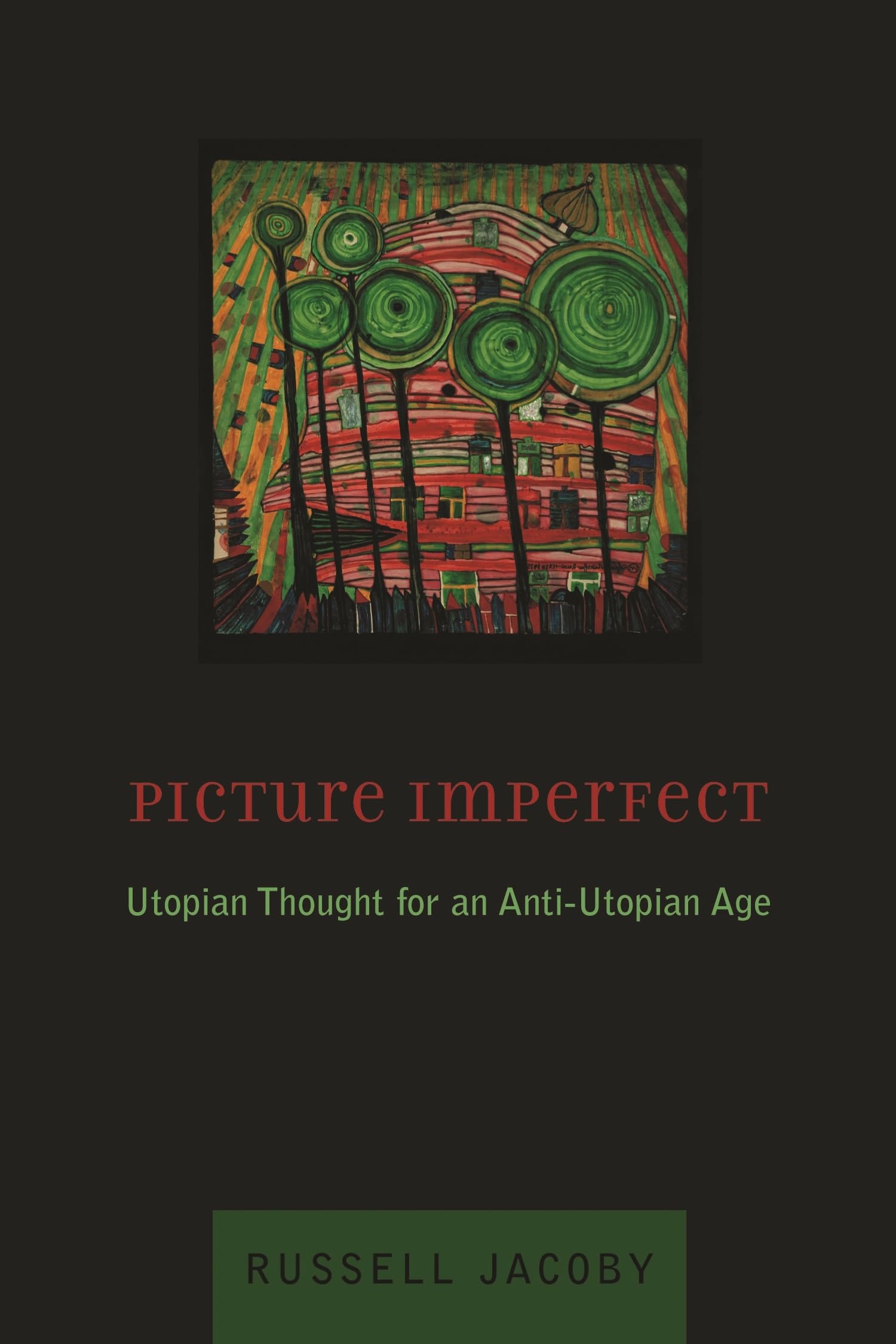
Title
Picture Imperfect: Utopian Thought For An Antiutopian Age
Sold by Ergodebooks, an authorized reseller.
Returns accepted within 30 days | support@ergodebooks.com
Shipping Information
- Free Standard Shipping — United States only
- Processing Time: 3–5 business days
- Estimated Delivery: 6–10 business days after dispatch
- Double-boxed, fully insured & discreetly packaged
- Tracking number sent via email once dispatched
Returns & Refund
Returns accepted within 30 days of delivery.
Damaged or Defective Item
Free return shipping + replacement or full refund
Wrong Item Received
Free return shipping + replacement or full refund
Change of Mind
Return shipping at customer's expense · 25% restocking fee applies
Payment Option

The Choice We Have Is Not Between Reasonable Proposals And An Unreasonable Utopianism. Utopian Thinking Does Not Undermine Or Discount Real Reforms. Indeed, It Is Almost The Opposite: Practical Reforms Depend On Utopian Dreaming.Russell Jacoby, Picture Imperfectutopianism Suffers From An Image Problem: A Recent Exhibition On Utopias In Paris And New York Included Photographs Of Hitler'S Mein Kampf And A Nazi Concentration Camp. Many Observers Judge Utopians And Their Sympathizers As Foolhardy Dreamers At Best And Murderous Totalitarians At Worst. However, As Noted Social Critic And Historian Russell Jacoby Argues In This Salient, Polemical, And Innovative Work, Not Only Has Utopianism Been Unfairly Characterized, A Return To An Iconoclastic Utopian Spirit Is Vital For Today'S Society. Shaped By The Works Of Theodor Adorno, Walter Benjamin, Ernst Bloch, Gustav Landauer, And Other Predominantly Jewish Thinkers, Iconoclastic Utopianism Revives Society'S Dormant Political Imagination And Offers Hope For A Better Future. Writing Against The Grain Of History, Jacoby Reexamines The Antiutopian Mindset And Identifies How Utopian Thought Came To Be Regarded With Such Suspicion. He Challenges Standard Readings Of Such Antiutopian Classics As 1984 And Brave New World And Offers Stinging Critiques Of The Influential Liberal And Antiutopian Theorists Hannah Arendt, Isaiah Berlin, And Karl Popper. He Argues That These Thinkers Mistakenly Equate Utopianism With Totalitarianism.The Reputation Of Utopian Thought Has Also Suffered From The Failures Of, What Jacoby Terms, The Blueprint Utopian Tradition And Its Oppressive Emphasis On Detailing All Aspects Of Society And Providing Fantastic Images Of The Future. In Contrast, The Iconoclastic Utopians, Like Those Who Follow God'S Prohibition Against Graven Images, Resist Both The Blueprinters' Obsession With Detail And The Modern Seduction Of Images. Jacoby Suggests That By Learning From The Hopeful Spirit Of Iconoclastic Utopians And Their Willingness To Accept New Possibilities For Society, We Open Ourselves To New And More Imaginative Ideas Of The Future.
⚠️ WARNING (California Proposition 65):
This product may contain chemicals known to the State of California to cause cancer, birth defects, or other reproductive harm.
For more information, please visit www.P65Warnings.ca.gov.
- Q: What is the page count of 'Picture Imperfect'? A: The book contains two hundred forty pages. This length is typical for a comprehensive analysis of utopian thought.
- Q: What are the dimensions of this book? A: The book measures five point three seven inches in length, zero point seven one inches in width, and seven point two four inches in height. These dimensions make it portable and easy to handle.
- Q: What is the binding type of 'Picture Imperfect'? A: The book is available in paperback binding. This type of binding is lightweight and convenient for reading.
- Q: Who is the author of 'Picture Imperfect'? A: The author is Russell Jacoby. He is known for his critical examination of utopianism and its societal implications.
- Q: What genre does 'Picture Imperfect' belong to? A: This book belongs to the Political genre. It explores themes related to utopian thought and societal reform.
- Q: How do I engage with the themes in 'Picture Imperfect'? A: To engage with this book, read it critically and reflect on Jacoby's arguments. Consider how utopian thought can influence contemporary political issues.
- Q: Is 'Picture Imperfect' suitable for academic study? A: Yes, this book is suitable for academic study. It provides insightful critiques of major political theorists and can serve as a resource for discussions on utopianism.
- Q: What age group is 'Picture Imperfect' appropriate for? A: This book is primarily aimed at adults and young adults interested in political theory. The themes may not be suitable for younger audiences.
- Q: Can I include 'Picture Imperfect' in a reading group? A: Yes, this book is a great choice for reading groups. Its thought-provoking content encourages discussion and debate on complex political ideas.
- Q: What should I do to keep 'Picture Imperfect' in good condition? A: To keep the book in good condition, store it in a cool, dry place and avoid exposing it to direct sunlight. This will help preserve its quality.
- Q: Are there any special care instructions for 'Picture Imperfect'? A: No special care instructions are needed for this paperback book. Simply handle it with care to avoid wear and tear.
- Q: What if 'Picture Imperfect' arrives damaged? A: If the book arrives damaged, contact the retailer for a return or exchange. Most retailers have policies in place for damaged items.
- Q: Can I return 'Picture Imperfect' if I'm not satisfied? A: Yes, you can typically return the book if you're not satisfied. Check the retailer's return policy for specific details.
- Q: Is it easy to read 'Picture Imperfect'? A: Yes, the writing style is accessible. Jacoby presents complex ideas in a clear and engaging manner, making it easier for readers to follow.
- Q: How does 'Picture Imperfect' compare to other political theory books? A: Unlike many political theory books, 'Picture Imperfect' offers a unique perspective on utopian thought, challenging traditional anti-utopian views.
- Q: What unique perspectives does 'Picture Imperfect' offer? A: The book critiques standard anti-utopian narratives and emphasizes the importance of utopian dreaming for societal progress. Jacoby's approach is both innovative and thought-provoking.