
Title
Pigs for the Ancestors: Ritual in the Ecology of a New Guinea People,Used
Sold by Ergodebooks, an authorized reseller.
Returns accepted within 30 days | support@ergodebooks.com
Shipping Information
- Free Standard Shipping — United States only
- Processing Time: 3–5 business days
- Estimated Delivery: 6–10 business days after dispatch
- Double-boxed, fully insured & discreetly packaged
- Tracking number sent via email once dispatched
Returns & Refund
Returns accepted within 30 days of delivery.
Damaged or Defective Item
Free return shipping + replacement or full refund
Wrong Item Received
Free return shipping + replacement or full refund
Change of Mind
Return shipping at customer's expense · 25% restocking fee applies
Payment Option

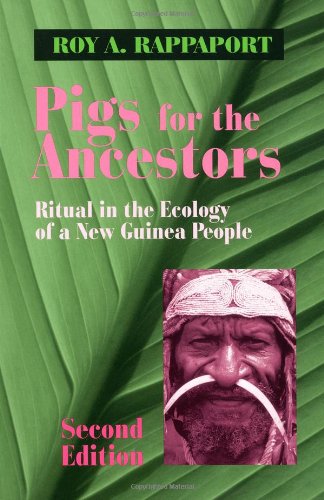
This influential work is the most important and widely cited book ever published in ecological anthropology. It is a classic case study of human ecology in a tribal society, the role of culture (especially ritual) in local and regional resource management, negative feedback, and the application of systems theory to an anthropological population. It is considered a major work of theory, yet it is also empirically grounded in Rappaport's meticulous collection of quantitative and qualitative data on such 'material' matters as diet and energy expenditure, as well as such mentalcognitiveideational domains as myth and folk taxonomies. Rappaport's tour de force is a recognized classic because it contributes in so many ways to anthropological theory, ethnographic methodology, ecological anthropology, and the anthropology of religion. This enlarged edition offers a carefully reasoned, empirically focused reassessment of Rappaport's original study in the context of ongoing theoretical and methodological problems.Titles of related interest also available from Waveland Press: Hogbin, The Island of Menstruating Men: Religion in Wogeo, New Guinea (ISBN 9780881338843); Netting, Cultural Ecology, Second Edition (ISBN 9780881332049); SillitoeSillitoe, GrassClearing Man: A Factional Ethnography of Life in the New Guinea Highlands (ISBN 9781577666011); and Townsend, Environmental Anthropology: From Pigs to Policies, Second Edition (ISBN 9781577665816).
⚠️ WARNING (California Proposition 65):
This product may contain chemicals known to the State of California to cause cancer, birth defects, or other reproductive harm.
For more information, please visit www.P65Warnings.ca.gov.
- Q: What is the page count of 'Pigs for the Ancestors'? A: The book has five hundred one pages. This extensive length allows for a thorough exploration of ecological anthropology and related themes.
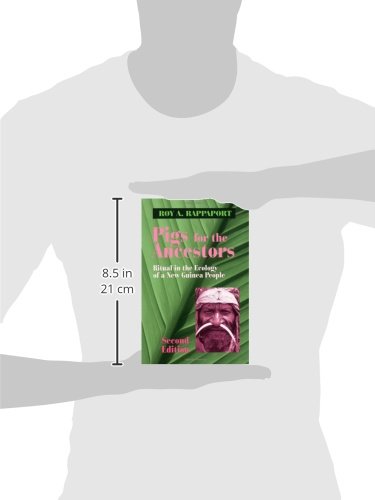
- Q: What are the dimensions of the book? A: The book measures five point five one inches in length, one inch in width, and eight point five inches in height. These dimensions make it a convenient size for reading and storage.
- Q: What type of binding does this book have? A: The book is paperback bound. This type of binding is lightweight and flexible, making it easy to handle.
- Q: Who is the author of this book? A: The author is Roy A. Rappaport. He is a prominent figure in ecological anthropology, known for his influential research.
- Q: What is the main subject of 'Pigs for the Ancestors'? A: The book focuses on ecological anthropology. It examines the relationship between culture, ritual, and resource management in tribal societies.
- Q: How do I apply the concepts in this book to real life? A: Readers can apply the concepts by examining local cultural practices related to resource management. Observing how rituals influence ecological behavior can provide practical insights.
- Q: Is this book suitable for beginners in anthropology? A: Yes, it is suitable for beginners. The book provides foundational theories and case studies that can be understood by those new to the field.
- Q: What is the reading level for this book? A: The reading level is appropriate for adults and advanced students. It involves complex theories and data analysis typical in academic anthropology.
- Q: Can I use this book as a textbook for a course? A: Yes, it can be used as a textbook. Its empirical research and theoretical framework make it suitable for academic courses in anthropology.
- Q: How should I store this book to keep it in good condition? A: Store the book in a cool, dry place, away from direct sunlight. This will help preserve its cover and pages over time.
- Q: Is there any special care needed for this paperback book? A: No special care is needed beyond regular handling. Avoid bending the cover excessively to maintain its shape.
- Q: What if the book arrives damaged? A: If the book arrives damaged, you should contact the seller for a return or exchange. Most sellers have a return policy for damaged items.
- Q: Does this book contain any adult content? A: No, this book does not contain adult content. It focuses on ecological and anthropological themes suitable for general audiences.
- Q: Are there other related books by the same publisher? A: Yes, other related titles by Waveland Press include 'The Island of Menstruating Men' and 'Cultural Ecology'. These books also explore themes in anthropology.
- Q: What makes this book a classic in ecological anthropology? A: It is considered a classic due to its comprehensive research and theoretical contributions to the field. Rappaport’s methodologies and findings are widely cited.
- Q: Can I find this book in libraries? A: Yes, it is commonly available in academic libraries. Its significance in the field of anthropology ensures it is included in many collections.