If you have any questions, you are always welcome to contact us. We'll get back to you as soon as possible, withing 24 hours on weekdays.
Customer service
All questions about your order, return and delivery must be sent to our customer service team by e-mail at yourstore@yourdomain.com
Sale & Press
If you are interested in selling our products, need more information about our brand or wish to make a collaboration, please contact us at press@yourdomain.com
Help
If you have any questions, you are always welcome to contact us. We'll get back to you as soon as possible, withing 24 hours on weekdays.
Customer service
All questions about your order, return and delivery must be sent to our customer service team by e-mail at yourstore@yourdomain.com
Sale & Press
If you are interested in selling our products, need more information about our brand or wish to make a collaboration, please contact us at press@yourdomain.com
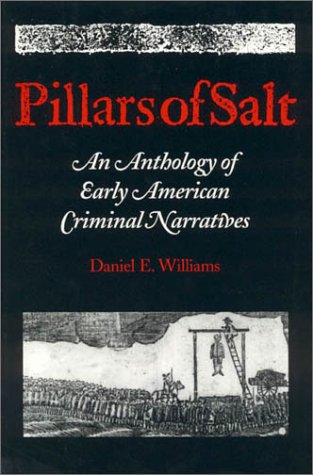
Designed first to terrify readers with examples of divine retribution against lives gone wrong, and later to excite prurient imaginations, criminal narratives comprise a significant but forgotten genre of American literature. The representation of crime and the characterization of criminals in these narratives, according to Williams, offer an accurate index of more widespread social transformations, such as the secularization of society and the growth of capitalism. Recorded first by Puritan clergy as morality plays, these narratives depict the ritual drama of execution, in which the condemned criminals were given specific roles to fulfill, roles that not only marked the boundaries of acceptable behavior but also made crime understandable. For New Englanders of later generations, however, the scaffold was a stage for a more secular drama, and the popular narratives it produced served a very different purpose. Profit replaced passion as a motive for crime, and condemned criminals were used to demonstrate the pathetic consequences of ungoverned greed. By collecting and presenting thirtytwo examples of crime stories ranging from the late seventeenth to the late eighteenth centuries, Williams explores the public ritual of capital punishment and the changing aspects of the genre it produced. These tales are as fascinating today as they were two and a half centuries ago, and they offer a glimpse of how popular literature functioned in early American society.
⚠️ WARNING (California Proposition 65):
This product may contain chemicals known to the State of California to cause cancer,
birth defects, or other reproductive harm.
For MAP (Minimum Advertised Price) violations and Intellectual Property (IP) or Trademark concerns, please contact:
support@ergodebooks.com
⚠️ California Proposition 65 Warning: Some products sold on this website may expose you to chemicals known to the State of California to cause cancer, birth defects, or other reproductive harm. For more information, visit www.P65Warnings.ca.gov.