
Title
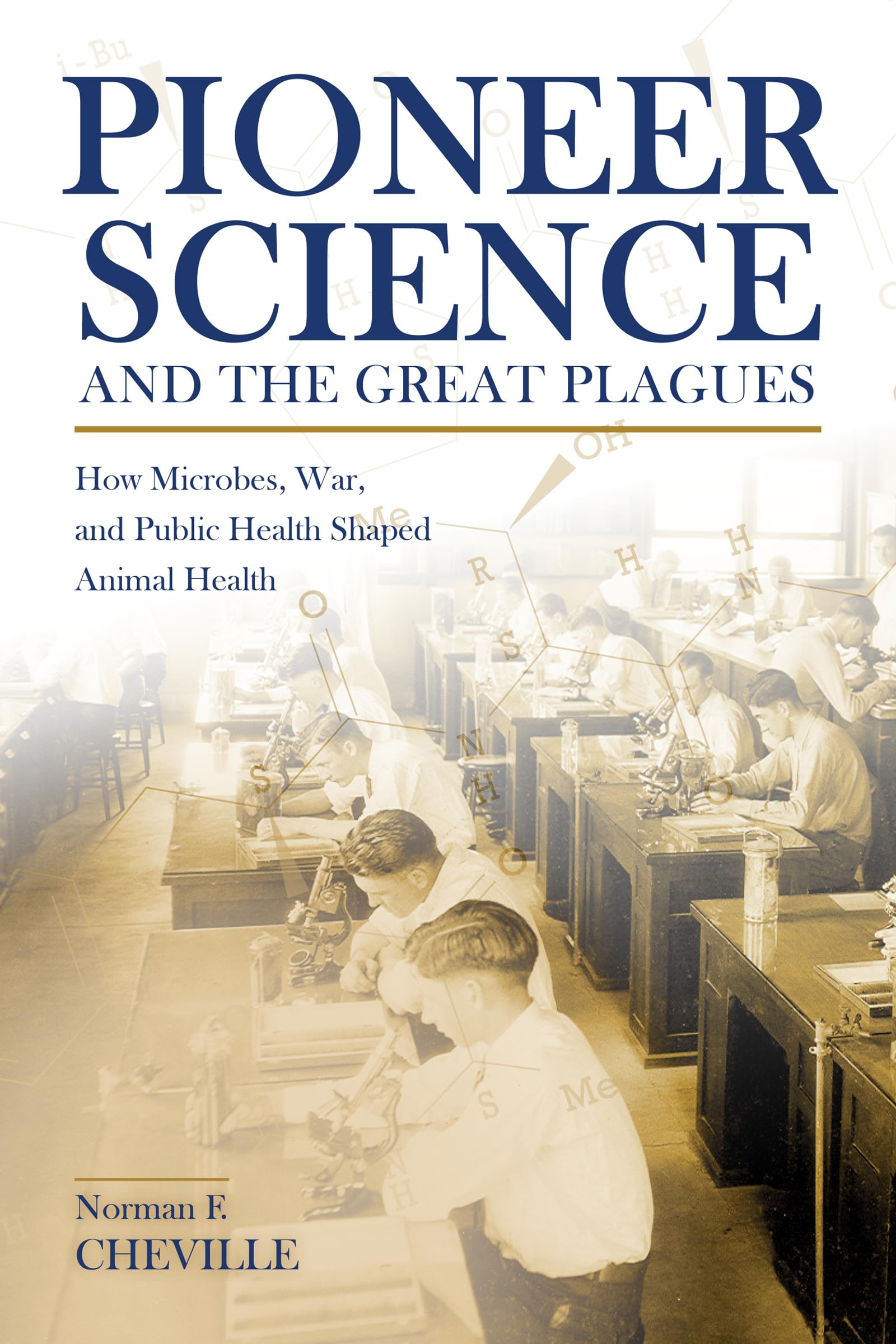
Pioneer Science And The Great Plagues: How Microbes, War, And Public Health Shaped Animal Health (New Directions In The Humanan,Used
Sold by Ergodebooks, an authorized reseller.
Returns accepted within 30 days | support@ergodebooks.com
Shipping Information
- Free Standard Shipping — United States only
- Processing Time: 3–5 business days
- Estimated Delivery: 6–10 business days after dispatch
- Double-boxed, fully insured & discreetly packaged
- Tracking number sent via email once dispatched
Returns & Refund
Returns accepted within 30 days of delivery.
Damaged or Defective Item
Free return shipping + replacement or full refund
Wrong Item Received
Free return shipping + replacement or full refund
Change of Mind
Return shipping at customer's expense · 25% restocking fee applies
Payment Option

Pioneer Science and the Great Plagues covers the century when infectious plaguesanthrax, tuberculosis, tetanus, plague, smallpox, and poliowere conquered, and details the important role that veterinary scientists played. The narrative is driven by astonishing events that centered on animal disease: the influenza pandemic of 1872, discovery of the causes of anthrax and tuberculosis in the 1880s, conquest of Texas cattle fever and then yellow fever, German anthrax attacks on the United States during World War I, the tuberculin war of 1931, Japanese biological warfare in the 1940s, and todays bioterror dangers.Veterinary science in the rural Midwest arose from agriculture, but in urban Philadelphia it came from medicine; similar differences occurred in Canada between Toronto and Montreal. As landgrant colleges were established after the American Civil War, individual states followed divergent pathways in supporting veterinary science. Some employed a trade school curriculum that taught agriculturalists to empirically treat animal diseases and others emphasized a curriculum tied to science. This pattern continued for a century, but today some institutions have moved back to the trade school philosophy. Avoiding lessons of the 1910 Flexner Report on medical education reform, universityassociated veterinary schools are being approved that do not have control of their own veterinary hospitals, diagnostic laboratories, and research institutescomponents that are critical for training students in science. Underlying this change were twin idiosyncrasies of culturedisbelief in science and distrust of governmentthat spawned scientology, creationism, antivaccination movements, and other antiscience scams.As new infectious plagues continue to arise, Pioneer Science and the Great Plagues details the strategies we learned defeating plagues from 1860 to 1960and the essential role veterinary science played. To defeat the plagues of today it is essential we avoid the digital cocoon of disbelief in science and cultural stasis now threatening progress.
⚠️ WARNING (California Proposition 65):
This product may contain chemicals known to the State of California to cause cancer, birth defects, or other reproductive harm.
For more information, please visit www.P65Warnings.ca.gov.
- Q: How many pages does this book have? A: This book has three hundred seventy pages. It provides a comprehensive exploration of veterinary science and public health.
- Q: What is the binding type of this book? A: The binding type of this book is paperback. This makes it lightweight and portable for easy reading.
- Q: What are the dimensions of the book? A: The dimensions of the book are six inches in length, zero point seventy-five inches in width, and nine point zero two inches in height. These dimensions make it easy to handle.
- Q: Who is the author of the book? A: The author of the book is Norman F. Cheville. He brings expertise in veterinary science and public health to the narrative.
- Q: What is the genre of this book? A: The genre of this book is State and Local history. It covers significant historical events related to animal health and infectious diseases.
- Q: How do I read this book? A: You can read this book like any standard paperback. Simply open it and start from the first page to follow the narrative.
- Q: Is this book suitable for beginners in veterinary science? A: Yes, this book is suitable for beginners. It explains complex topics in an engaging manner that is accessible to newcomers.
- Q: What age group is this book appropriate for? A: This book is generally appropriate for adults and older teens. Its themes are complex and may not be suitable for younger readers.
- Q: How should I store this book? A: Store this book in a cool, dry place away from direct sunlight. This will help preserve its quality and prevent damage.
- Q: Can I clean the book if it gets dirty? A: Yes, you can clean the book gently with a dry cloth. Avoid using water or cleaning solutions to prevent damage to the pages.
- Q: What if the book arrives damaged? A: If the book arrives damaged, you should contact the retailer for return instructions. Most retailers offer a return or exchange policy.
- Q: Is there a warranty for the book? A: No, there is typically no warranty for books. However, check with the retailer for their specific return policies.
- Q: How does this book compare to others on veterinary science? A: This book provides a unique historical perspective compared to others focused solely on modern practices. It emphasizes the historical role of veterinary science.
- Q: Are there any specific themes covered in this book? A: Yes, the book covers themes such as infectious diseases, public health, and the evolution of veterinary science. It details significant historical events.
- Q: What if I have more questions about the book? A: If you have more questions, check the publisher's website or contact customer support for detailed information.
- Q: Is there a digital version available? A: Yes, there is likely a digital version available. Check online retailers for eBook options.