
Title
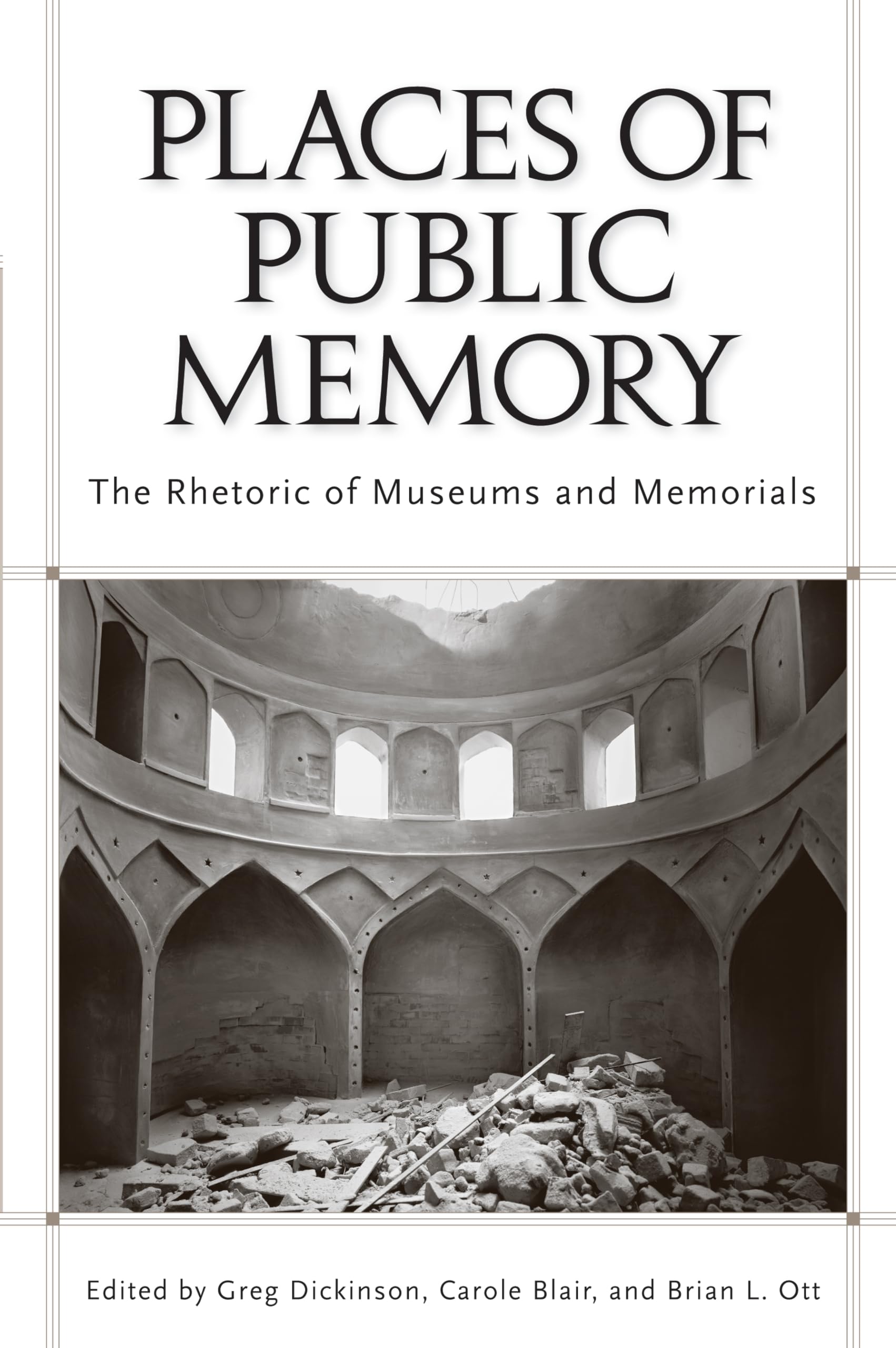
Places Of Public Memory: The Rhetoric Of Museums And Memorials (Rhetoric, Culture, And Social Critique)
Sold by Ergodebooks, an authorized reseller.
Returns accepted within 30 days | support@ergodebooks.com
Shipping Information
- Free Standard Shipping — United States only
- Processing Time: 3–5 business days
- Estimated Delivery: 6–10 business days after dispatch
- Double-boxed, fully insured & discreetly packaged
- Tracking number sent via email once dispatched
Returns & Refund
Returns accepted within 30 days of delivery.
Damaged or Defective Item
Free return shipping + replacement or full refund
Wrong Item Received
Free return shipping + replacement or full refund
Change of Mind
Return shipping at customer's expense · 25% restocking fee applies
Payment Option

A Sustained And Rigorous Consideration Of The Intersections Of Memory, Place, And Rhetoricthough We Live In A Time When Memory Seems To Be Losing Its Hold On Communities, Memory Remains Central To Personal, Communal, And National Identities. And Although Popular And Public Discourses From Speeches To Films Invite A Shared Sense Of The Past, Official Sites Of Memory Such As Memorials, Museums, And Battlefields Embody Unique Rhetorical Principles.Places Of Public Memory: The Rhetoric Of Museums And Memorials Is A Sustained And Rigorous Consideration Of The Intersections Of Memory, Place, And Rhetoric. From The Mnemonic Systems Inscribed Upon Ancient Architecture To The Roadside Accident Memorials That Line Americas Highways, Memory And Place Have Always Been Deeply Interconnected. This Book Investigates The Intersections Of Memory And Place Through Nine Original Essays Written By Leading Memory Studies Scholars From The Fields Of Rhetoric, Media Studies, Organizational Communication, History, Performance Studies, And English. The Essays Address, Among Other Subjects, The Rhetorical Strategies Of Those Vying For Competing Visions Of A 9/11 Memorial At New York Citys Ground Zero; Rhetorics Of Resistance Embedded In The Plans For An Expansion Of The National Civil Rights Museum; Representations Of Nuclear Energyboth As Power Source And Weaponin Cold War And Postcold War Museums; And Tours And Tourism As Acts Of Performance.By Focusing On Official Places Of Memory, The Collection Causes Readers To Reflect On How Nations And Local Communities Remember History And On How Some Voices And Views Are Legitimated And Others Are Minimized Or Erased.
⚠️ WARNING (California Proposition 65):
This product may contain chemicals known to the State of California to cause cancer, birth defects, or other reproductive harm.
For more information, please visit www.P65Warnings.ca.gov.
- Q: What is 'Places of Public Memory: The Rhetoric of Museums and Memorials' about? A: 'Places of Public Memory: The Rhetoric of Museums and Memorials' explores the relationship between memory, place, and rhetoric, focusing on how official sites like memorials and museums embody unique rhetorical principles.
- Q: Who is the author of this book? A: The book is authored by Greg Dickinson, a leading scholar in the field of memory studies.
- Q: How many pages does this book have? A: The book contains 296 pages.
- Q: What is the publication date of this book? A: It was published on August 2, 2010.
- Q: Is this book in hardcover or paperback? A: The book is available in paperback binding.
- Q: What subjects do the essays in this book cover? A: The essays cover various subjects, including the rhetorical strategies of 9/11 memorials, resistance in the National Civil Rights Museum plans, and representations of nuclear energy in museums.
- Q: Is this book suitable for academic study? A: Yes, this book is suitable for academic study, as it features original essays from scholars in rhetoric, media studies, history, and related fields.
- Q: What themes are explored in the book? A: The book explores themes of memory, place, identity, and the rhetorical implications of how history is remembered and represented.
- Q: Does the book include illustrations? A: Yes, the book is labeled as 'Illustrated', indicating that it contains visual elements to complement the text.
- Q: What is the target audience for this book? A: The target audience includes students, researchers, and readers interested in memory studies, rhetoric, and cultural critique.