
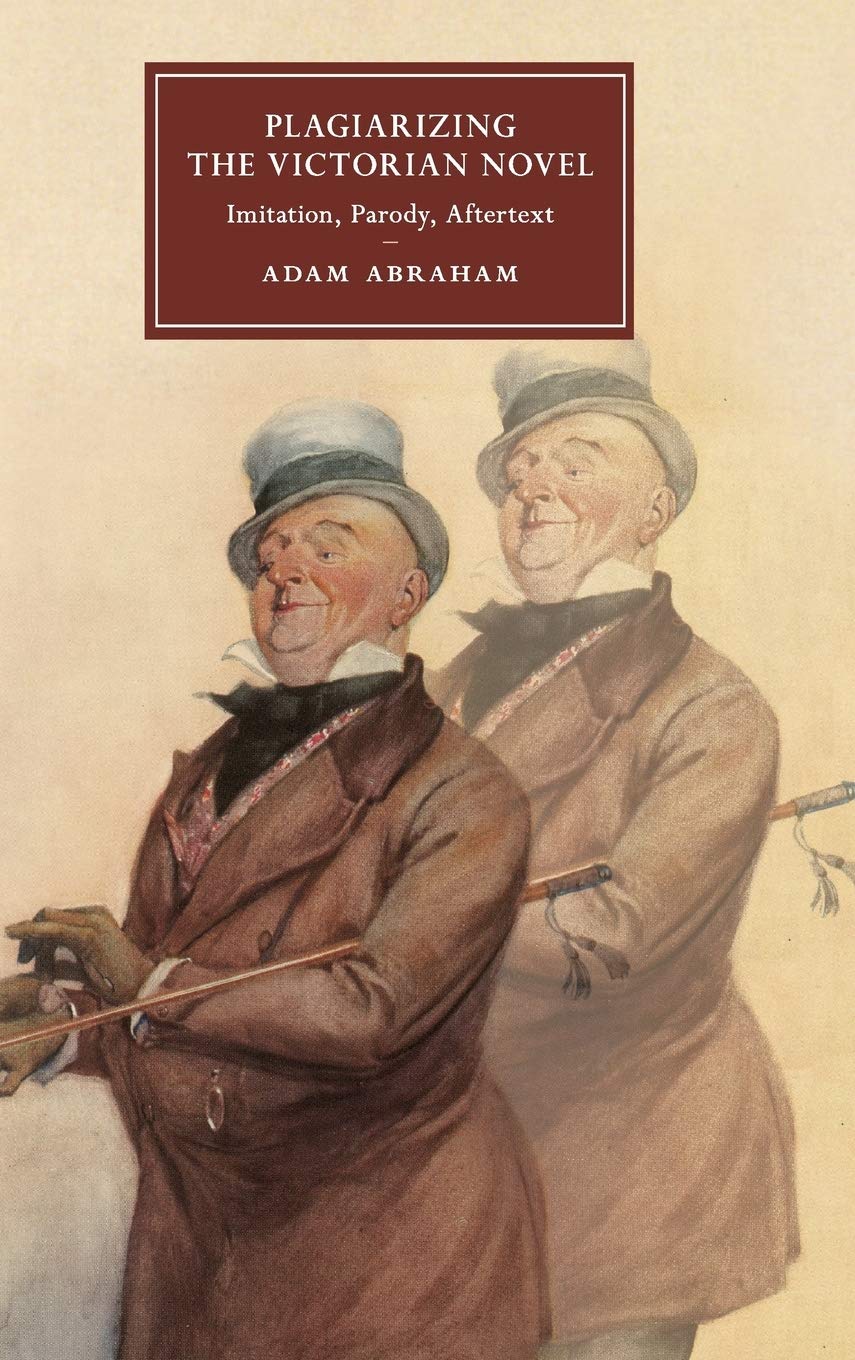
Title

Plagiarizing the Victorian Novel: Imitation, Parody, Aftertext (Cambridge Studies in NineteenthCentury Literature and Culture, ,Used
Sold by Ergodebooks, an authorized reseller.
Returns accepted within 30 days | support@ergodebooks.com
Shipping Information
- Free Standard Shipping — United States only
- Processing Time: 3–5 business days
- Estimated Delivery: 6–10 business days after dispatch
- Double-boxed, fully insured & discreetly packaged
- Tracking number sent via email once dispatched
Returns & Refund
Returns accepted within 30 days of delivery.
Damaged or Defective Item
Free return shipping + replacement or full refund
Wrong Item Received
Free return shipping + replacement or full refund
Change of Mind
Return shipping at customer's expense · 25% restocking fee applies
Payment Option

How can we tell plagiarism from an allusion? How does imitation differ from parody? Where is the line between copyright infringement and homage? Questions of intellectual property have been vexed long before our own age of online piracy. In Victorian Britain, enterprising authors tested the limits of literary ownership by generating plagiaristic publications based on leading writers of the day. Adam Abraham illuminates these issues by examining imitations of three novelists: Charles Dickens, Edward Bulwer Lytton, and George Eliot. Readers of Oliver Twist may be surprised to learn about Oliver Twiss, a penny serial that usurped Dickens's characters. Such imitative publications capture the essence of their sources; the caricature, although crude, is necessarily clear. By reading works that emulate three nineteenthcentury writers, this innovative study enlarges our sense of what literary knowledge looks like: to know a particular author means to know the sometimes bad imitations that the author inspired.
⚠️ WARNING (California Proposition 65):
This product may contain chemicals known to the State of California to cause cancer, birth defects, or other reproductive harm.
For more information, please visit www.P65Warnings.ca.gov.
- Q: What is the page count of this book? A: This book has two hundred ninety-eight pages. It provides an in-depth exploration of Victorian literature and its themes.
- Q: What binding does this book have? A: The book is bound in hardcover. This ensures durability and a high-quality feel for readers.
- Q: What are the dimensions of this book? A: The book measures six point two six inches in length, one inch in width, and nine point two five inches in height. These dimensions make it a standard size for hardcover novels.
- Q: Who is the author of 'Plagiarizing the Victorian Novel'? A: The author is Adam Abraham. He specializes in Victorian literature and intellectual property issues.
- Q: What genre does this book belong to? A: This book is categorized as Victorian literature. It discusses themes of imitation and parody within that literary period.
- Q: Is this book suitable for academic study? A: Yes, this book is suitable for academic study. It provides critical insights into plagiarism and literary ownership during the Victorian era.
- Q: How do I engage with the themes in this book? A: To engage with the themes, read through the examples of imitation and parody. Consider historical context and how it applies to modern issues of plagiarism.
- Q: Is this book appropriate for high school students? A: Yes, this book is appropriate for high school students, especially those studying literature. It offers valuable insights into literary analysis.
- Q: Can I use this book for a literature class? A: Yes, this book can be used for a literature class. It provides comprehensive discussions on Victorian authors and their imitations.
- Q: How should I store this book to keep it in good condition? A: Store this book upright on a shelf in a dry place. Avoid direct sunlight to prevent fading of the cover.
- Q: What is the best way to clean this book? A: To clean this book, gently dust the cover and pages with a soft, dry cloth. Avoid using liquid cleaners.
- Q: Can I return this book if I'm not satisfied? A: Yes, you can return this book if you're not satisfied. Check the return policy for specific details and conditions.
- Q: What should I do if my book arrives damaged? A: If your book arrives damaged, contact the seller immediately for a replacement or refund. Provide photos of the damage if possible.
- Q: Is this book a reliable source for research? A: Yes, this book is a reliable source for research. It provides well-researched information on Victorian literary practices.
- Q: How does this book compare to other studies on Victorian literature? A: This book offers a unique perspective by focusing on plagiarism and imitation, which may not be covered in other studies.
- Q: Does this book include references or citations? A: Yes, the book includes references and citations. This supports the author's arguments and provides further reading opportunities.