
Title
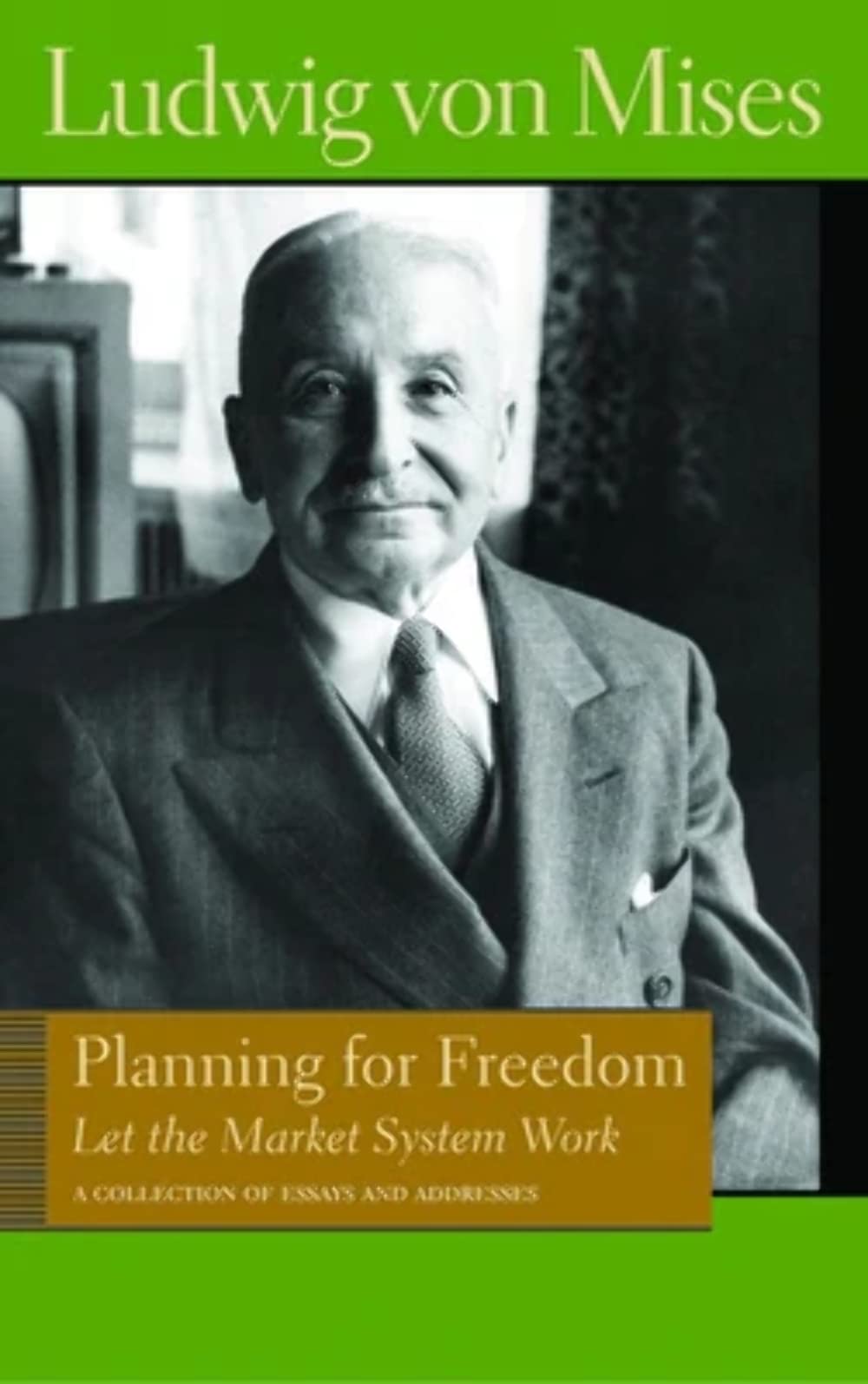
Planning for Freedom: Let the Market System Work; A Collection of Essays and Addresses (Liberty Fund Library of the Works of Lud,New
Sold by Ergodebooks, an authorized reseller.
Returns accepted within 30 days | support@ergodebooks.com
Shipping Information
- Free Standard Shipping — United States only
- Processing Time: 3–5 business days
- Estimated Delivery: 6–10 business days after dispatch
- Double-boxed, fully insured & discreetly packaged
- Tracking number sent via email once dispatched
Returns & Refund
Returns accepted within 30 days of delivery.
Damaged or Defective Item
Free return shipping + replacement or full refund
Wrong Item Received
Free return shipping + replacement or full refund
Change of Mind
Return shipping at customer's expense · 25% restocking fee applies
Payment Option

In this anthology, Mises offers an articulate and accessible introduction to and critique of two topics he considers especially important: inflation and government interventionism. Mises believes inflation, that is monetary expansion, is destructive; it destroys savings and investment, which are the basis for production and prosperity. Government controls and economic planning never accomplish what their proponents intend. Mises consistently argues that the solution to government intervention is free markets and free enterprise, which call for reforming government. For that, ideas must be changed to let the market system work. There is no better planning for freedom than this.The seventeen essays in Planning for Freedom: Let the Market System Work are tied together by one overarching idea, best expressed by Mises in the capstone essay Profit and Loss. The essays in the final section of the book summarize Misess contributions to economic thought and emphasize his firm belief in the power of ideas.Ludwig von Mises (18811973) was the leading spokesman of the Austrian School of economics throughout most of the twentieth century.Bettina Bien Greaves is a former resident scholar and trustee of the Foundation for Economic Education and was a senior staff member at FEE from 1951 to 1999.
⚠️ WARNING (California Proposition 65):
This product may contain chemicals known to the State of California to cause cancer, birth defects, or other reproductive harm.
For more information, please visit www.P65Warnings.ca.gov.
- Q: What is the main theme of 'Planning for Freedom' by Ludwig von Mises? A: The main theme of 'Planning for Freedom' revolves around the critique of inflation and government interventionism, advocating for free markets and free enterprise as the solution to economic challenges.
- Q: How many essays are included in this book? A: The book contains seventeen essays that explore various aspects of economic thought and the principles of free markets.
- Q: What is the condition of the book? A: The book is listed as 'Used Book in Good Condition', but specific details about its physical condition can vary.
- Q: Who is the author of 'Planning for Freedom'? A: The author of 'Planning for Freedom' is Ludwig von Mises, a prominent economist associated with the Austrian School of economics.
- Q: When was 'Planning for Freedom' published? A: 'Planning for Freedom' was published on August 19, 2008.
- Q: What topics does Mises address in his essays? A: Mises addresses critical topics such as the dangers of inflation, the failures of government controls, and the need for economic reform through free market principles.
- Q: Is there any specific focus on government intervention in the book? A: Yes, Mises critiques government interventionism and argues that it often leads to unintended negative consequences, emphasizing the importance of allowing market forces to operate freely.
- Q: Who contributed to the book as an editor or scholar? A: Bettina Bien Greaves is noted as a former resident scholar and trustee of the Foundation for Economic Education, who played a significant role in the book's publication.
- Q: What is the binding type of this book? A: The book is available in paperback binding.
- Q: How many pages does 'Planning for Freedom' contain? A: 'Planning for Freedom' contains a total of 192 pages.