
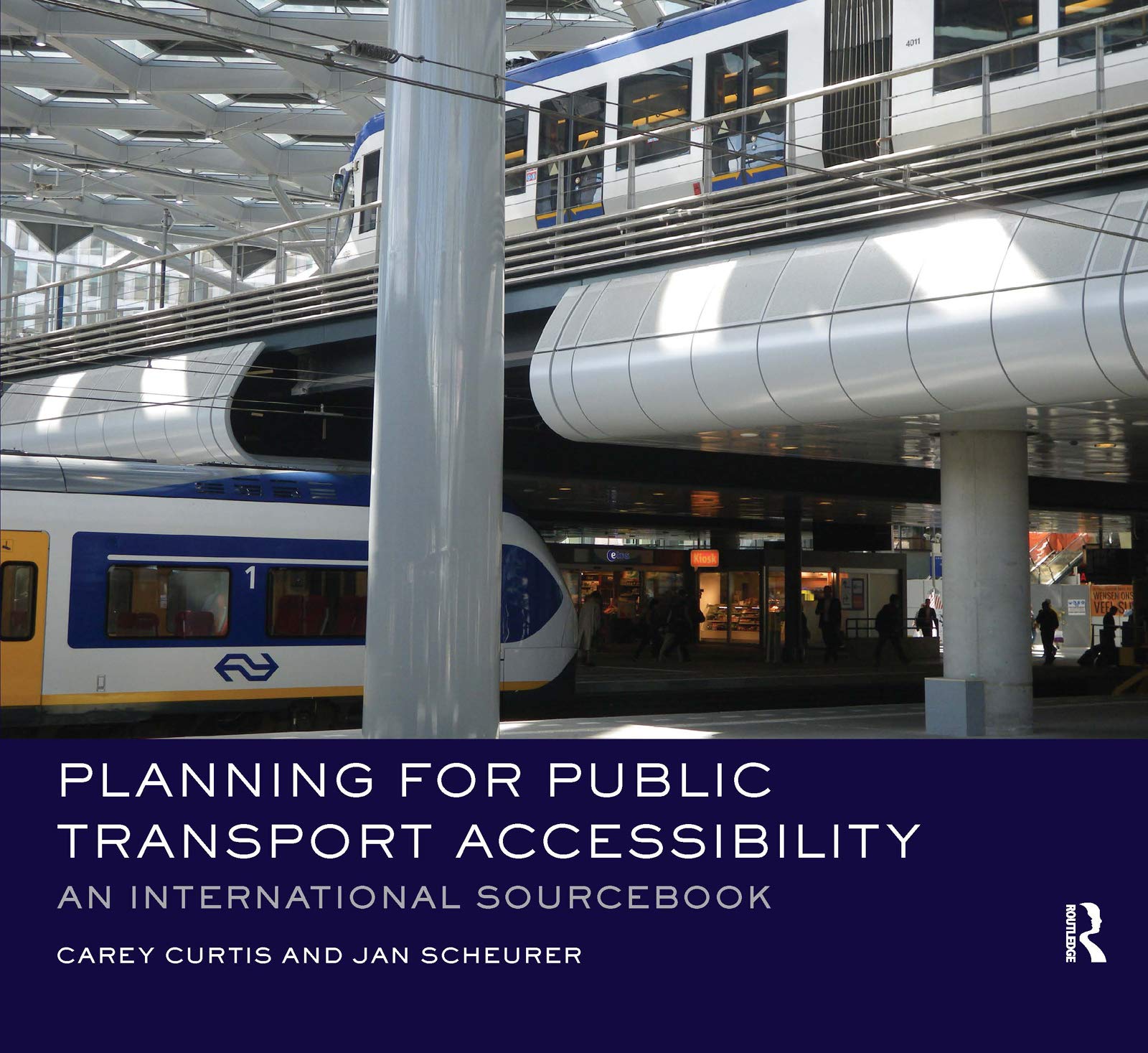
Title
Planning For Public Transport Accessibility: An International Sourcebook
Sold by Ergodebooks, an authorized reseller.
Returns accepted within 30 days | support@ergodebooks.com
Shipping Information
- Free Standard Shipping — United States only
- Processing Time: 3–5 business days
- Estimated Delivery: 6–10 business days after dispatch
- Double-boxed, fully insured & discreetly packaged
- Tracking number sent via email once dispatched
Returns & Refund
Returns accepted within 30 days of delivery.
Damaged or Defective Item
Free return shipping + replacement or full refund
Wrong Item Received
Free return shipping + replacement or full refund
Change of Mind
Return shipping at customer's expense · 25% restocking fee applies
Payment Option

Bringing Together A Comparative Analysis Of The Accessibility By Public Transport Of 23 Cities Spanning Four Continents, This Book Provides A Handson Introduction To The Evolution, Rationale And Effectiveness Of A New Generation Of Accessibility Planning Tools That Have Emerged Since The Mid2000S. The Spatial Network Analysis For Multimodal Urban Transport Systems (Snamuts) Tool Is Used As A Practical Example To Demonstrate How City Planners Can Find Answers As They Seek To Improve Public Transport Accessibility. Uniquely Among The New Generation Of Accessibility Tools, Snamuts Has Been Designed For Multicity Comparisons. A Range Of Indicators Are Employed In Each City Including: The Effectiveness Of The Public Transport Network; The Relationship Between The Transport Network And Land Use Activity; Who Gets Access Within The City; And How Resilient The City Will Be. The Cities Selected Enable A Comparison Between Cities By Old Worldnew World; Public Transport Modes; Governance Approach; Urban Development Constraints. The Book Is Arranged Along Six Themes That Address The Different Planning Challenges Cities Confront. Richly Illustrated With Maps And Diagrams, This Volume Acts As A Comprehensive Sourcebook Of Accessibility Indicators And A Snapshot Of Current Policy Making Around The World In The Realm Of Strategic Planning For Land Use Transport Integration And The Growth Of Public Transport. It Provides A Deeper Understanding Of The Complexity, Opportunities And Challenges Of Twentyfirstcentury Accessibility Planning.
⚠️ WARNING (California Proposition 65):
This product may contain chemicals known to the State of California to cause cancer, birth defects, or other reproductive harm.
For more information, please visit www.P65Warnings.ca.gov.
- Q: What is the main focus of the book 'Planning for Public Transport Accessibility'? A: The book provides a comparative analysis of public transport accessibility in 23 cities across four continents, focusing on the evolution and effectiveness of new accessibility planning tools.
- Q: Who is the author of the book and what is their expertise? A: The author is Carey Curtis, who is knowledgeable in environmental economics and urban planning, providing insights into accessibility planning.
- Q: What are some key tools or frameworks discussed in this book? A: The book highlights the Spatial Network Analysis for Multimodal Urban Transport Systems (SNAMUTS) tool, which facilitates multi-city comparisons of public transport accessibility.
- Q: How does the book address the challenges of urban transport planning? A: It is organized around six themes that tackle various planning challenges faced by cities, utilizing indicators like the effectiveness of transport networks and land use relationships.
- Q: What type of illustrations can readers expect in this book? A: The book is richly illustrated with maps and diagrams that complement the textual content and enhance the understanding of accessibility indicators.
- Q: Is this book suitable for both researchers and practitioners? A: Yes, the book serves as a comprehensive sourcebook of accessibility indicators, making it valuable for both researchers and urban planners.
- Q: What condition is the book in and what is its binding type? A: The book is in new condition and is available in a paperback binding.
- Q: When was the book published? A: The book was published on September 30, 2020.
- Q: How many pages does the book contain? A: The book contains 310 pages.
- Q: Can this book help in understanding global public transport policies? A: Yes, it provides insights into current policy-making around the world regarding strategic planning for land use and transport integration.