
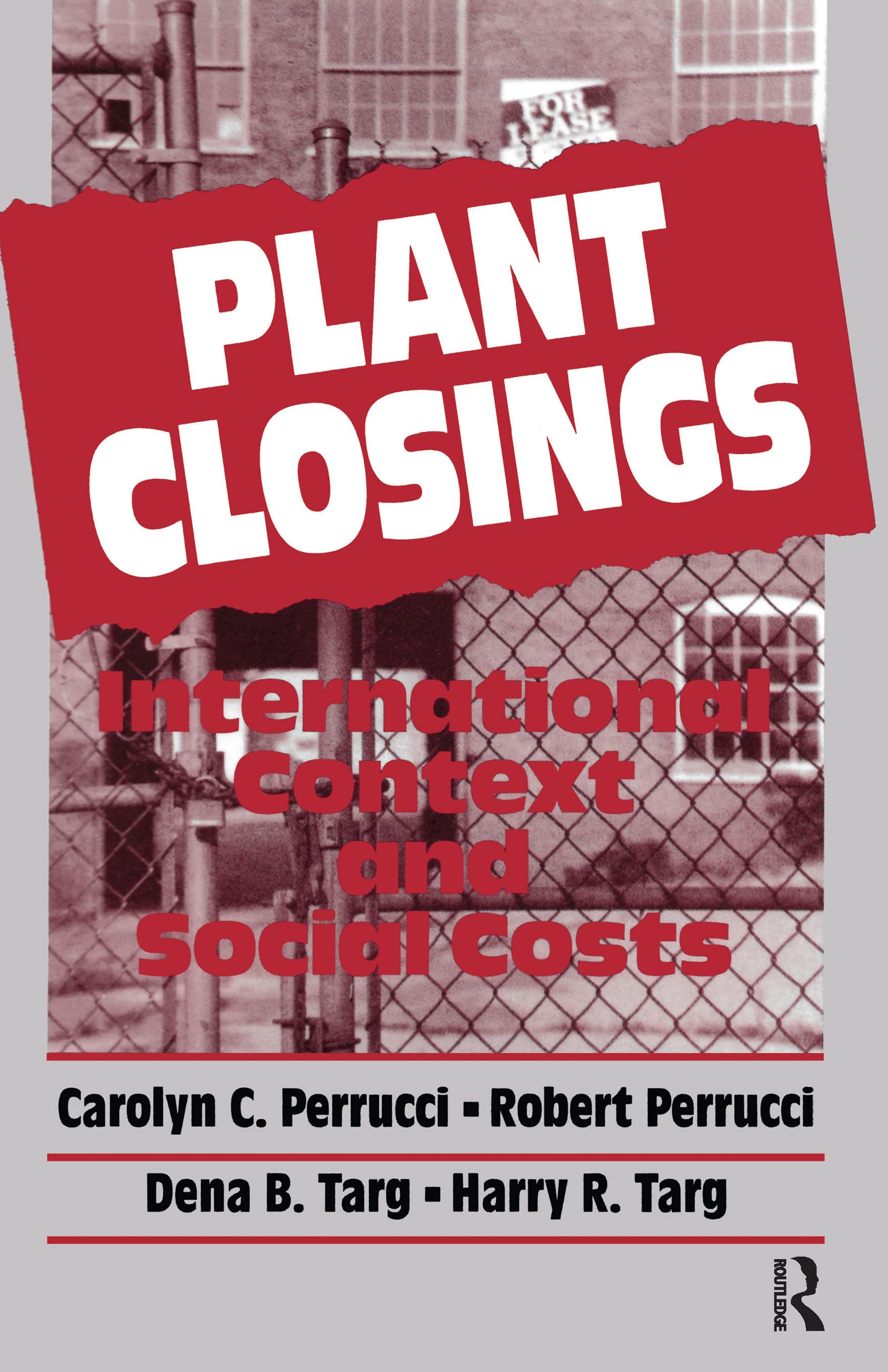
Title
Plant Closings: International Context and Social Costs (Social Institutions and Social Change),Used
Sold by Ergodebooks, an authorized reseller.
Returns accepted within 30 days | support@ergodebooks.com
Shipping Information
- Free Standard Shipping — United States only
- Processing Time: 3–5 business days
- Estimated Delivery: 6–10 business days after dispatch
- Double-boxed, fully insured & discreetly packaged
- Tracking number sent via email once dispatched
Returns & Refund
Returns accepted within 30 days of delivery.
Damaged or Defective Item
Free return shipping + replacement or full refund
Wrong Item Received
Free return shipping + replacement or full refund
Change of Mind
Return shipping at customer's expense · 25% restocking fee applies
Payment Option

PLANT CLOSEDA sign of the times? These two words have had profound meaning for workers in every factory and office across the country. Millions of workers who have already been displaced by closings have had to pick up the pieces of shattered lives and get on with the business of living. Those who are still working are faced with the insecurity of wondering whether they might find the gates closed some morning when they arrive at work. The number of plant closings and the threat of future closings have raised many questions.What has been happening to the American economy that has resulted in major companies closing their doors? What forces within the international and national political economies are converging to reshape the labor force, eliminating jobs in manufacturing and expanding employment in the lower wage, insecure manufacturing sector? What happens to displaced workers, their families, and the community in which they work?In Plant Closings, the authors examine the reasons plants close and the social, economic, and psychological consequences. A variety of causes are identified including capital flight, decreasing profit rates, and the pursuit of lower labor costs. Through the analysis of a case study the authors examine the changing health patterns, political attitudes, and financial stability of displaced workers. There is also discussion of the impact on the community at large and on the individual institutions within the community. Finally, the authors analyze legislation that addresses the human and social costs of unemployment.Carolyn C. Perrucci is professor of sociology in the Department of Sociology and Anthropology at Purdue University. Robert Perrucci is professor of sociology in the Department of Sociology and Anthropology at Purdue University. Dena B. Targ is professor in the Department of Child Development and Family Studies at Purdue University. Harry R. Targ is professor in the Department of Political Science at Purdue University.
⚠️ WARNING (California Proposition 65):
This product may contain chemicals known to the State of California to cause cancer, birth defects, or other reproductive harm.
For more information, please visit www.P65Warnings.ca.gov.