If you have any questions, you are always welcome to contact us. We'll get back to you as soon as possible, withing 24 hours on weekdays.
Customer service
All questions about your order, return and delivery must be sent to our customer service team by e-mail at yourstore@yourdomain.com
Sale & Press
If you are interested in selling our products, need more information about our brand or wish to make a collaboration, please contact us at press@yourdomain.com
Help
If you have any questions, you are always welcome to contact us. We'll get back to you as soon as possible, withing 24 hours on weekdays.
Customer service
All questions about your order, return and delivery must be sent to our customer service team by e-mail at yourstore@yourdomain.com
Sale & Press
If you are interested in selling our products, need more information about our brand or wish to make a collaboration, please contact us at press@yourdomain.com
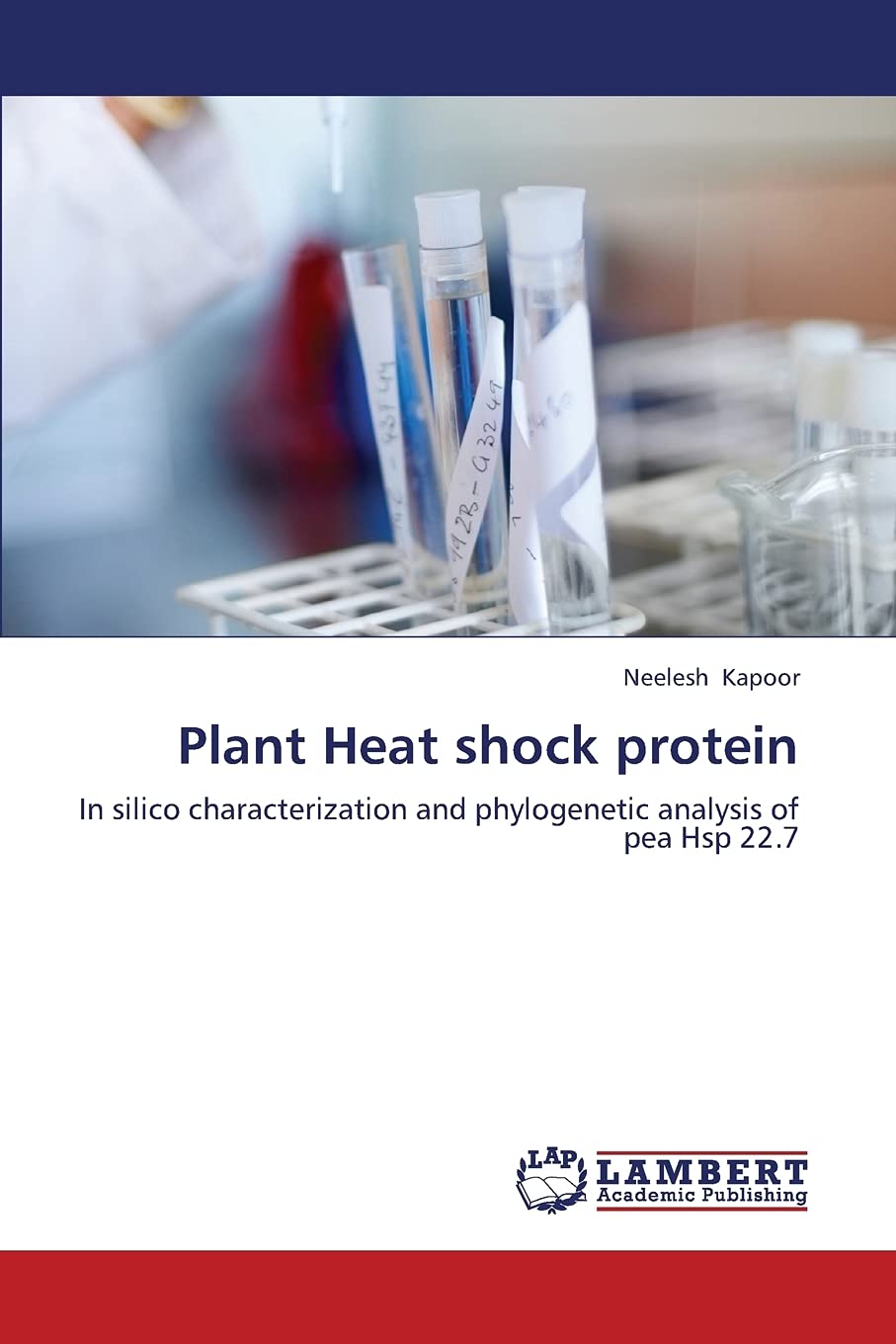
Abiotic stress is the primary cause of crop loss worldwide, reducing average yields for most crop plants by more than 50%. Hsps/chaperones cooperate in cellular protection and play complementary and sometimes overlapping roles in the protection of proteins from stress. A rapid progress in insilico analysis in the past decade has had a major impact on the study of plant tolerance. In this book a detailed in silico analysis of heat shock proteins in pea (Pisum sativum) has been performed. Most techniques of bioinformatics are used to extract interesting information and find important proteins. Information about pea small heat shock protein may allow researchers to more accurate and comprehensive understanding of the mechanism of tolerance in plant. This book follows the practical approaches in guiding the researchers, taking them through bioinformatics and its application in the plant system. This book should prove an invaluable asset to students and researchers in the field of plant abiotic stress, plant physiology, bioinformatics, plant biotechnology and molecular biology.
⚠️ WARNING (California Proposition 65):
This product may contain chemicals known to the State of California to cause cancer,
birth defects, or other reproductive harm.
For MAP (Minimum Advertised Price) violations and Intellectual Property (IP) or Trademark concerns, please contact:
support@ergodebooks.com
⚠️ California Proposition 65 Warning: Some products sold on this website may expose you to chemicals known to the State of California to cause cancer, birth defects, or other reproductive harm. For more information, visit www.P65Warnings.ca.gov.