
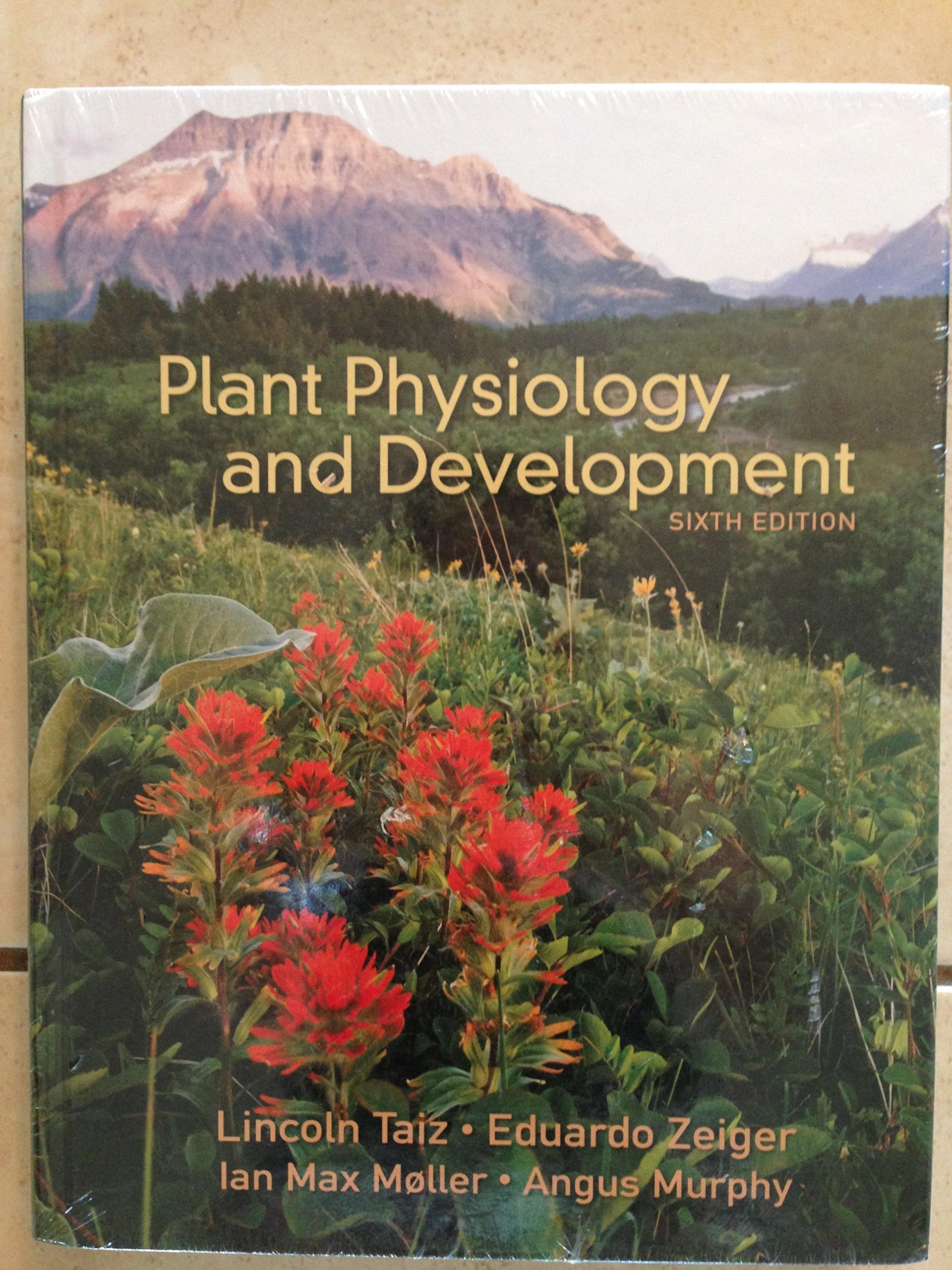
Title
Plant Physiology and Development,Used
Sold by Ergodebooks, an authorized reseller.
Returns accepted within 30 days | support@ergodebooks.com
Shipping Information
- Free Standard Shipping — United States only
- Processing Time: 3–5 business days
- Estimated Delivery: 6–10 business days after dispatch
- Double-boxed, fully insured & discreetly packaged
- Tracking number sent via email once dispatched
Returns & Refund
Returns accepted within 30 days of delivery.
Damaged or Defective Item
Free return shipping + replacement or full refund
Wrong Item Received
Free return shipping + replacement or full refund
Change of Mind
Return shipping at customer's expense · 25% restocking fee applies
Payment Option

Throughout its twentytwo year history, the authors of Plant Physiology have continually updated the book to incorporate the latest advances in plant biology and implement pedagogical improvements requested by adopters. This has made Plant Physiology the most authoritative, comprehensive, and widely used upperdivision plant biology textbook. In the Sixth Edition, the Growth and Development section (Unit III) has been reorganized and expanded to present the complete life cycle of seed plants from germination to senescence. In recognition of this enhancement, the text has been renamed Plant Physiology and Development. As before, Unit III begins with updated chapters on Cell Walls and Signals and Signal Transduction. The latter chapter has been expanded to include a discussion of major signaling molecules, such as calcium ions and plant hormones. A new, unified chapter entitled Signals from Sunlight has replaced the two FifthEdition chapters on Phytochrome and Blue Light Responses. This chapter includes phytochrome, as well as the blue and UV light receptors and their signaling pathways, including phototropins, cryptochromes, and UVR8. The subsequent chapters in Unit III are devoted to describing the stages of development from embryogenesis to senescence and the many physiological and environmental factors that regulate them. The result provides students with an improved understanding of the integration of hormones and other signaling agents in developmental regulation.The new organization of Unit III has the added benefit that it minimizes redundancy, making it possible to reduce the number of chapters in the Unit from 13 to 11. Angus Murphy of the University of Maryland has headed up a team of authors and editors to implement the revision. Ian Max Mller has subsequently edited all the book chapters to ensure an even high quality and consistency level.In addition to the organizational changes noted above, two new chapters on stress are included:*A new chapter titled Biotic Interactionsreplacing the FifthEdition Chapter 13 on Secondary Metabolites and Plant Defensediscusses the integrated signaling responses to a spectrum of biological agents.*A completely rewritten chapter on Abiotic Stress discusses the use of genomics, systems biology, imaging, and bioinformatics tools in the study of abiotic stress. Recent efforts to develop droughttolerant maize and floodtolerant rice are described, as well as the role of ABA receptors, newlyidentified regulatory networks, epigenetic changes in response to abiotic stress, and rapid systemic signaling.The Sixth Edition of Plant Physiology and Development also includes updated and improved versions of the physiological chapters in Units I and II. A new chapter on Stomatal Biology has been added to Unit II. The chapters on Mineral Nutrition and Assimilation of Inorganic Nutrients feature a new treatment of nitrogen metabolism:*Ammonium and nitrate are often lumped together as inorganic nitrogen although their influences on plants are quite different, almost like two different elements. These two forms of nitrogen are therefore treated separately in the Sixth Edition.*The pathway of all nutrients essential in the human diet begins with plant roots "mining" the soil for mineral elements; the Sixth Edition explicitly examines the linkage between plant nutrition and human health.*The response of plants to rising atmospheric levels of carbon dioxide depends most strongly on their nitrogen status. The Sixth Edition describes the newly discovered mechanism for this dependence and how it will influence food quality in the future.*Exciting new findings on the mechanisms of mycorrhizal associations and symbiotic nitrogen fixation will be added, providing insights about the interdependence of plants and microorganisms.The goal, as always, is to provide the best educational foundation possible for the next generation of plant biologists.RESOURCESFor the StudentCOMPANION
⚠️ WARNING (California Proposition 65):
This product may contain chemicals known to the State of California to cause cancer, birth defects, or other reproductive harm.
For more information, please visit www.P65Warnings.ca.gov.
- Q: How many pages does this book have? A: The book has seven hundred sixty-one pages. This extensive page count provides in-depth coverage of plant physiology and development.
- Q: What is the binding type of this book? A: The book is hardcover. This durable binding is designed to withstand frequent use, making it ideal for students and professionals.
- Q: What are the dimensions of the book? A: The book measures eleven inches in length, eight point seven inches in height, and one point two inches in width. These dimensions make it a substantial resource for study.
- Q: Who is the author of this book? A: The author is Lincoln Taiz. He is a recognized expert in the field of plant biology, contributing significantly to the text.
- Q: What is the main focus of the book? A: The book focuses on plant physiology and development. It covers the complete life cycle of seed plants, integrating various physiological processes.
- Q: How do I use this book for studying? A: You can use the book as a primary textbook for upper-division plant biology courses. It includes updated chapters and study questions to aid comprehension.
- Q: Is this book suitable for beginners in plant biology? A: Yes, this book can be suitable for beginners. However, it is primarily designed for upper-division students and may be challenging for complete novices.
- Q: Can I use this book for self-study? A: Yes, this book is excellent for self-study. It includes companion website resources and study questions to enhance learning.
- Q: How should I care for this hardcover book? A: To care for the book, keep it in a dry place and avoid exposure to direct sunlight. This will help preserve the cover and pages.
- Q: Is there a companion website for this book? A: Yes, there is a companion website available free of charge. It offers additional resources, including web topics and study questions for each chapter.
- Q: What should I do if the book arrives damaged? A: If the book arrives damaged, you should contact the retailer for a return or exchange. Most retailers offer a satisfaction guarantee.
- Q: Does this book include chapters on stress in plants? A: Yes, the book includes new chapters on biotic and abiotic stress. These chapters discuss integrated signaling responses to stress factors.
- Q: Are there updates in the latest edition of this book? A: Yes, the latest edition has been updated to include recent advances in plant biology and pedagogical improvements.
- Q: What can I learn from this book about plant hormones? A: You can learn about the integration of hormones in developmental regulation. The book discusses major signaling molecules and their roles in plant growth.
- Q: Is this book part of a series? A: Yes, this book is part of a well-regarded series on plant physiology. It has been continually updated over twenty-two years.
- Q: What type of illustrations does the book include? A: The book includes high-quality illustrations and figures. These visuals aid in understanding complex physiological processes.