If you have any questions, you are always welcome to contact us. We'll get back to you as soon as possible, withing 24 hours on weekdays.
Customer service
All questions about your order, return and delivery must be sent to our customer service team by e-mail at yourstore@yourdomain.com
Sale & Press
If you are interested in selling our products, need more information about our brand or wish to make a collaboration, please contact us at press@yourdomain.com
Help
If you have any questions, you are always welcome to contact us. We'll get back to you as soon as possible, withing 24 hours on weekdays.
Customer service
All questions about your order, return and delivery must be sent to our customer service team by e-mail at yourstore@yourdomain.com
Sale & Press
If you are interested in selling our products, need more information about our brand or wish to make a collaboration, please contact us at press@yourdomain.com
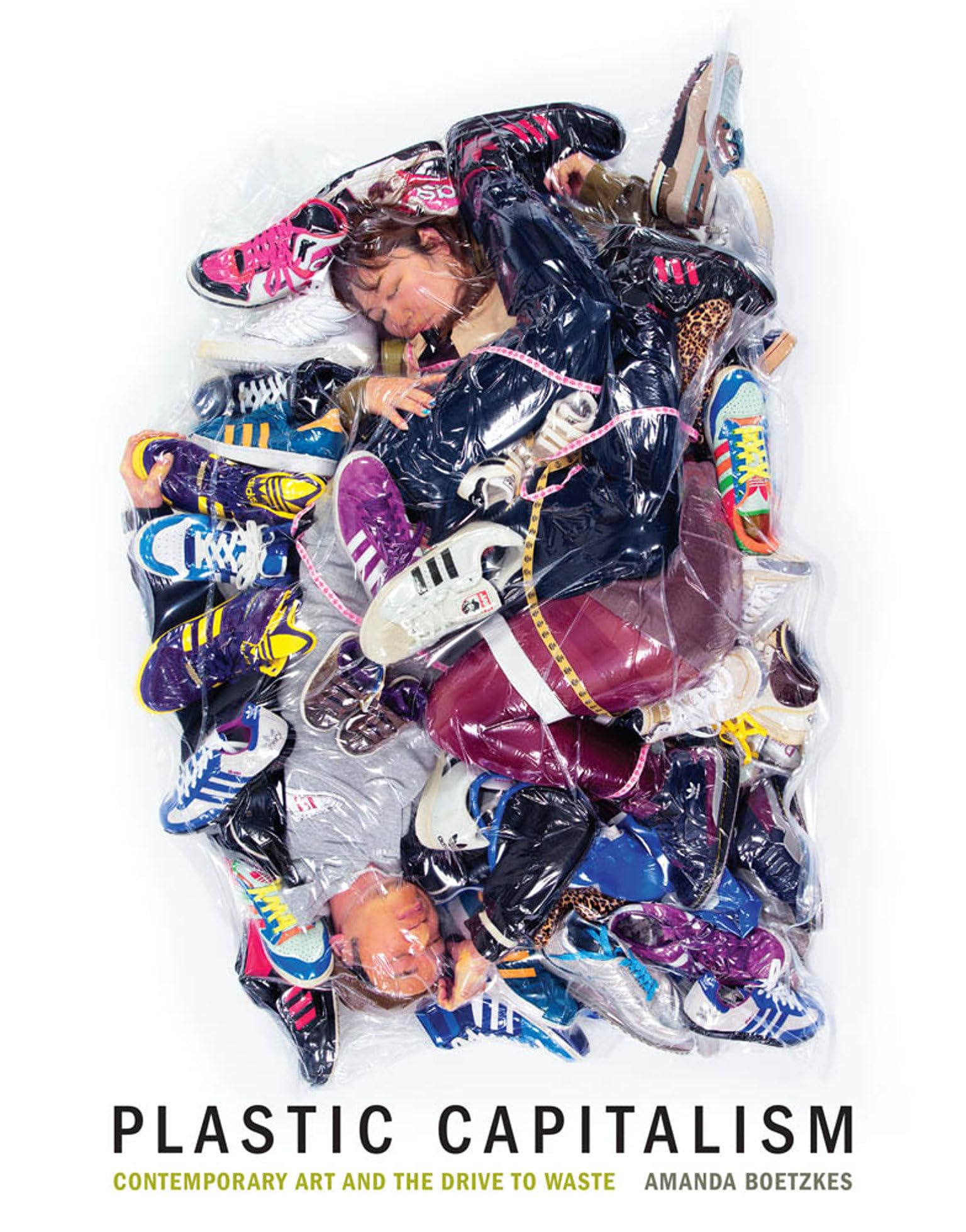
An argument for the centrality of the visual culture of wasteas seen in works by international contemporary artiststo the study of our ecological condition.Ecological crisis has driven contemporary artists to engage with waste in its most nonbiodegradable forms: plastics, ewaste, toxic waste, garbage hermetically sealed in landfills. In this provocative and original book, Amanda Boetzkes links the increasing visualization of waste in contemporary art to the rise of the global oil economy and the emergence of ecological thinking. Often, when art is analyzed in relation to the political, scientific, or ecological climate, it is considered merely illustrative. Boetzkes argues that art is constitutive of an ecological consciousness, not simply an extension of it. The visual culture of waste is central to the study of the ecological condition.Boetzkes examines a series of works by an international roster of celebrated artists, including Thomas Hirschhorn, Francis Als, Song Dong, Tara Donovan, Agns Varda, Gabriel Orozco, and Mel Chin, among others, mapping waste art from its modernist origins to the development of a new waste imaginary generated by contemporary artists. Boetzkes argues that these artists do not offer a predictable or facile critique of consumer culture. Bearing this in mind, she explores the ambivalent relationship between waste (both aestheticized and reviled) and a global economic regime that curbs energy expenditure while promoting profitable forms of resource consumption.
⚠️ WARNING (California Proposition 65):
This product may contain chemicals known to the State of California to cause cancer,
birth defects, or other reproductive harm.
For MAP (Minimum Advertised Price) violations and Intellectual Property (IP) or Trademark concerns, please contact:
support@ergodebooks.com
⚠️ California Proposition 65 Warning: Some products sold on this website may expose you to chemicals known to the State of California to cause cancer, birth defects, or other reproductive harm. For more information, visit www.P65Warnings.ca.gov.