
Title
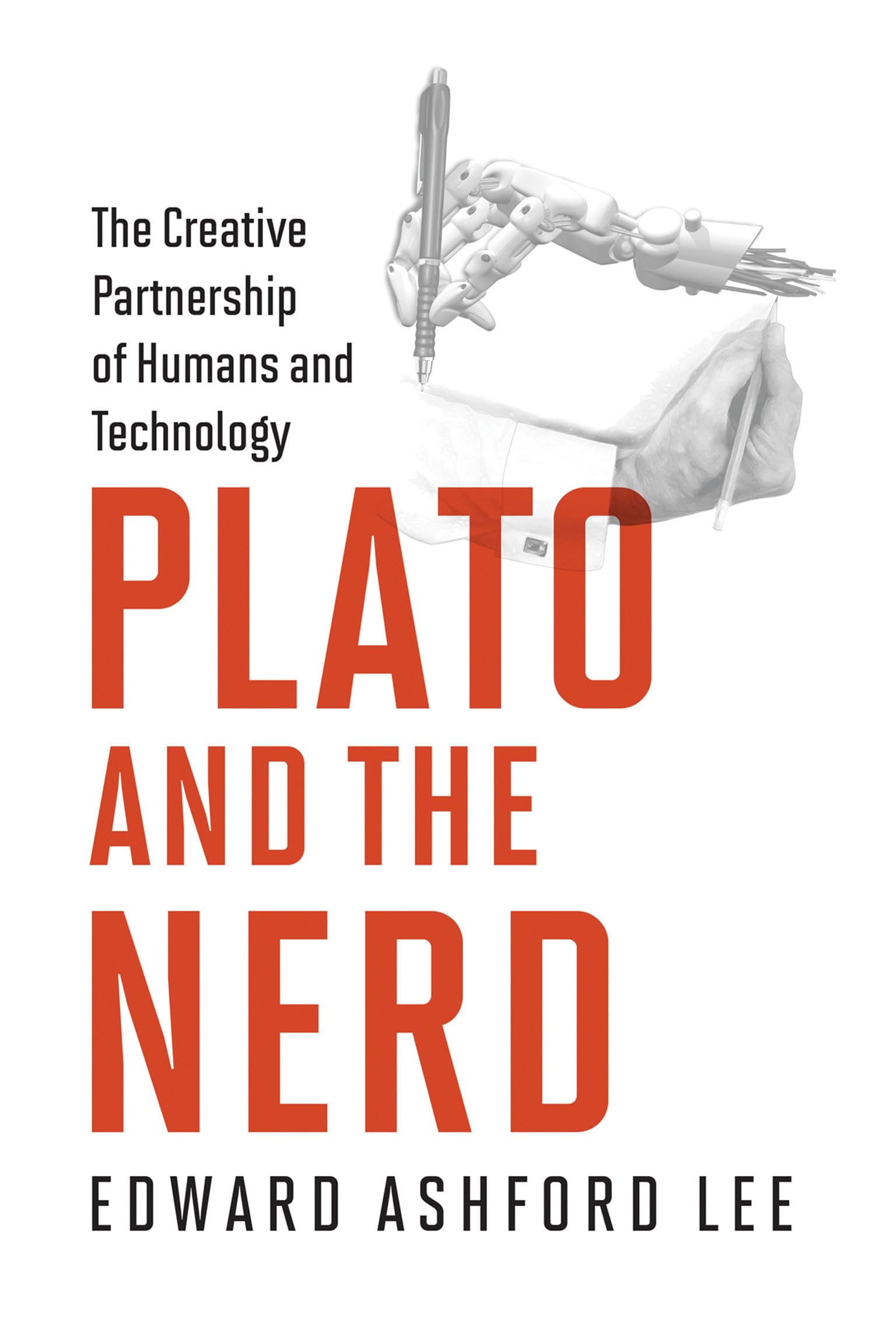
Plato and the Nerd: The Creative Partnership of Humans and Technology (Mit Press),New
Sold by Ergodebooks, an authorized reseller.
Returns accepted within 30 days | support@ergodebooks.com
Shipping Information
- Free Standard Shipping — United States only
- Processing Time: 3–5 business days
- Estimated Delivery: 6–10 business days after dispatch
- Double-boxed, fully insured & discreetly packaged
- Tracking number sent via email once dispatched
Returns & Refund
Returns accepted within 30 days of delivery.
Damaged or Defective Item
Free return shipping + replacement or full refund
Wrong Item Received
Free return shipping + replacement or full refund
Change of Mind
Return shipping at customer's expense · 25% restocking fee applies
Payment Option

How humans and technology evolve together in a creative partnership.In this book, Edward Ashford Lee makes a bold claim: that the creators of digital technology have an unsurpassed medium for creativity. Technology has advanced to the point where progress seems limited not by physical constraints but the human imagination. Writing for both literate technologists and numerate humanists, Lee makes a case for engineeringcreating technologyas a deeply intellectual and fundamentally creative process. Explaining why digital technology has been so transformative and so liberating, Lee argues that the real power of technology stems from its partnership with humans.Lee explores the ways that engineers use models and abstraction to build inventive artificial worlds and to give us things that we never dreamed offor example, the ability to carry in our pockets everything humans have ever published. But he also attempts to counter the runaway enthusiasm of some technology boosters who claim everything in the physical world is a computationthat even such complex phenomena as human cognition are software operating on digital data. Lee argues that the evidence for this is weak, and the likelihood that nature has limited itself to processes that conform to today's notion of digital computation is remote.Lee goes on to argue that artificial intelligence's goal of reproducing human cognitive functions in computers vastly underestimates the potential of computers. In his view, technology is coevolving with humans. It augments our cognitive and physical capabilities while we nurture, develop, and propagate the technology itself. Complementarity is more likely than competition.
⚠️ WARNING (California Proposition 65):
This product may contain chemicals known to the State of California to cause cancer, birth defects, or other reproductive harm.
For more information, please visit www.P65Warnings.ca.gov.