
Title
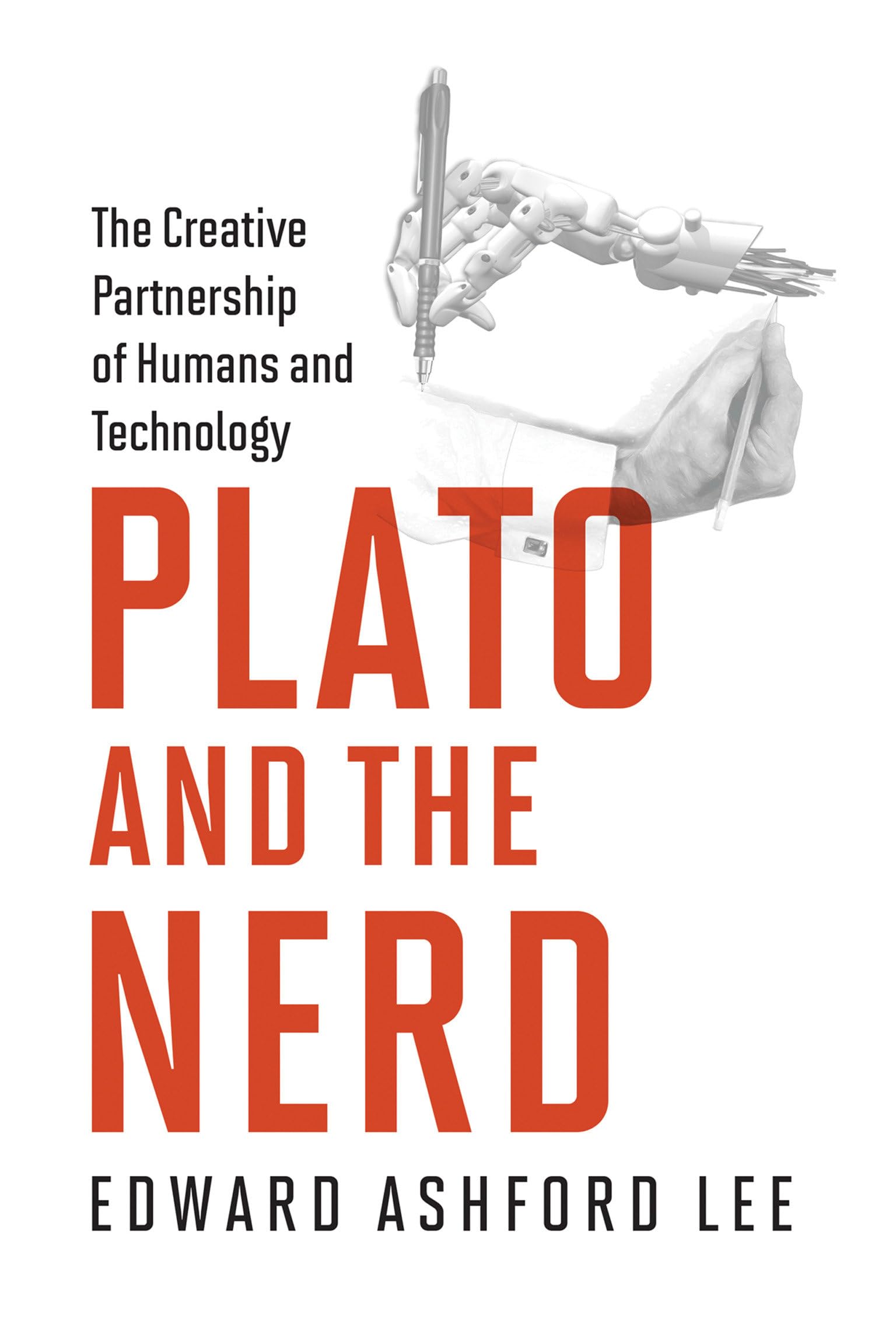
Plato and the Nerd: The Creative Partnership of Humans and Technology,Used
Sold by Ergodebooks, an authorized reseller.
Returns accepted within 30 days | support@ergodebooks.com
Shipping Information
- Free Standard Shipping — United States only
- Processing Time: 3–5 business days
- Estimated Delivery: 6–10 business days after dispatch
- Double-boxed, fully insured & discreetly packaged
- Tracking number sent via email once dispatched
Returns & Refund
Returns accepted within 30 days of delivery.
Damaged or Defective Item
Free return shipping + replacement or full refund
Wrong Item Received
Free return shipping + replacement or full refund
Change of Mind
Return shipping at customer's expense · 25% restocking fee applies
Payment Option

How humans and technology evolve together in a creative partnership.With the explosion of interest, hype, and fear about artificial intelligence, data science, and robotics, it is essential that we better understand how it is that technology and society evolve. Without such understanding, we are assured of making dumb decisions. This book is an effort to develop such an understanding. It emphasizes the creative partnership and the coevolution of human culture and technology. Not to dismiss legitimate fears about the disruptive effects of technology, the real power of technology stems from its partnership with humans. We humans, with all our limitations and foibles, are central to its creation and nurture, and technology is central the progression of our society. Many technological developments are as much cultural as scientific, and human creativity provides the random mutations in a fundamentally Darwinian coevolution.The book examines the question of whether technological advances are driven primarily by discovery or by invention. The question is important, because 'discovery' presupposes preexistence of the facts that are discovered and abdicates responsibility for those facts. Invention, on the other hand, creates facts out of nothing and cannot escape responsibility. The book explores the ways that engineers use models to build inventive artificial worlds and to give us things that we never dreamed of beforefor example, the ability to carry in our pockets everything humans have ever published. But in a yinandyang balance, the book also attempts to counter the runaway enthusiasm of some technology boosters who claim that everything in the physical world is a computationthat even such complex phenomena as human cognition are software operating on digital data. I argue that the evidence for this is weak, and the likelihood that nature has limited itself to processes that conform to today's notion of digital computation is remote.The book goes on to argue that artificial intelligence's goal of reproducing human cognitive functions in computers vastly underestimates the potential of computers. Technology is coevolving with humans. It augments our cognitive and physical capabilities while we nurture, develop, and propagate the technology itself. Complementarity and symbiosis are more likely than confrontation and annihilation.
⚠️ WARNING (California Proposition 65):
This product may contain chemicals known to the State of California to cause cancer, birth defects, or other reproductive harm.
For more information, please visit www.P65Warnings.ca.gov.
- Q: What is the page count of the book? A: The book has two hundred eighty-eight pages. It offers a detailed exploration of the partnership between humans and technology.
- Q: What are the dimensions of this book? A: The book measures six point thirty-one inches in length, nine point thirty-one inches in height, and is zero point ninety-five inches thick.
- Q: What binding type does this book have? A: This book is bound in hardcover. The hardcover format provides durability and a quality feel.
- Q: Who is the author of this book? A: The author is Edward Ashford Lee. His work focuses on the interplay between technology and human creativity.
- Q: What genre does this book belong to? A: The book belongs to the genre of Patents and Inventions. It examines technological advancements and their cultural implications.
- Q: How do I read this book? A: You can read the book at your own pace. It's suitable for anyone interested in understanding the relationship between technology and society.
- Q: Is this book suitable for beginners? A: Yes, this book is suitable for beginners. It provides foundational insights into the creative partnership of humans and technology.
- Q: What age group is this book appropriate for? A: This book is appropriate for adults and older teens. It discusses complex themes about technology and society.
- Q: What themes are explored in this book? A: The book explores themes of coevolution between humans and technology, creativity, and the impact of artificial intelligence.
- Q: How should I store this book? A: Store the book in a cool, dry place. Keep it upright on a shelf to maintain its shape and protect the cover.
- Q: Are there any specific care instructions for this book? A: To care for the book, avoid exposure to direct sunlight and moisture. Handle it gently to preserve the binding.
- Q: What if the book arrives damaged? A: If the book arrives damaged, you should contact the seller for a return or replacement. Keep the original packaging for reference.
- Q: Is there a warranty for this book? A: No, books typically do not come with a warranty. However, check with the retailer for their return policy.
- Q: Can I return the book if I don’t like it? A: Yes, most retailers allow returns within a specified period. Be sure to check the return policy for details.
- Q: What if I have trouble understanding the content? A: If you have trouble understanding the content, consider discussing it with peers or seeking additional resources for clarification.
- Q: Is this book available in other formats? A: Currently, this book is available in hardcover. Check with the publisher for potential future formats like e-books or paperbacks.