
Title
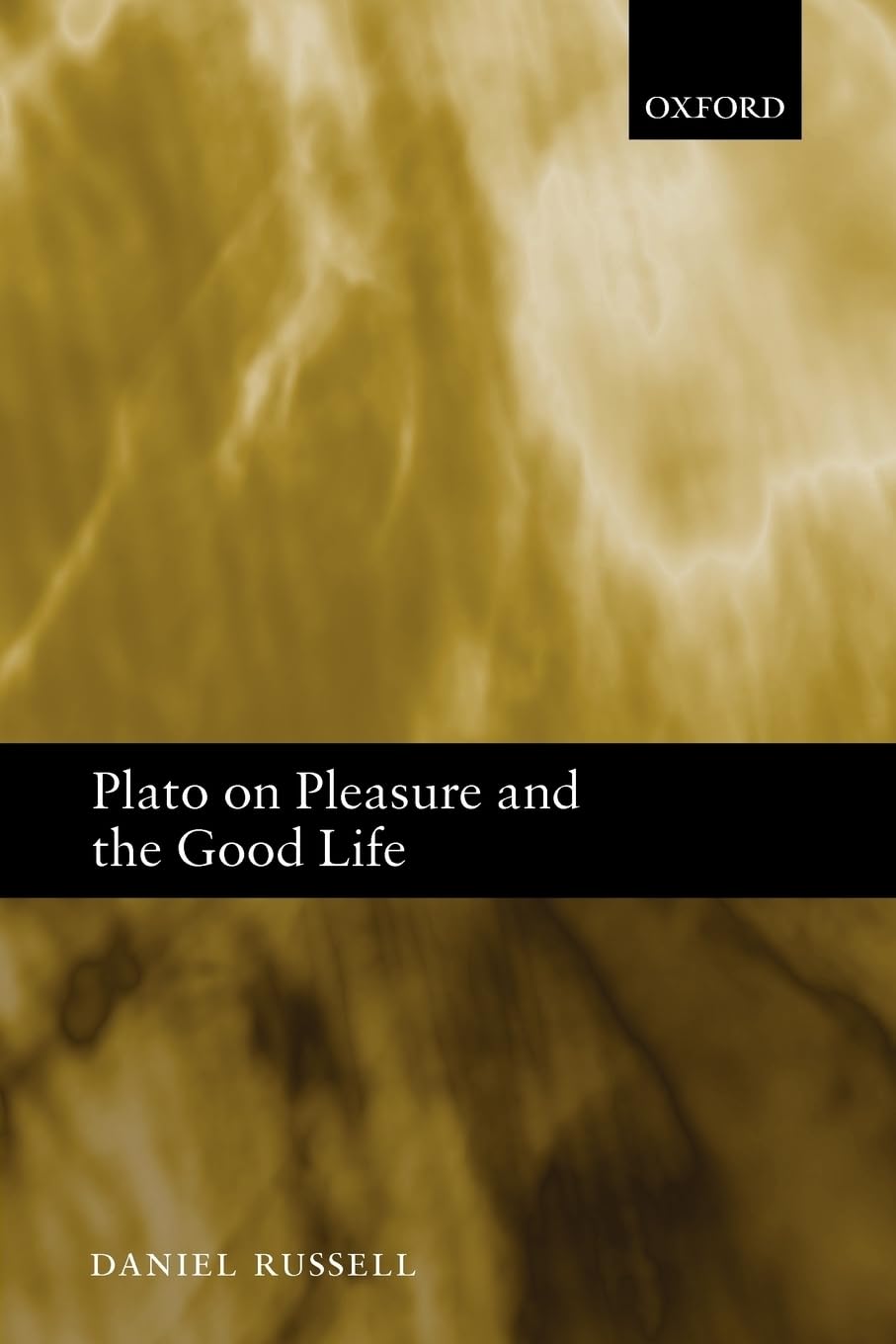
Plato on Pleasure and the Good Life,Used
Sold by Ergodebooks, an authorized reseller.
Returns accepted within 30 days | support@ergodebooks.com
Shipping Information
- Free Standard Shipping — United States only
- Processing Time: 3–5 business days
- Estimated Delivery: 6–10 business days after dispatch
- Double-boxed, fully insured & discreetly packaged
- Tracking number sent via email once dispatched
Returns & Refund
Returns accepted within 30 days of delivery.
Damaged or Defective Item
Free return shipping + replacement or full refund
Wrong Item Received
Free return shipping + replacement or full refund
Change of Mind
Return shipping at customer's expense · 25% restocking fee applies
Payment Option

Daniel Russell examines Plato's subtle and insightful analysis of pleasure and explores its intimate connections with his discussions of value and human psychology. Russell offers a fresh perspective on how good things bear on happiness in Plato's ethics, and shows that, for Plato, pleasure cannot determine happiness because pleasure lacks a direction of its own. Plato presents wisdom as a skill of living that determines happiness by directing one's life as a whole, bringing about goodness in all areas of one's life, as a skill brings about order in its materials. The 'materials' of the skill of living are, in the first instance, not things like money or health, but one's attitudes, emotions, and desires where things like money and health are concerned. Plato recognizes that these 'materials' of the psyche are inchoate, ethically speaking, and in need of direction from wisdom. Among them is pleasure, which Plato treats not as a sensation but as an attitude with which one ascribes value to its object.However, Plato also views pleasure, once shaped and directed by wisdom, as a crucial part of a virtuous character as a whole. Consequently, Plato rejects all forms of hedonism, which allows happiness to be determined by a part of the psyche that does not direct one's life but is among the materials to be directed. At the same time, Plato is also able to hold both that virtue is sufficient for happiness, and that pleasure is necessary for happiness, not as an addition to one's virtue, but as a constituent of one's whole virtuous character itself. Plato therefore offers an illuminating role for pleasure in ethics and psychology, one to which we may be unaccustomed: pleasure emerges not as a sensation or even a mode of activity, but as an attitude one of the ways in which we construe our worldand as such, a central part of every character.
⚠️ WARNING (California Proposition 65):
This product may contain chemicals known to the State of California to cause cancer, birth defects, or other reproductive harm.
For more information, please visit www.P65Warnings.ca.gov.