
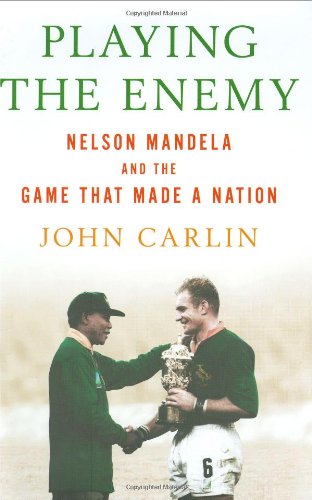
Title
Playing The Enemy: Nelson Mandela And The Game That Made A Nation,New
Sold by Ergodebooks, an authorized reseller.
Returns accepted within 30 days | support@ergodebooks.com
Shipping Information
- Free Standard Shipping — United States only
- Processing Time: 3–5 business days
- Estimated Delivery: 6–10 business days after dispatch
- Double-boxed, fully insured & discreetly packaged
- Tracking number sent via email once dispatched
Returns & Refund
Returns accepted within 30 days of delivery.
Damaged or Defective Item
Free return shipping + replacement or full refund
Wrong Item Received
Free return shipping + replacement or full refund
Change of Mind
Return shipping at customer's expense · 25% restocking fee applies
Payment Option

In 1985, Nelson Mandela, then in prison for twentythree years, set about winning over the fiercest proponents of apartheid, from his jailers to the head of South Africas military. First he earned his freedom and then he won the presidency in the nations first free election in 1994. But he knew that South Africa was still dangerously divided by almost fifty years of apartheid. If he couldnt unite his country in a visceral, emotional wayand fastit would collapse into chaos. He would need all the charisma and strategic acumen he had honed during half a century of activism, and hed need a cause all South Africans could share. Mandela picked one of the more farfetched causes imaginablethe national rugby team, the Springboks, who would host the sports World Cup in 1995.Against the giants of the sport, the Springboks chances of victory were remote. But their chances of capturing the hearts of most South Africans seemed remoter still, as they had long been the embodiment of white supremacist rule. During apartheid, the allwhite Springboks and their fans had belted out racist fight songs, and blacks would come to Springbok matches to cheer for whatever team was playing against them. Yet Mandela believed that the Springboks could embodyand engagethe new South Africa. And the Springboks themselves embraced the scheme. Soon South African TV would carry images of the team singing Nkosi Sikelele Afrika, the longtime anthem of black resistance to apartheid.As their surprising string of victories lengthened, their homefield advantage grew exponentially. South Africans of every color and political stripe found themselves falling for the team. When the Springboks took to the field for the championship match against New Zealands heavily favored squad, Mandela sat in his presidential box wearing a Springbok jersey while sixtytwothousand fans, mostly white, chanted Nelson! Nelson! Millions more gathered around their TV sets, whether in dusty black townships or leafy white suburbs, to urge their team toward victory. The Springboks won a nailbiter that day, defying the oddsmakers and capping Mandelas miraculous tenyearlong effort to bring fortythree million South Africans together in an enduring bond.John Carlin, a former South Africa bureau chief for the London Independent, offers a singular portrait of the greatest statesman of our time in action, blending the volatile cocktail of race, sport, and politics to intoxicating effect. He draws on extensive interviews with Mandela, Desmond Tutu, and dozens of other South Africans caught up in Mandelas momentous campaign, and the Springboks unlikely triumph. As he makes stirringly clear, their championship transcended the mere thrill of victory to erase ancient hatreds and make a nation whole.
⚠️ WARNING (California Proposition 65):
This product may contain chemicals known to the State of California to cause cancer, birth defects, or other reproductive harm.
For more information, please visit www.P65Warnings.ca.gov.