
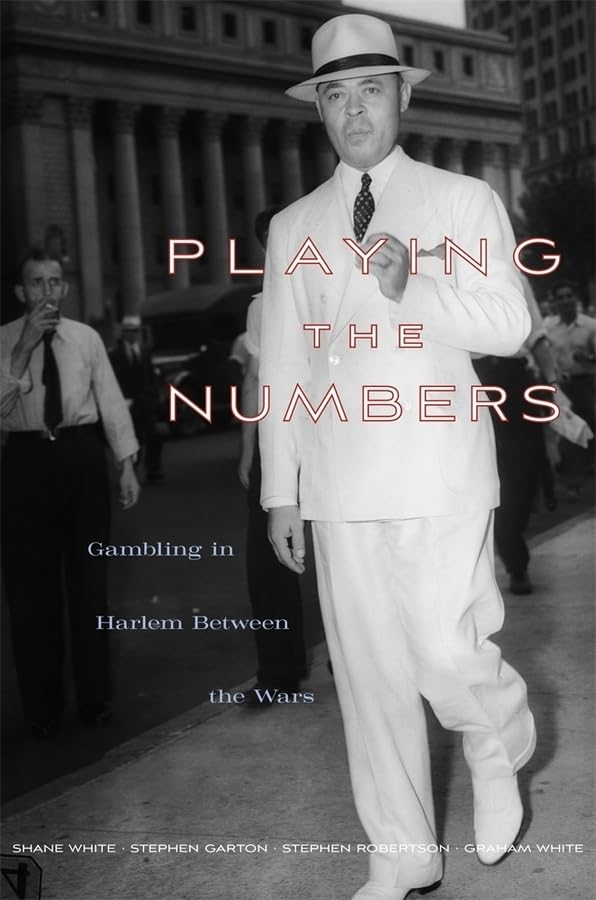
Title
Playing The Numbers: Gambling In Harlem Between The Wars,Used
Sold by Ergodebooks, an authorized reseller.
Returns accepted within 30 days | support@ergodebooks.com
Shipping Information
- Free Standard Shipping — United States only
- Processing Time: 3–5 business days
- Estimated Delivery: 6–10 business days after dispatch
- Double-boxed, fully insured & discreetly packaged
- Tracking number sent via email once dispatched
Returns & Refund
Returns accepted within 30 days of delivery.
Damaged or Defective Item
Free return shipping + replacement or full refund
Wrong Item Received
Free return shipping + replacement or full refund
Change of Mind
Return shipping at customer's expense · 25% restocking fee applies
Payment Option

The Phrase Harlem In The 1920S Evokes Images Of The Harlem Renaissance, Or Of Marcus Garvey And Soapbox Orators Haranguing Crowds About Politics And Race. Yet The Most Ubiquitous Feature Of Harlem Life Between The World Wars Was The Game Of Numbers. Thousands Of Wagers, Usually Of A Dime Or Less, Would Be Placed On A Daily Number Derived From U.S. Bank Statistics. The Rewards Of Hitting The Number, A 600To1 Payoff, Tempted The Ordinary Men And Women Of The Black Metropolis With The Chimera Of The Good Life. Playing The Numbers Tells The Story Of This Illegal Form Of Gambling And The Central Role It Played In The Lives Of African Americans Who Flooded Into Harlem In The Wake Of World War I.For A Dozen Years The Numbers Game Was One Of Americas Rare Blackowned Businesses, Turning Over Tens Of Millions Of Dollars Every Year. The Most Successful Bankers Were Known As Black Kings And Queens, And They Lived Royally. Yet The Very Success Of Bankers Like Stephanie St. Clair And Casper Holstein Attracted Dutch Schultz, Lucky Luciano, And Organized Crime To The Game. By The Late 1930S, Most Of The Profits Were Being Siphoned Out Of Harlem.Playing The Numbers Reveals A Unique Dimension Of African American Culture That Made Not Only Harlem But New York City Itself The Vibrant And Energizing Metropolis It Was. An Interactive Website Allows Readers To Locate Actors And Events On Harlems Streets.
⚠️ WARNING (California Proposition 65):
This product may contain chemicals known to the State of California to cause cancer, birth defects, or other reproductive harm.
For more information, please visit www.P65Warnings.ca.gov.
- Q: How many pages does the book have? A: This book has three hundred twenty pages. It provides an in-depth look into gambling culture in Harlem during the early twentieth century.
- Q: What is the binding type of this book? A: The book is bound in hardcover. This durable binding method helps protect the book and enhances its shelf life.
- Q: What are the dimensions of the book? A: The dimensions of the book are five point eight four inches in length, one point one inches in width, and eight point three five inches in height. These measurements make it a standard size for easy handling.
- Q: What genre does this book belong to? A: The book falls under the Organized Crime genre. It explores the historical aspects of illegal gambling in Harlem.
- Q: Who is the author of this book? A: The author of this book is Shane White. His research provides valuable insights into the cultural significance of gambling in Harlem.
- Q: What is the main theme of the book? A: The main theme revolves around the influence of the numbers game on African American culture in Harlem. It highlights the interplay between community life and illegal gambling.
- Q: Is this book suitable for all ages? A: No, this book is aimed at adult readers. It discusses mature themes related to organized crime and gambling.
- Q: How can I read this book effectively? A: To read this book effectively, consider taking notes on the cultural references and historical contexts. This can enhance your understanding of the themes presented.
- Q: What should I know before reading this book? A: Before reading, it's helpful to have a basic understanding of the Harlem Renaissance and the socio-economic factors of that era. This context will enrich your reading experience.
- Q: How should I care for this hardcover book? A: To care for the hardcover book, keep it in a dry place away from direct sunlight. Avoid exposing it to moisture to prevent damage.
- Q: Can this book be stored in a bookshelf? A: Yes, it can be stored in a bookshelf. Ensure it is placed upright and supported by other books to maintain its shape.
- Q: What if the book arrives damaged? A: If the book arrives damaged, you should contact the seller for a return or exchange. Most sellers have policies in place for such situations.
- Q: Is there a warranty for this book? A: No, books typically do not come with a warranty. However, you can check the seller’s return policy for any guarantees.
- Q: How can I find more information about the author? A: You can find more information about Shane White by searching online or visiting literary databases. His work often focuses on African American history.
- Q: What other books are similar to this one? A: Books on organized crime and African American history would be similar. Titles focusing on the Harlem Renaissance may also provide additional context.