If you have any questions, you are always welcome to contact us. We'll get back to you as soon as possible, withing 24 hours on weekdays.
Customer service
All questions about your order, return and delivery must be sent to our customer service team by e-mail at yourstore@yourdomain.com
Sale & Press
If you are interested in selling our products, need more information about our brand or wish to make a collaboration, please contact us at press@yourdomain.com
Help
If you have any questions, you are always welcome to contact us. We'll get back to you as soon as possible, withing 24 hours on weekdays.
Customer service
All questions about your order, return and delivery must be sent to our customer service team by e-mail at yourstore@yourdomain.com
Sale & Press
If you are interested in selling our products, need more information about our brand or wish to make a collaboration, please contact us at press@yourdomain.com
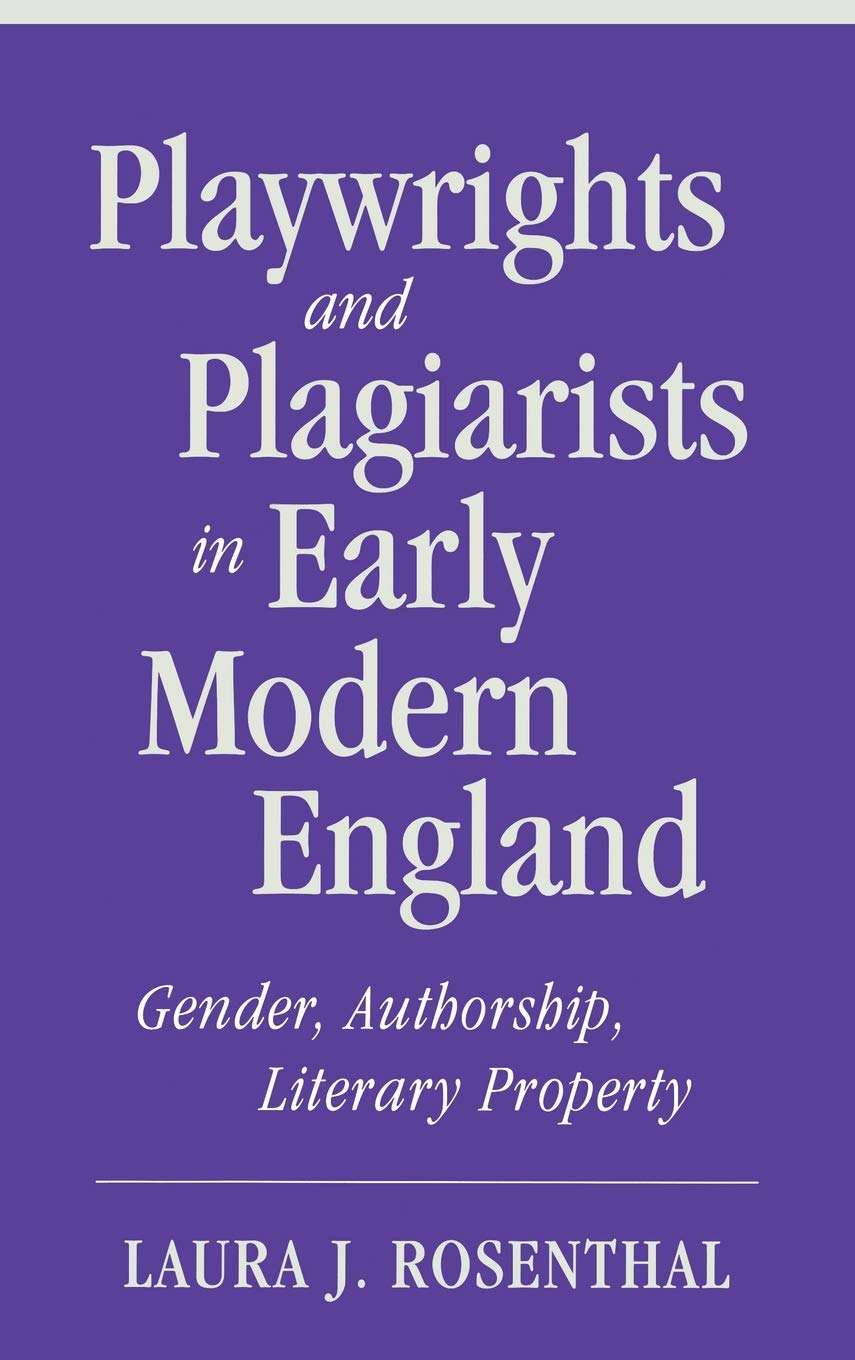
1ST EDITION, Hardcover in dust jacket, 1996, by Laura J. Rosenthal, Cornell University Press, "Passage of the first copyright law in 1710 marked a radical change in the perception of authorship. According to Laura J. Rosenthal, the new construction of the author as the owner of literary property bore different consequences for women than for men, for amateurs than for professionals, and for playwrights than for other authors. Rosenthal explores the distinctions between legitimate and illegitimate forms of literary appropriation in drama from 1650 to 1730. In considering the alleged plagiarists Margaret Cavendish (the duchess of Newcastle), Aphra Benn, John Dryden, Colley Ci and Susanna Centlivre, Rosenthal maintains that accusations had less to do with the degree of repitition than with the gender of the authors and the cultural location of the plays."
⚠️ WARNING (California Proposition 65):
This product may contain chemicals known to the State of California to cause cancer,
birth defects, or other reproductive harm.
For MAP (Minimum Advertised Price) violations and Intellectual Property (IP) or Trademark concerns, please contact:
support@ergodebooks.com
⚠️ California Proposition 65 Warning: Some products sold on this website may expose you to chemicals known to the State of California to cause cancer, birth defects, or other reproductive harm. For more information, visit www.P65Warnings.ca.gov.