
Title
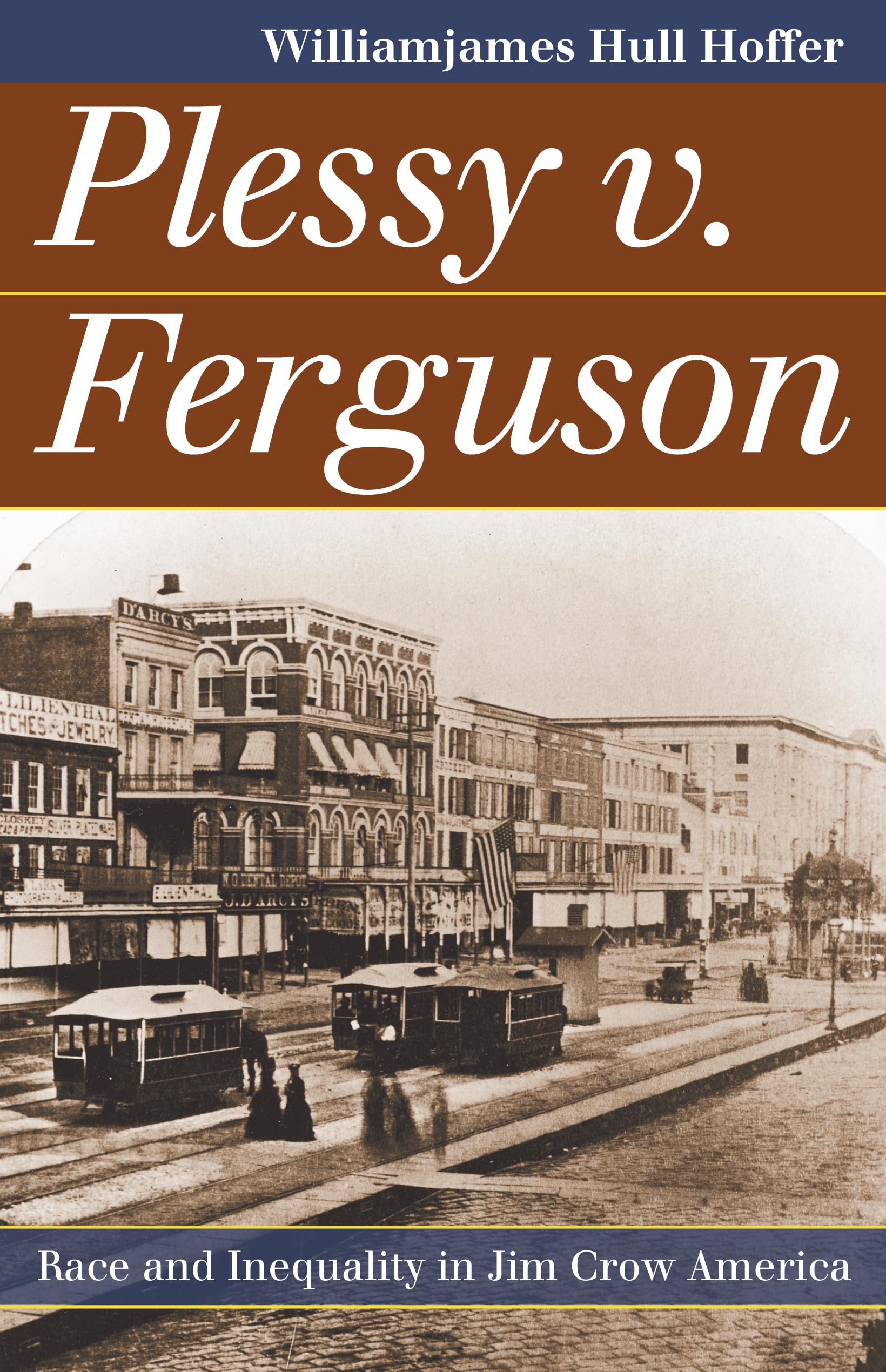
Plessy V. Ferguson: Race And Inequality In Jim Crow America (Landmark Law Cases And American Society)
Sold by Ergodebooks, an authorized reseller.
Returns accepted within 30 days | support@ergodebooks.com
Shipping Information
- Free Standard Shipping — United States only
- Processing Time: 3–5 business days
- Estimated Delivery: 6–10 business days after dispatch
- Double-boxed, fully insured & discreetly packaged
- Tracking number sent via email once dispatched
Returns & Refund
Returns accepted within 30 days of delivery.
Damaged or Defective Item
Free return shipping + replacement or full refund
Wrong Item Received
Free return shipping + replacement or full refund
Change of Mind
Return shipping at customer's expense · 25% restocking fee applies
Payment Option

Six Decades Before Rosa Parks Boarded Her Fateful Bus, Another Traveler In The Deep South Tried To Strike A Blow Against Racial Discriminationbut Ultimately Fell Short Of That Goal, Leading To The Supreme Court'S Landmark 1896 Decision In Plessy V. Ferguson. Now Williamjames Hull Hoffer Vividly Details The Origins, Litigation, Opinions, And Aftermath Of This Notorious Case.In Response To The Passage Of The Louisiana Separate Car Act Of 1890, Which Prescribed Equal But Separate Accommodations On Public Transportation, A Group Called The Committee Of Citizens Decided To Challenge Its Constitutionality. At A Preselected Time And Place, Homer Plessy, On Behalf Of The Committee, Boarded A Train Car Set Aside For Whites, Announced His Nonwhite Racial Identity, And Was Immediately Arrested. The Legal Deliberations That Followed Eventually Led To The Court'S 71 Decision In Plessy, Which Upheld Both The Louisiana Statute And The State'S Police Powers. It Also Helped Create A Jim Crow System That Would Last Deep Into The Twentieth Century, Until Brown V. Board Of Education In 1954 And Other Cases Helped Overturn It.Hoffer'S Readable Study Synthesizes Past Work On This Landmark Case, While Also Shedding New Light On Its Proceedings And Oftenneglected Historical Contexts. From The Streets Of New Orleans' Faubourg Trem District To The Justices' Chambers At The Supreme Court, He Breathes New Life Into The Opposing Forces, Dissecting Their Arguments To Clarify One Of The Most Important, Controversial, And Socially Revealing Cases In American Law. He Particularly Focuses On Justice Henry Billings Brown'S Ruling That The Statute'S Equal, But Separate Condition Was A Sufficient Constitutional Standard For Equality, And On Justice John Marshall Harlan'S Classic Dissent, In Which He Stated, Our Constitution Is Colorblind, And Neither Knows Nor Tolerates Classes Among Its Citizens.Hoffer'S Compelling Reconstruction Illuminates The Controversies And Impact Of Plessy V. Ferguson For A New Generation Of Students And Other Interested Readers. It Also Pays Tribute To A Group Of Little Known Heroes From The Deep South Who Failed To Hold Back The Tide Of Racial Segregation But Nevertheless Laid The Groundwork For A Less Divided America.
⚠️ WARNING (California Proposition 65):
This product may contain chemicals known to the State of California to cause cancer, birth defects, or other reproductive harm.
For more information, please visit www.P65Warnings.ca.gov.
- Q: What is the page count of the book? A: The book has two hundred thirty-two pages. This length allows for an in-depth exploration of the Plessy v. Ferguson case.
- Q: What are the dimensions of the book? A: The book measures five point seventy-five inches in length, zero point seventy-five inches in width, and eight point seventy-five inches in height. These dimensions make it portable and easy to handle.
- Q: What type of binding does this book have? A: This book is a paperback edition. Paperback bindings are flexible and lightweight, making them ideal for casual reading.
- Q: Who is the author of this book? A: The author is William James Hull Hoffer. He provides a detailed analysis of the historical significance of the Plessy v. Ferguson case.
- Q: What is the genre of this book? A: This book falls under the category of State and Local history. It specifically addresses issues of race and inequality in America.
- Q: What is the main theme of the book? A: The main theme is racial discrimination and legal battles surrounding the Jim Crow laws. It highlights the historical context of the landmark Supreme Court case.
- Q: How can I use this book for educational purposes? A: You can use this book as a resource for understanding civil rights history. It’s suitable for students, educators, and anyone interested in American law.
- Q: Is this book appropriate for high school students? A: Yes, this book is appropriate for high school students. It offers a comprehensive look at a pivotal case in American history, suitable for advanced learners.
- Q: Can this book be used in college courses? A: Yes, this book is suitable for college courses on American history or law. It provides critical insights into the legal framework of racial segregation.
- Q: How should I store this book to keep it in good condition? A: Store the book upright in a cool, dry place. Avoid direct sunlight to prevent fading and preserve the integrity of the pages.
- Q: What is the recommended way to clean the book? A: To clean the book, gently wipe the cover with a soft, dry cloth. Avoid using water or cleaning products to protect the binding and pages.
- Q: Does this book contain adult content? A: No, this book does not contain adult content. It focuses on historical and legal discussions suitable for a general audience.
- Q: What if the book arrives damaged? A: If the book arrives damaged, you should contact customer service for a return or replacement. Most sellers have policies in place for such situations.
- Q: Is this book available for return? A: Yes, this book is generally available for return within a specified period. Check the seller’s return policy for specific details.
- Q: Are there any supplementary materials with this book? A: No, this book does not come with supplementary materials. It stands alone as a comprehensive study of the Plessy v. Ferguson case.