
Title
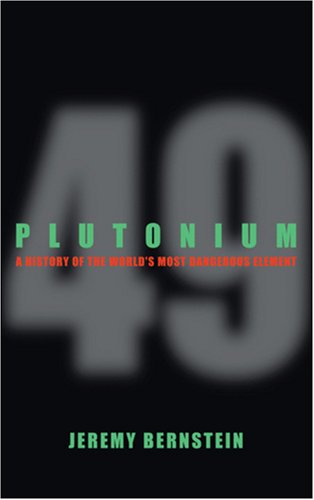
Plutonium: A History of the Worlds Most Dangerous Element,Used
Sold by Ergodebooks, an authorized reseller.
Returns accepted within 30 days | support@ergodebooks.com
Shipping Information
- Free Standard Shipping — United States only
- Processing Time: 3–5 business days
- Estimated Delivery: 6–10 business days after dispatch
- Double-boxed, fully insured & discreetly packaged
- Tracking number sent via email once dispatched
Returns & Refund
Returns accepted within 30 days of delivery.
Damaged or Defective Item
Free return shipping + replacement or full refund
Wrong Item Received
Free return shipping + replacement or full refund
Change of Mind
Return shipping at customer's expense · 25% restocking fee applies
Payment Option

When plutonium was first manufactured at Berkeley in the spring of 1941, there was so little of it that it was not visible to the naked eye. It took a year to accumulate enough so that one could actually see it. Now there is so much that we dont know what to do to get rid of it. We have created a monster.The history of plutonium is as strange as the element itself. When scientists began looking for it, they did so simply in the spirit of inquiry, not certain whether there were still spots to fill on the periodic table. But the discovery of fission made it clear that this stillhypothetical element would be more than just a scientific curiosity?it could be a powerful nuclear weapon.As it turned out, it is good for almost nothing else. Plutoniums nuclear potential put it at the heart of the World War II arms race?the Russians found out about it through espionage, the Germans through independent research, and everybody wanted some. Now, nearly everyone has some?the United States alone has about 47 metric tons?but it has almost no uses besides warmongering. How did the product of scientific curiosity become such a dangerous burden?In his new history of this complex and dangerous element, noted physicist Jeremy Bernstein describes the steps that were taken to transform plutonium from a laboratory novelty into the nuclear weapon that destroyed Nagasaki. This is the first book to weave together the many strands of plutoniums story, explaining not only the science but the people involved.
⚠️ WARNING (California Proposition 65):
This product may contain chemicals known to the State of California to cause cancer, birth defects, or other reproductive harm.
For more information, please visit www.P65Warnings.ca.gov.
- Q: What is the page count of the book? A: The book has two hundred fourteen pages. This length provides a detailed exploration of plutonium's history and implications.
- Q: What are the dimensions of the book? A: The book measures five point seventy-five inches in length, zero point seventy-five inches in width, and eight point seventy-five inches in height. These dimensions make it a manageable size for reading.
- Q: What type of binding does this book have? A: The book is bound in hardcover. This binding type ensures durability and a professional appearance on bookshelves.
- Q: Who is the author of this book? A: The author is Jeremy Bernstein. He is a noted physicist with expertise in the subject matter of plutonium.
- Q: What is the publishing company for this book? A: The book is published by Joseph Henry Press. This publisher specializes in works related to science and history.
- Q: What genre does this book belong to? A: The book belongs to the nuclear history genre. It explores the scientific and historical significance of plutonium.
- Q: How do I read this book? A: You can read the book as a traditional printed book. It does not have a digital version, so it’s ideal for physical reading.
- Q: Is this book suitable for children? A: No, this book is not suitable for children. It covers complex scientific topics and the history of nuclear weapons.
- Q: What is the reading level for this book? A: The book is best suited for adults and older teens. Its themes and language are geared towards an educated audience.
- Q: How should I store this book? A: Store the book in a cool, dry place, upright on a shelf. This will help preserve its physical condition over time.
- Q: Can I clean the cover of this book? A: Yes, you can clean the cover gently with a soft, dry cloth. Avoid using liquids to prevent damage.
- Q: How do I keep this book in good condition? A: To keep the book in good condition, avoid exposure to direct sunlight and moisture. Additionally, handle it with clean hands.
- Q: What if the book arrives damaged? A: If the book arrives damaged, contact the seller for a return or replacement. Most sellers will have policies in place for damaged goods.
- Q: Is there a warranty for this book? A: No, there is typically no warranty for books. However, you can check with the seller for their return policy.
- Q: What should I do if I can't find information in the book? A: If you can't find the information you need, consider using supplemental resources or contacting a local library for further assistance.
- Q: How can I find similar books on nuclear history? A: You can find similar books by searching online retailers or visiting a library's science section. Look for titles related to nuclear science and history.