
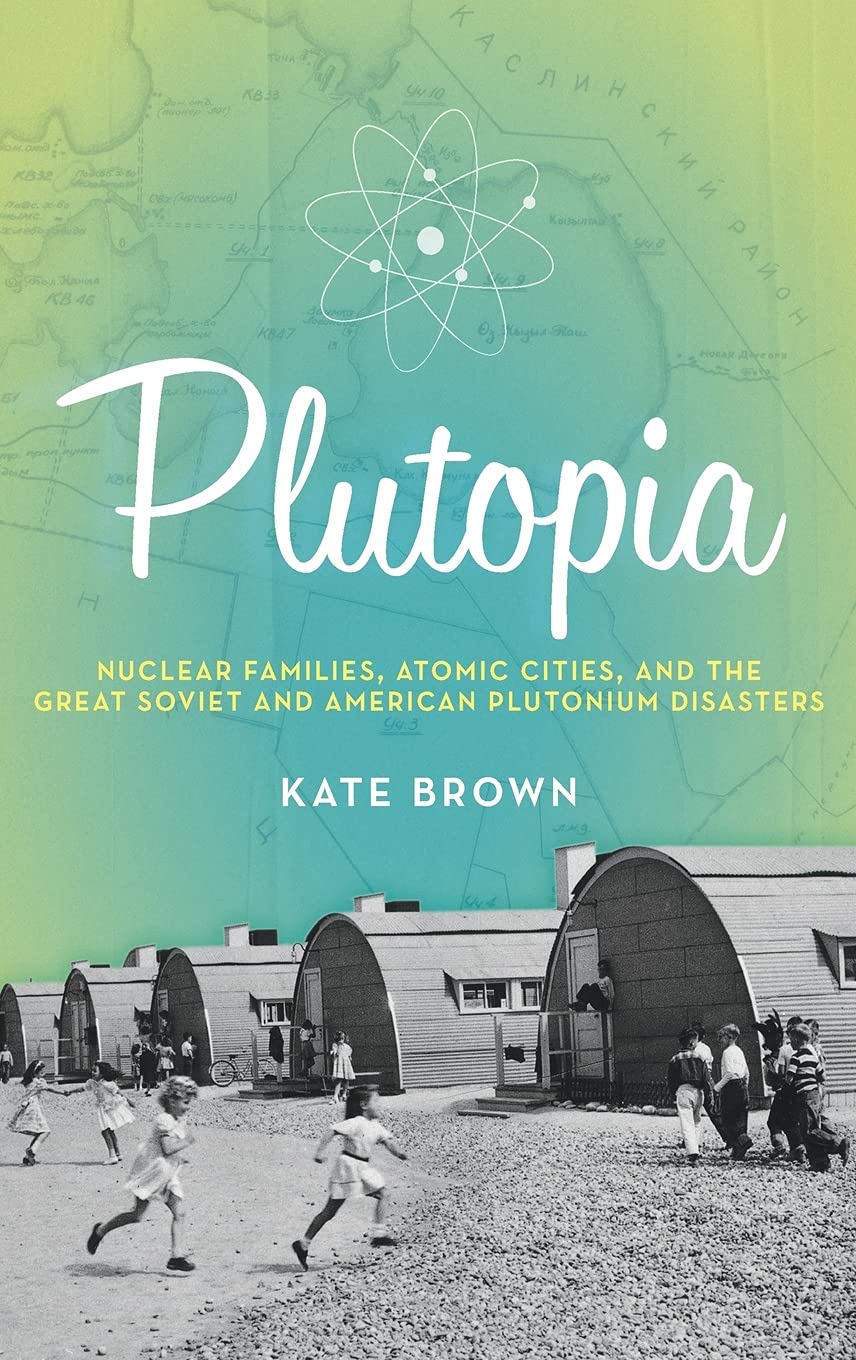
Title


Plutopia: Nuclear Families, Atomic Cities, And The Great Soviet And American Plutonium Disasters,New
Sold by Ergodebooks, an authorized reseller.
Returns accepted within 30 days | support@ergodebooks.com
Shipping Information
- Free Standard Shipping — United States only
- Processing Time: 3–5 business days
- Estimated Delivery: 6–10 business days after dispatch
- Double-boxed, fully insured & discreetly packaged
- Tracking number sent via email once dispatched
Returns & Refund
Returns accepted within 30 days of delivery.
Damaged or Defective Item
Free return shipping + replacement or full refund
Wrong Item Received
Free return shipping + replacement or full refund
Change of Mind
Return shipping at customer's expense · 25% restocking fee applies
Payment Option

While Many Transnational Histories Of The Nuclear Arms Race Have Been Written, Kate Brown Provides The First Definitive Account Of The Great Plutonium Disasters Of The United States And The Soviet Union.In Plutopia, Brown Draws On Official Records And Dozens Of Interviews To Tell The Extraordinary Stories Of Richland, Washington And Ozersk, Russiathe First Two Cities In The World To Produce Plutonium. To Contain Secrets, American And Soviet Leaders Created Plutopiascommunities Of Nuclear Families Living In Highlysubsidized, Limitedaccess Atomic Cities. Fully Employed And Medically Monitored, The Residents Of Richland And Ozersk Enjoyed All The Pleasures Of Consumer Society, While Nearby, Migrants, Prisoners, And Soldiers Were Banned From Plutopiathey Lived In Temporary 'Staging Grounds' And Often Performed The Most Dangerous Work At The Plant. Brown Shows That The Plants' Segregation Of Permanent And Temporary Workers And Of Nuclear And Nonnuclear Zones Created A Bubble Of Immunity, Where Dumps And Accidents Were Glossed Over And Plant Managers Freely Embezzled And Polluted. In Four Decades, The Hanford Plant Near Richland And The Maiak Plant Near Ozersk Each Issued At Least 200 Million Curies Of Radioactive Isotopes Into The Surrounding Environmentequaling Four Chernobylslaying Waste To Hundreds Of Square Miles And Contaminating Rivers, Fields, Forests, And Food Supplies. Because Of The Decades Of Secrecy, Downwind And Downriver Neighbors Of The Plutonium Plants Had Difficulty Proving What They Suspected, That The Rash Of Illnesses, Cancers, And Birth Defects In Their Communities Were Caused By The Plants' Radioactive Emissions. Plutopia Was Successful Because In Its Zonedoff Isolation It Appeared To Deliver The Promises Of The American Dream And Soviet Communism; In Reality, It Concealed Disasters That Remain Highly Unstable And Threatening Today.An Untold And Profoundly Important Piece Of Cold War History, Plutopia Invites Readers To Consider The Nuclear Footprint Left By The Arms Race And The Enormous Price Of Paying For It.
⚠️ WARNING (California Proposition 65):
This product may contain chemicals known to the State of California to cause cancer, birth defects, or other reproductive harm.
For more information, please visit www.P65Warnings.ca.gov.
- Q: How many pages does this book have? A: This book has four hundred six pages. It offers a comprehensive exploration of nuclear history and its societal impacts.
- Q: What is the binding type of this book? A: This book is hardcover. The durable binding ensures longevity and a premium reading experience.
- Q: Who is the author of this book? A: The author of this book is Kate Brown. She is known for her insightful historical narratives.
- Q: What is the genre of this book? A: The genre of this book is Environmental Economics. It focuses on the historical and economic implications of nuclear energy.
- Q: What are the dimensions of this book? A: This book measures nine point five inches in length, six point two inches in width, and one point three inches in height. Its size makes it convenient for reading.
- Q: Is this book suitable for children? A: No, this book is not specifically suitable for children. It deals with complex themes related to nuclear disasters and may not be age-appropriate.
- Q: What historical events does this book cover? A: This book covers the plutonium disasters in the United States and the Soviet Union. It examines the implications of these events on society.
- Q: How does the author conduct research for this book? A: The author conducts research through official records and interviews. This method provides a detailed and personal perspective on the events discussed.
- Q: What themes are explored in this book? A: Themes explored in this book include the nuclear arms race, societal impacts, and the consequences of secrecy. It highlights the human and environmental costs of nuclear energy.
- Q: How should I care for this book? A: To care for this book, store it in a cool, dry place and avoid exposure to direct sunlight. This will help preserve its condition over time.
- Q: Can I return this book if I don't like it? A: Yes, you can typically return this book if you are not satisfied. Check the retailer's return policy for specific details.
- Q: Is this book available in digital format? A: Yes, this book may be available in digital format. Check online retailers for eBook options.
- Q: What if the book arrives damaged? A: If the book arrives damaged, contact the retailer for a replacement or refund. Most retailers have policies in place for such issues.
- Q: Does this book include illustrations or photographs? A: No, this book does not prominently feature illustrations or photographs. It focuses on text and historical narratives.
- Q: Is this book part of a series? A: No, this book is not part of a series. It stands alone as a comprehensive examination of its subject matter.