
Title
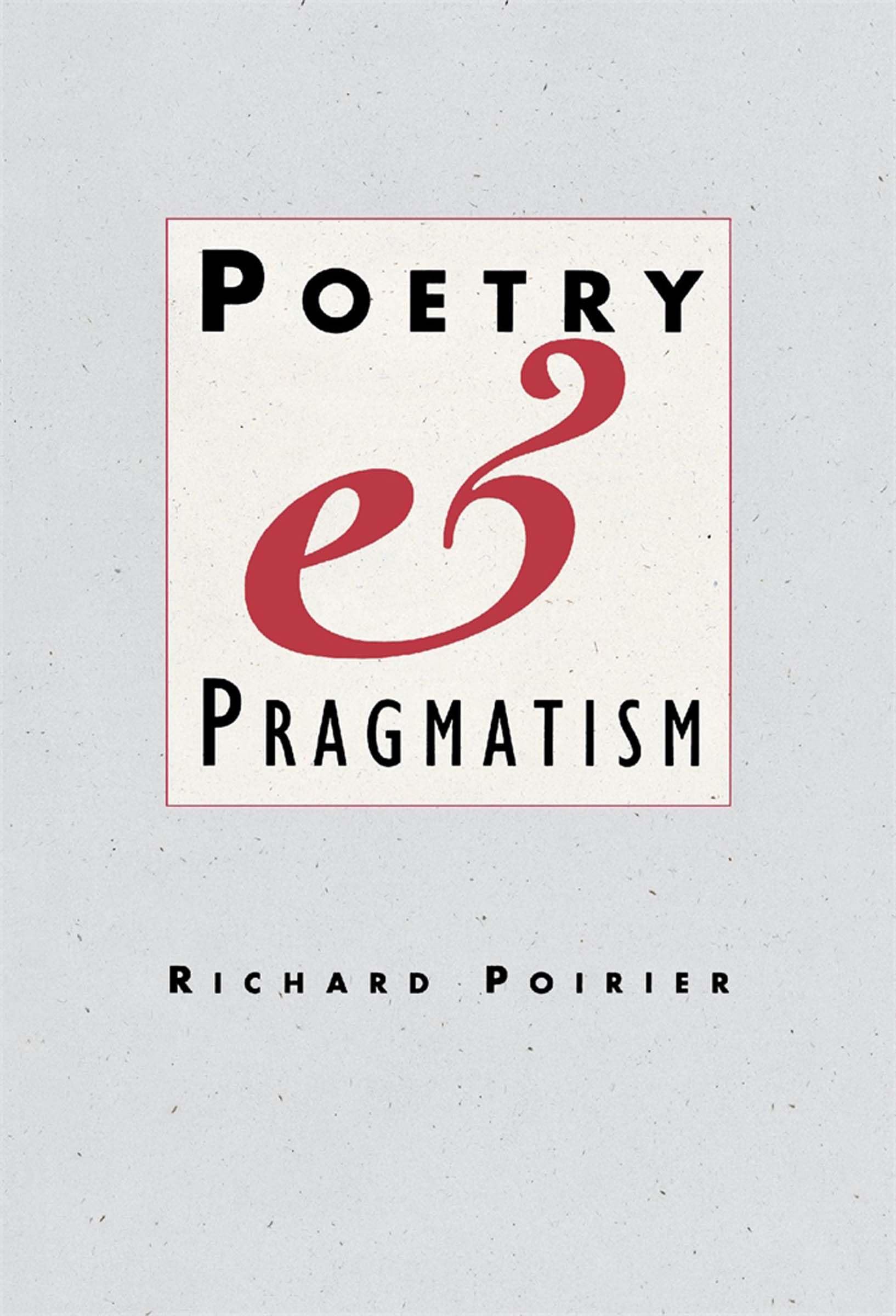
Poetry and Pragmatism (Convergences: Inventories of the Present),Used
Sold by Ergodebooks, an authorized reseller.
Returns accepted within 30 days | support@ergodebooks.com
Shipping Information
- Free Standard Shipping — United States only
- Processing Time: 3–5 business days
- Estimated Delivery: 6–10 business days after dispatch
- Double-boxed, fully insured & discreetly packaged
- Tracking number sent via email once dispatched
Returns & Refund
Returns accepted within 30 days of delivery.
Damaged or Defective Item
Free return shipping + replacement or full refund
Wrong Item Received
Free return shipping + replacement or full refund
Change of Mind
Return shipping at customer's expense · 25% restocking fee applies
Payment Option

Richard Poirier, one of America's most eminent critics, reveals in this book the creative but mostly hidden alliance between American pragmatism and American poetry. He brilliantly traces pragmatism as a philosophical and literary practice grounded in a linguistic skepticism that runs from Emerson and William James to the work of Robert Frost, Gertrude Stein, and Wallace Stevens, and on to the cultural debates of today.More powerfully than ever before, Poirier shows that pragmatism had its start in Emerson, the great example to all his successors of how it is possible to redeem even as you set out to change the literature of the past. Poirier demonstrates that Emersonand later William Jameswere essentially philosophers of language, and that it is language that embodies our cultural past, an inheritance to be struggled with, and transformed, before being handed on to future generations. He maintains that in Emersonian pragmatist writing, any losspersonal or culturalgives way to a quest for what he calls superfluousness, a kind of rhetorical excess by which powerfully creative individuals try to elude deprivation and stasis. In a wideranging meditation on what James called the vague, Poirier extols the authentic voice of individualism, which, he argues, is tentative and casual rather than aggressive and dogmatic.The concluding chapters describe the possibilities for criticism created by this radically different understanding of reading and writing, which are nothing less than a reinvention of literary tradition itself. Poirier's discovery of this tradition illuminates the work of many of the most important figures in American philosophy and poetry. His reanimation of pragmatism also calls for a redirection of contemporary criticism, so that readers inside as well as outside the academy can begin to respond to poetic language as the source of meaning, not to meaning as the source of language.
⚠️ WARNING (California Proposition 65):
This product may contain chemicals known to the State of California to cause cancer, birth defects, or other reproductive harm.
For more information, please visit www.P65Warnings.ca.gov.