If you have any questions, you are always welcome to contact us. We'll get back to you as soon as possible, withing 24 hours on weekdays.
Customer service
All questions about your order, return and delivery must be sent to our customer service team by e-mail at yourstore@yourdomain.com
Sale & Press
If you are interested in selling our products, need more information about our brand or wish to make a collaboration, please contact us at press@yourdomain.com
Help
If you have any questions, you are always welcome to contact us. We'll get back to you as soon as possible, withing 24 hours on weekdays.
Customer service
All questions about your order, return and delivery must be sent to our customer service team by e-mail at yourstore@yourdomain.com
Sale & Press
If you are interested in selling our products, need more information about our brand or wish to make a collaboration, please contact us at press@yourdomain.com
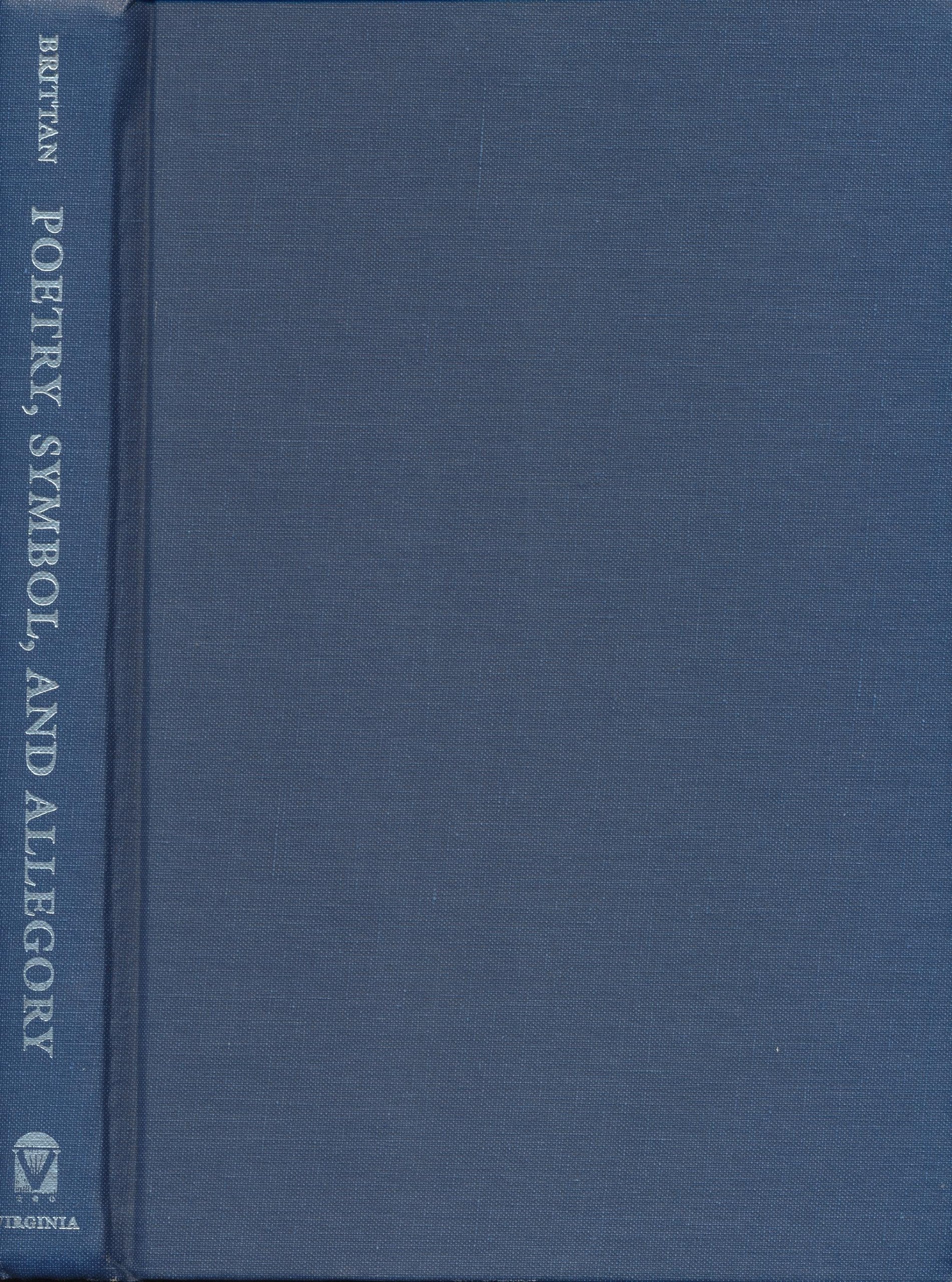
Dealing with poetry is frequently problematic for the university teacher and student: although undergraduates are usually responsive to discussions about drama and prose, poetry often silences the classroom. Unless a poem provides references easily applicable to their own lives, many students feel they cant relate to the piece and are stymied. In particular, allegorical poetry produces tensions among the desire to find the meanings of the poets symbolism, the fear of voicing a 'wrong' interpretation, and a natural objection to perceived restrictions on interpretive freedom.Poetry, Symbol, and Allegory eases that dilemma by providing a historical overview of theories of interpretation as they apply to symbol and allegory in poetry, thereby reclaiming valuable and useful methods of analyzing poems. Beginning with Plato and Aristotle, Simon Brittan moves from classical theory to the lesserknown medieval exegetical theories of such notables as Augustine, Aquinas, and Origen; addresses theory pertaining to Renaissance Italy and Dante, English theory of the Middle Ages, the sixteenth and seventeenth centuries, and the Romantic period; and concludes by weighing the poetry of T. E. Hulme, T. S. Eliot, and Ezra Pound on the larger historical scale of literary theory. By acknowledging interpretive theories of the past, Brittan provides a proper historical frame of reference in which todays student can better understand figurative language in poetry.
⚠️ WARNING (California Proposition 65):
This product may contain chemicals known to the State of California to cause cancer,
birth defects, or other reproductive harm.
For MAP (Minimum Advertised Price) violations and Intellectual Property (IP) or Trademark concerns, please contact:
support@ergodebooks.com
⚠️ California Proposition 65 Warning: Some products sold on this website may expose you to chemicals known to the State of California to cause cancer, birth defects, or other reproductive harm. For more information, visit www.P65Warnings.ca.gov.