
Title
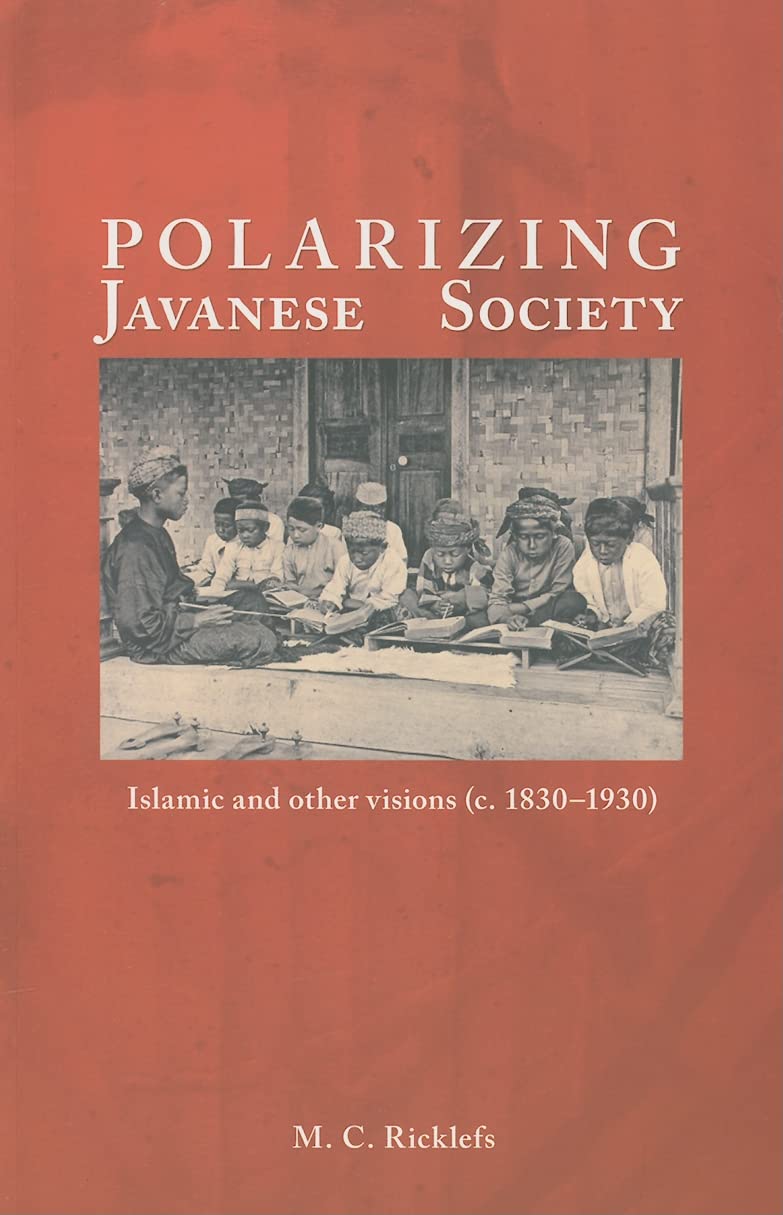
Polarizing Javanese Society: Islamic and Other Visions (c. 18301930),Used
Sold by Ergodebooks, an authorized reseller.
Returns accepted within 30 days | support@ergodebooks.com
Shipping Information
- Free Standard Shipping — United States only
- Processing Time: 3–5 business days
- Estimated Delivery: 6–10 business days after dispatch
- Double-boxed, fully insured & discreetly packaged
- Tracking number sent via email once dispatched
Returns & Refund
Returns accepted within 30 days of delivery.
Damaged or Defective Item
Free return shipping + replacement or full refund
Wrong Item Received
Free return shipping + replacement or full refund
Change of Mind
Return shipping at customer's expense · 25% restocking fee applies
Payment Option

"Ricklefs grounds his study of Javanese religious change in the material reality of the island. This is very fine social history." James Rush, Arizona State UniversityBy the early nineteenth century, Islam had come to be the religious element in Javanese identity. But it was a particular kind of Islam, here called the "mystic synthesis." This Javanese mysticism had three notable characteristics: Javanese held firmly to their identity as Muslims, they carried out the basic ritual obligations of the faith, but they also accepted the reality of local spiritual forces.In the course of the nineteenth century, colonial rule, population pressure and Islamic reform all acted to undermine this "mystic synthesis." Pious Muslims became divided amongst adherents of that synthesis, reformers who demanded a more orthoprax way of life, reforming Sufis and those who believed in messianic ideas. A new category of Javanese emerged, people who resisted Islamic reform and began to attenuate their Islamic identity. This group became known as abangan, nominal Muslims, and they constituted a majority of the population. For the first time, a minority of Javanese converted to Christianity. The priyayi elite, Javas aristocracy, meanwhile embraced the forms of modernity represented by their European rulers and the wider advances of modern scientific learning. Some even came to regard the original conversion of the Javanese to Islam as a civilizational mistake, and within this element explicitly antiIslamic sentiments began to appear.In the early twentieth century these categories became politicized in the context of Indonesias nascent anticolonial movements. Thus were born contending political identities that lay behind much of the conflict and bloodshed of twentiethcentury Indonesia.
⚠️ WARNING (California Proposition 65):
This product may contain chemicals known to the State of California to cause cancer, birth defects, or other reproductive harm.
For more information, please visit www.P65Warnings.ca.gov.