
Title
Poles and Jews: A Failed Brotherhood (TAUBER INSTITUTE FOR THE STUDY OF EUROPEAN JEWRY SERIES),Used
Sold by Ergodebooks, an authorized reseller.
Returns accepted within 30 days | support@ergodebooks.com
Shipping Information
- Free Standard Shipping — United States only
- Processing Time: 3–5 business days
- Estimated Delivery: 6–10 business days after dispatch
- Double-boxed, fully insured & discreetly packaged
- Tracking number sent via email once dispatched
Returns & Refund
Returns accepted within 30 days of delivery.
Damaged or Defective Item
Free return shipping + replacement or full refund
Wrong Item Received
Free return shipping + replacement or full refund
Change of Mind
Return shipping at customer's expense · 25% restocking fee applies
Payment Option

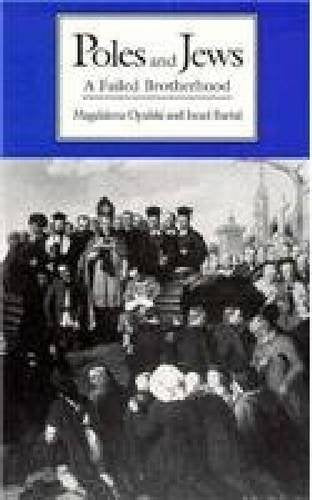
Poles and Jews draws upon a vast archive of Polish, Yiddish, Hebrew, German, French, and Russian literary works and historical sources to examine Polish and Jewish perceptions of the PolishJewish rapprochement of the early 1860s. The idea of a PolishJewish brotherhood developed during the wave of patriotic demonstrations that swept through Poland in 18611862 and culminated in the Polish national insurrection against Czarist Russia in 1863. With the revolution, Polish separatists appealed for Jewish support and promised full equality as a reward. Despite the Jewish tradition of loyalty to the Czar,many took active part in the antiRussian underground and partisan war. The 1864 defeat transformed Polish attitudes from enthusiasm to ambivalence. The conflicting interpretations by Poles and Jews of the shortlived brotherhood of the 1860s remained at the center of PolishJewish relations through the remainder of the nineteenth century. Changing ideologies and political currents saw this tradition adapted to fit conflicting needs. While Jewish reflection on the past accelerated growth of Jewish nationalism, the Poles used their interpretation to score points for and against the integration of Jews into Polish society. The period covered in Poles and Jews sets the stage for the tragedies of 20thcentury Central and Eastern European history. By examining and comparing Polish and Jewish literary reflections on the revolt, Opalski and Bartal illuminate an important period for all those interested in Jewish and Polish history and in Polish, Hebrew, and Yiddish literature.
⚠️ WARNING (California Proposition 65):
This product may contain chemicals known to the State of California to cause cancer, birth defects, or other reproductive harm.
For more information, please visit www.P65Warnings.ca.gov.