
Title
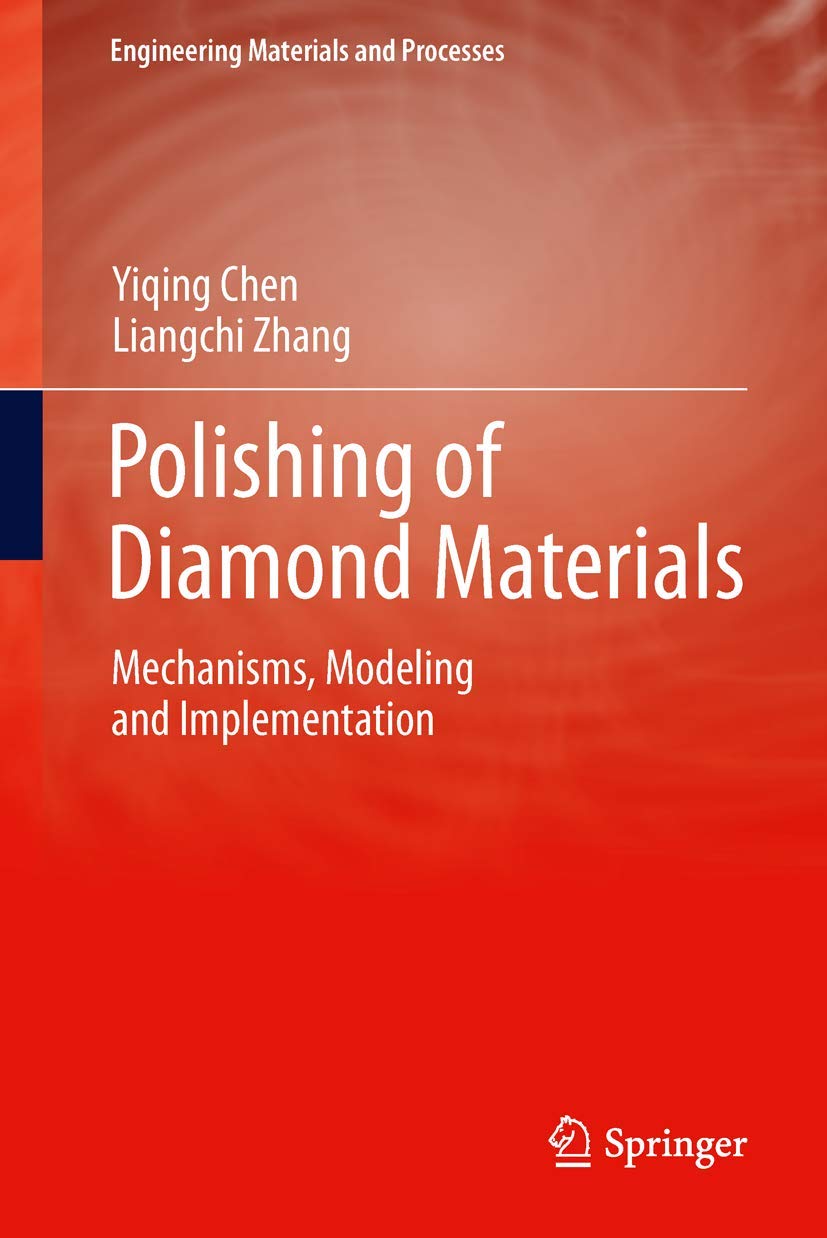
Polishing Of Diamond Materials: Mechanisms, Modeling And Implementation (Engineering Materials And Processes),Used
Sold by Ergodebooks, an authorized reseller.
Returns accepted within 30 days | support@ergodebooks.com
Shipping Information
- Free Standard Shipping — United States only
- Processing Time: 3–5 business days
- Estimated Delivery: 6–10 business days after dispatch
- Double-boxed, fully insured & discreetly packaged
- Tracking number sent via email once dispatched
Returns & Refund
Returns accepted within 30 days of delivery.
Damaged or Defective Item
Free return shipping + replacement or full refund
Wrong Item Received
Free return shipping + replacement or full refund
Change of Mind
Return shipping at customer's expense · 25% restocking fee applies
Payment Option

Diamond has a unique combination of properties, such as the highest hardness and thermal conductivity among any known material, high electrical resistivity, a large optical band gap and a high transmission, good resistance to chemical erosion, low adhesion and friction, and extremely low thermal expansion coefficient. As such, diamond has been a desirable material in a wide range of applications in mechanical, chemical, optical, thermal and electrical engineering. In many of the cases, the surface of a diamond component or element must have a superior finish, often down to a surface roughness of nanometers. Nevertheless, due to its extreme hardness and chemical inertness, the polishing of diamond and its composites has been a sophisticated process.Polishing of Diamond Materials will provide a stateoftheart analysis, both theoretically and experimentally, of the most commonly used polishing techniques for mono/polycrystalline diamond and chemical vapour deposition (CVD) diamond films, including mechanical, chemomechanical, thermochemical, high energy beam, dynamic friction and other polishing techniques. The indepth discussions will be on the polishing mechanisms, possible modelling, material removal rate and the quality control of these techniques. A comparison of their advantages and drawbacks will be carried out to provide the reader with a useful guideline for the selection and implementation of these polishing techniques.Polishing of Diamond Materials will be of interest to researchers and engineers in hard materials and precision manufacturing, industry diamond suppliers, diamond jewellery suppliers and postgraduate students in the area of precision manufacturing.
⚠️ WARNING (California Proposition 65):
This product may contain chemicals known to the State of California to cause cancer, birth defects, or other reproductive harm.
For more information, please visit www.P65Warnings.ca.gov.