
Title
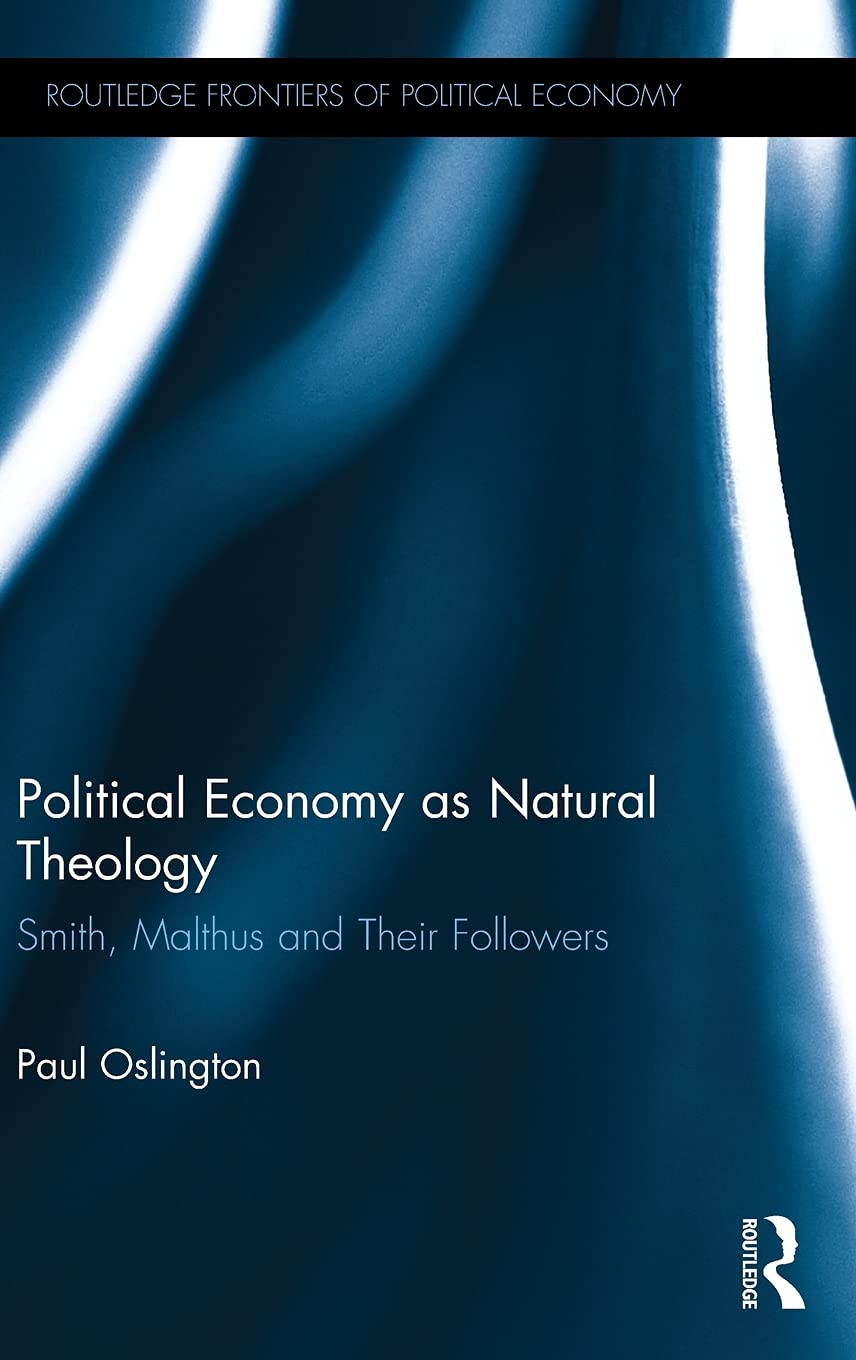
Political Economy as Natural Theology: Smith, Malthus and Their Followers (Routledge Frontiers of Political Economy),Used
Sold by Ergodebooks, an authorized reseller.
Returns accepted within 30 days | support@ergodebooks.com
Shipping Information
- Free Standard Shipping — United States only
- Processing Time: 3–5 business days
- Estimated Delivery: 6–10 business days after dispatch
- Double-boxed, fully insured & discreetly packaged
- Tracking number sent via email once dispatched
Returns & Refund
Returns accepted within 30 days of delivery.
Damaged or Defective Item
Free return shipping + replacement or full refund
Wrong Item Received
Free return shipping + replacement or full refund
Change of Mind
Return shipping at customer's expense · 25% restocking fee applies
Payment Option

Since the early 20th century, economics has been the dominant discourse in Englishspeaking countries, displacing Christian theology from its previous position of authority. This pathbreaking book is a major contribution to the interdisciplinary dialogue between economics and religion.Oslington tells the story of natural theology shaping political economy in the late 18th and early 19th centuries, emphasising continuing significance of theological issues for the discipline of economics. Early political economists such as Adam Smith, Josiah Tucker, Edmund Burke, William Paley, TR Malthus, Richard Whately, JB Sumner, Thomas Chalmers and William Whewell, extended the British scientific natural theology tradition of Francis Bacon, Robert Boyle and Isaac Newton to the social world. This extension nourished and shaped political economy as a discipline, influencing its theoretical framework, but perhaps more importantly helping legitimate political economy in the British universities and public policy circles. Educating the public in the principles of political economy had a central place in this religiously driven program. Natural theology also created tensions (especially reconciling economic suffering with divine goodness and power) that eventually contributed to its demise and the separation of economics from theology in mid19thcentury Britain. This volume highlights aspects of the story that are neglected in standard histories of economics, histories of science and contemporary theology.Political Economy as Natural Theology is essential reading for all concerned with the origins of economics, the meaning and purpose of economic activity and the role of religion in contemporary policy debates.
⚠️ WARNING (California Proposition 65):
This product may contain chemicals known to the State of California to cause cancer, birth defects, or other reproductive harm.
For more information, please visit www.P65Warnings.ca.gov.