
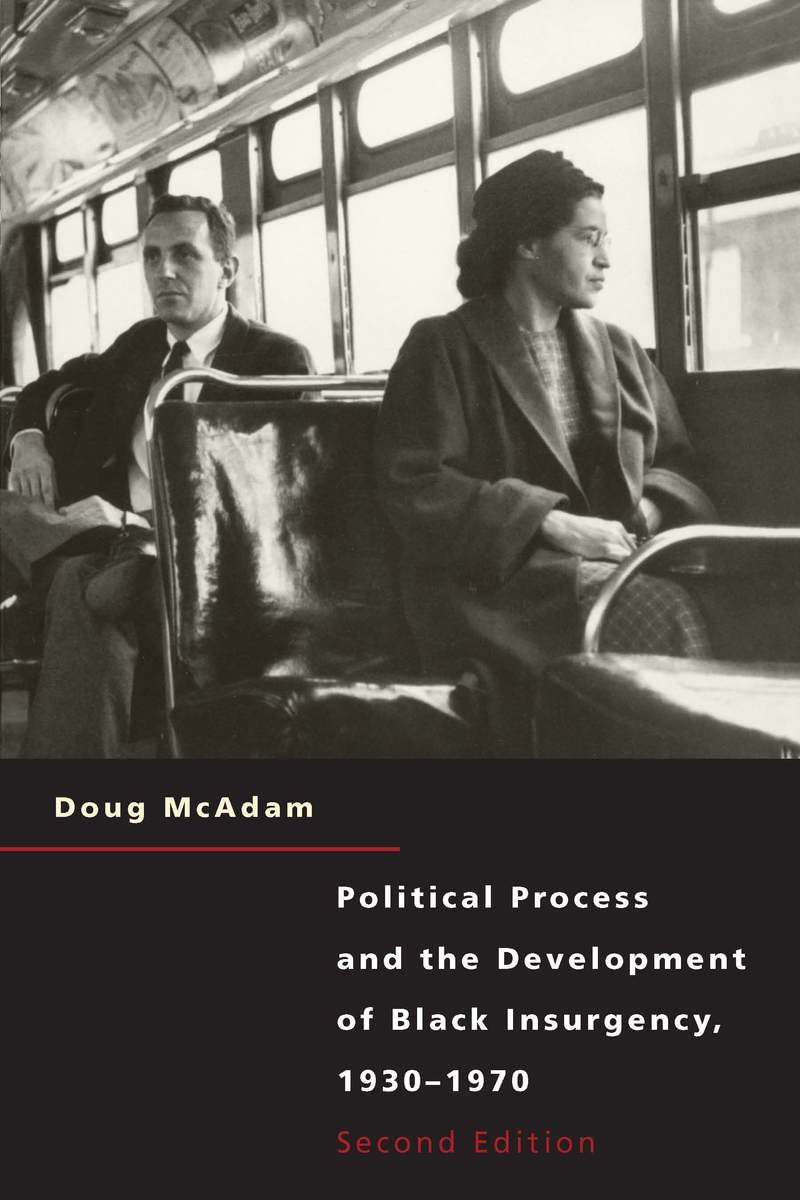
Title
Political Process And The Development Of Black Insurgency, 19301970, 2Nd Edition,New
Sold by Ergodebooks, an authorized reseller.
Returns accepted within 30 days | support@ergodebooks.com
Shipping Information
- Free Standard Shipping — United States only
- Processing Time: 3–5 business days
- Estimated Delivery: 6–10 business days after dispatch
- Double-boxed, fully insured & discreetly packaged
- Tracking number sent via email once dispatched
Returns & Refund
Returns accepted within 30 days of delivery.
Damaged or Defective Item
Free return shipping + replacement or full refund
Wrong Item Received
Free return shipping + replacement or full refund
Change of Mind
Return shipping at customer's expense · 25% restocking fee applies
Payment Option

In This Classic Work Of Sociology, Doug Mcadam Presents A Politicalprocess Model That Explains The Rise And Decline Of The Black Protest Movement In The United States. Moving From Theoretical Concerns To Empirical Analysis, He Focuses On The Crucial Role Of Three Institutions That Foster Protest: Black Churches, Black Colleges, And Southern Chapters Of The Naacp. He Concludes That Political Opportunities, A Heightened Sense Of Political Efficacy, And The Development Of These Three Institutions Played A Central Role In Shaping The Civil Rights Movement. In His New Introduction, Mcadam Revisits The Civil Rights Struggle In Light Of Recent Scholarship On Social Movement Origins And Collective Action.'[A] Firstrate Analytical Demonstration That The Civil Rights Movement Was The Culmination Of A Long Process Of Building Institutions In The Black Community.'Raymond Wolters, Journal Of American History'A Fresh, Rich, And Dynamic Model To Explain The Rise And Decline Of The Black Insurgency Movement In The United States.'James W. Lamare, Annals Of The American Academy Of Political And Social Science
⚠️ WARNING (California Proposition 65):
This product may contain chemicals known to the State of California to cause cancer, birth defects, or other reproductive harm.
For more information, please visit www.P65Warnings.ca.gov.
- Q: What is the page count of this book? A: This book has three hundred forty-six pages. It provides a comprehensive exploration of the black protest movement in the United States.
- Q: What are the dimensions of this book? A: The book measures eight point nine five inches in length, five point nine eight inches in width, and zero point seven five inches in height. These dimensions make it an accessible size for reading.
- Q: What type of binding does this book have? A: This book is paperback bound. This makes it lightweight and easy to handle for extended reading sessions.
- Q: How do I read this book effectively? A: To read this book effectively, start by engaging with the introduction, which sets the context for the following chapters. The analytical framework can be understood best when reading sequentially.
- Q: Is this book suitable for academic studies? A: Yes, this book is suitable for academic studies. It provides a political-process model that is valuable for sociology students and those studying social movements.
- Q: What age group is this book appropriate for? A: This book is appropriate for high school students and above. It addresses complex political and social themes that require a mature understanding.
- Q: How should I store this book to keep it in good condition? A: Store this book upright on a shelf in a cool, dry place. Avoid exposing it to excessive moisture or direct sunlight to prevent damage.
- Q: Can I clean this book if it gets dirty? A: Yes, you can clean this book. Use a dry cloth to gently wipe the cover and avoid using any liquids that may damage the pages.
- Q: Does this book contain any sensitive content? A: Yes, this book discusses historical events surrounding civil rights and black insurgency. Readers should be prepared for mature themes and discussions.
- Q: What if the book arrives damaged? A: If the book arrives damaged, contact customer support for a return or exchange. It's important to report any issues within a specified time frame.
- Q: Is there a warranty on this book? A: No, there is no warranty on this book. However, you should check the return policy for any conditions that apply.
- Q: How does this book compare to others in its genre? A: This book stands out for its analytical approach to the black protest movement. Compared to similar works, it offers unique insights into institutional influences on civil rights.
- Q: Is this book a good choice for someone new to the subject? A: Yes, this book is a good choice for newcomers. It provides foundational concepts and historical context that are essential for understanding the civil rights movement.
- Q: What are the main themes covered in this book? A: The main themes include political opportunities, the role of institutions, and the evolution of the black protest movement. These themes are pivotal to understanding civil rights history.
- Q: How can I find more resources on the topics discussed in this book? A: You can find more resources by checking the bibliography and references listed in the book. Online academic databases also provide additional materials on these topics.
- Q: Who is the author of this book? A: The author of this book is Doug McAdam, a prominent sociologist known for his work on social movements and political processes.