
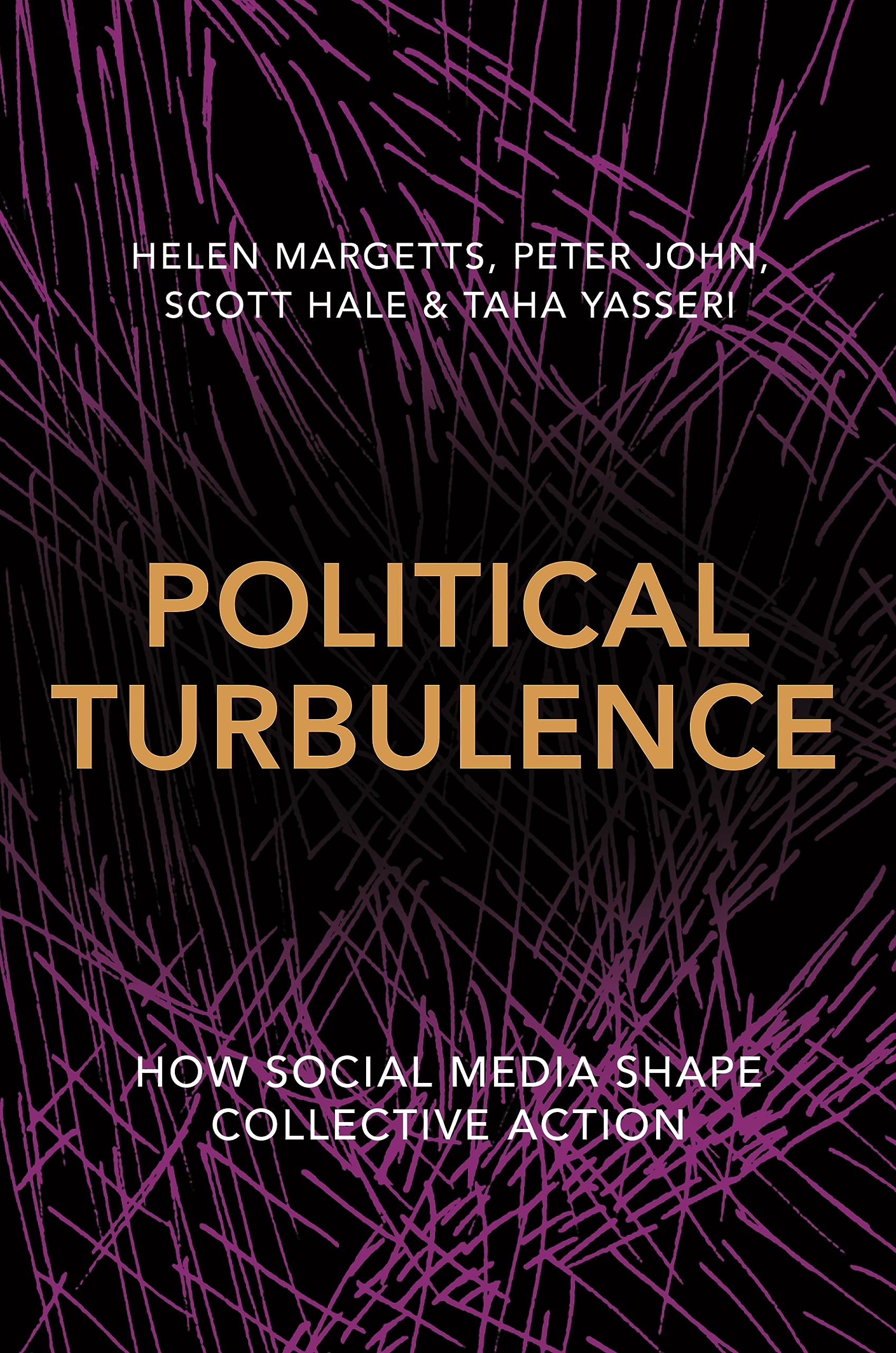
Title
Political Turbulence: How Social Media Shape Collective Action,Used
Sold by Ergodebooks, an authorized reseller.
Returns accepted within 30 days | support@ergodebooks.com
Shipping Information
- Free Standard Shipping — United States only
- Processing Time: 3–5 business days
- Estimated Delivery: 6–10 business days after dispatch
- Double-boxed, fully insured & discreetly packaged
- Tracking number sent via email once dispatched
Returns & Refund
Returns accepted within 30 days of delivery.
Damaged or Defective Item
Free return shipping + replacement or full refund
Wrong Item Received
Free return shipping + replacement or full refund
Change of Mind
Return shipping at customer's expense · 25% restocking fee applies
Payment Option

How social media is giving rise to a chaotic new form of politicsAs people spend increasing proportions of their daily lives using social media, such as Twitter and Facebook, they are being invited to support myriad political causes by sharing, liking, endorsing, or downloading. Chain reactions caused by these tiny acts of participation form a growing part of collective action today, from neighborhood campaigns to global political movements. Political Turbulence reveals that, in fact, most attempts at collective action online do not succeed, but some give rise to huge mobilizationseven revolutions.Drawing on largescale data generated from the Internet and realworld events, this book shows how mobilizations that succeed are unpredictable, unstable, and often unsustainable. To better understand this unruly new force in the political world, the authors use experiments that test how social media influence citizens deciding whether or not to participate. They show how different personality types react to social influences and identify which types of people are willing to participate at an early stage in a mobilization when there are few supporters or signals of viability. The authors argue that pluralism is the model of democracy that is emerging in the social media agenot the ordered, organized vision of early pluralists, but a chaotic, turbulent form of politics.This book demonstrates how data science and experimentation with social data can provide a methodological toolkit for understanding, shaping, and perhaps even predicting the outcomes of this democratic turbulence.
⚠️ WARNING (California Proposition 65):
This product may contain chemicals known to the State of California to cause cancer, birth defects, or other reproductive harm.
For more information, please visit www.P65Warnings.ca.gov.