
Title
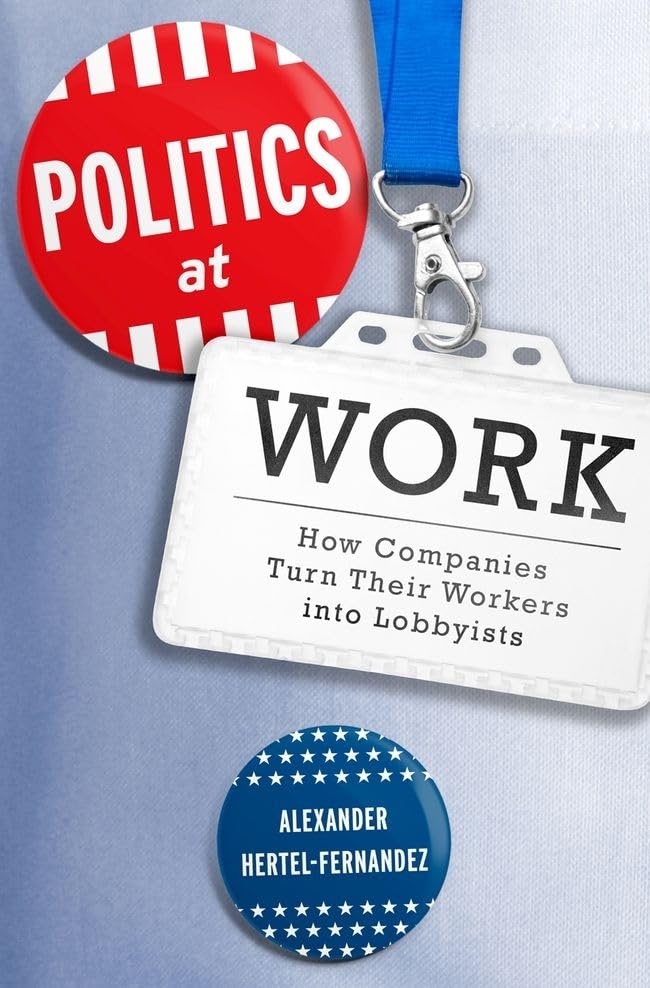
Politics at Work: How Companies Turn Their Workers into Lobbyists (Studies in Postwar American Political Development),Used
Sold by Ergodebooks, an authorized reseller.
Returns accepted within 30 days | support@ergodebooks.com
Shipping Information
- Free Standard Shipping — United States only
- Processing Time: 3–5 business days
- Estimated Delivery: 6–10 business days after dispatch
- Double-boxed, fully insured & discreetly packaged
- Tracking number sent via email once dispatched
Returns & Refund
Returns accepted within 30 days of delivery.
Damaged or Defective Item
Free return shipping + replacement or full refund
Wrong Item Received
Free return shipping + replacement or full refund
Change of Mind
Return shipping at customer's expense · 25% restocking fee applies
Payment Option

Employers are increasingly recruiting their workers into politics to change elections and public policysometimes in coercive ways. Using a diverse array of evidence, including national surveys of workers and employers, as well as indepth interviews with top corporate managers, Alexander HertelFernandez's Politics at Work explains why mobilization of workers has become an appealing corporate political strategy in recent decades. The book also assesses the effect of employer mobilization on the political process more broadly, including its consequences for electoral contests, policy debates, and political representation.HertelFernandez shows that while employer political recruitment has some benefits for American democracyfor instance, getting more workers to the pollsit also has troubling implications for our democratic system. Workers face considerable pressure to respond to their managers' political requests because of the economic power employers possess over workers. In spite of these worrisome patterns, HertelFernandez found that corporate managers view the mobilization of their own workers as an important strategy for influencing politics. As he shows, companies consider mobilization of their workers to be even more effective at changing public policy than making campaign contributions or buying electoral ads.HertelFernandez closes with an array of solutions that could protect workers from employer political coercion and could also win the support of majorities of Americans. By carefully examining a growing yet underappreciated political practice, Politics at Work contributes to our understanding of the changing workplace, as well as the increasing power of corporations in American politics. It is essential reading for anyone interested in the connections between inequality, public policy, and American democracy.
⚠️ WARNING (California Proposition 65):
This product may contain chemicals known to the State of California to cause cancer, birth defects, or other reproductive harm.
For more information, please visit www.P65Warnings.ca.gov.