
Title
Polities And Power: Archaeological Perspectives On The Landscapes Of Early States,Used
Sold by Ergodebooks, an authorized reseller.
Returns accepted within 30 days | support@ergodebooks.com
Shipping Information
- Free Standard Shipping — United States only
- Processing Time: 3–5 business days
- Estimated Delivery: 6–10 business days after dispatch
- Double-boxed, fully insured & discreetly packaged
- Tracking number sent via email once dispatched
Returns & Refund
Returns accepted within 30 days of delivery.
Damaged or Defective Item
Free return shipping + replacement or full refund
Wrong Item Received
Free return shipping + replacement or full refund
Change of Mind
Return shipping at customer's expense · 25% restocking fee applies
Payment Option

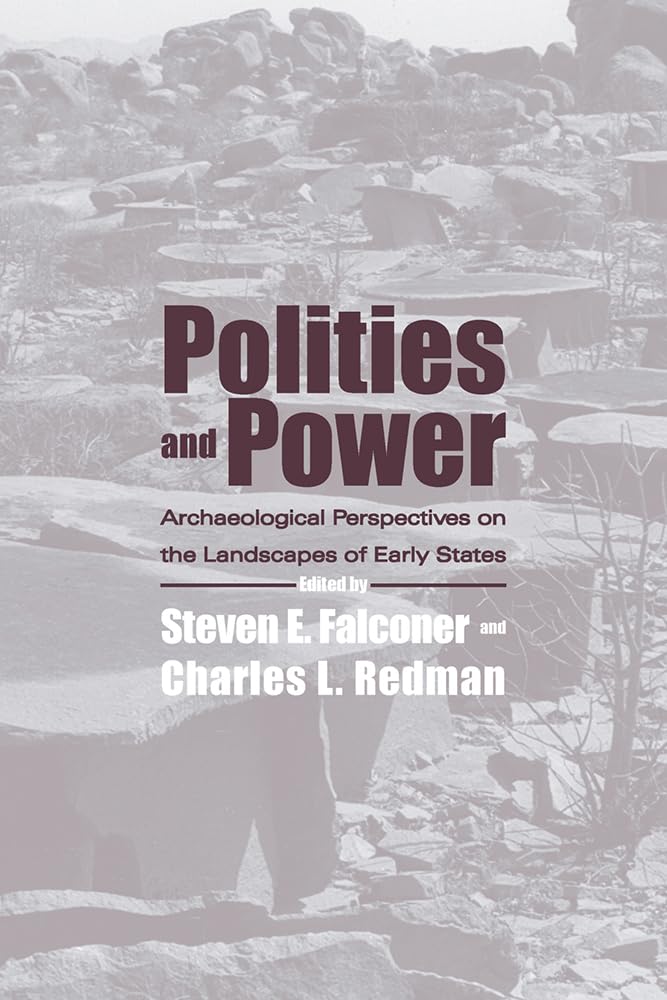
This distinctive book is the first to address the topic of landscape archaeology in early states from a truly global perspective. It provides an excellent introduction toand overview ofthe discipline today. The volume grew out of the Fifth Biennial Meeting of the Complex Societies Group, whose theme, States and the Landscape, paid tribute to the work of Robert McC. Adams. When Adams began publishing in the 1960s, the interdependence of cities and their countrysides, and the information revealed through the spatial patterning of communities, went largely unrecognized. Today, as this useful collection makes clear, these interpretive insights are fundamental to all archaeologists who investigate the roles of complex polities in their landscapes.Polities and Power features detailed studies from an intentionally disparate array of regions, including Mesoamerica, Andean South America, southwestern Asia, East Africa, and the Indian subcontinent. Each chapter or pair of chapters is followed by a critical commentary. In concert, these studies strive to infer social, political, and economic meaning from archaeologically discerned landscapes associated with societies that incorporate some expression of state authority. The contributions engage a variety of themes, including the significance of landscapes as they condition and reflect complex polities; the interplay of natural and cultural elements in defining landscapes of state; archaeological landscapes as everdynamic entities; and archaeological landscapes as recursive structures, reflected in palimpsests of human activity.Individually, many of these contributions are provocative, even controversial. Taken together, they reveal the contours of landscape archaeology at this particular evolutionary moment.
⚠️ WARNING (California Proposition 65):
This product may contain chemicals known to the State of California to cause cancer, birth defects, or other reproductive harm.
For more information, please visit www.P65Warnings.ca.gov.