
Title
Pollution Is Colonialism,Used
Sold by Ergodebooks, an authorized reseller.
Returns accepted within 30 days | support@ergodebooks.com
Shipping Information
- Free Standard Shipping — United States only
- Processing Time: 3–5 business days
- Estimated Delivery: 6–10 business days after dispatch
- Double-boxed, fully insured & discreetly packaged
- Tracking number sent via email once dispatched
Returns & Refund
Returns accepted within 30 days of delivery.
Damaged or Defective Item
Free return shipping + replacement or full refund
Wrong Item Received
Free return shipping + replacement or full refund
Change of Mind
Return shipping at customer's expense · 25% restocking fee applies
Payment Option

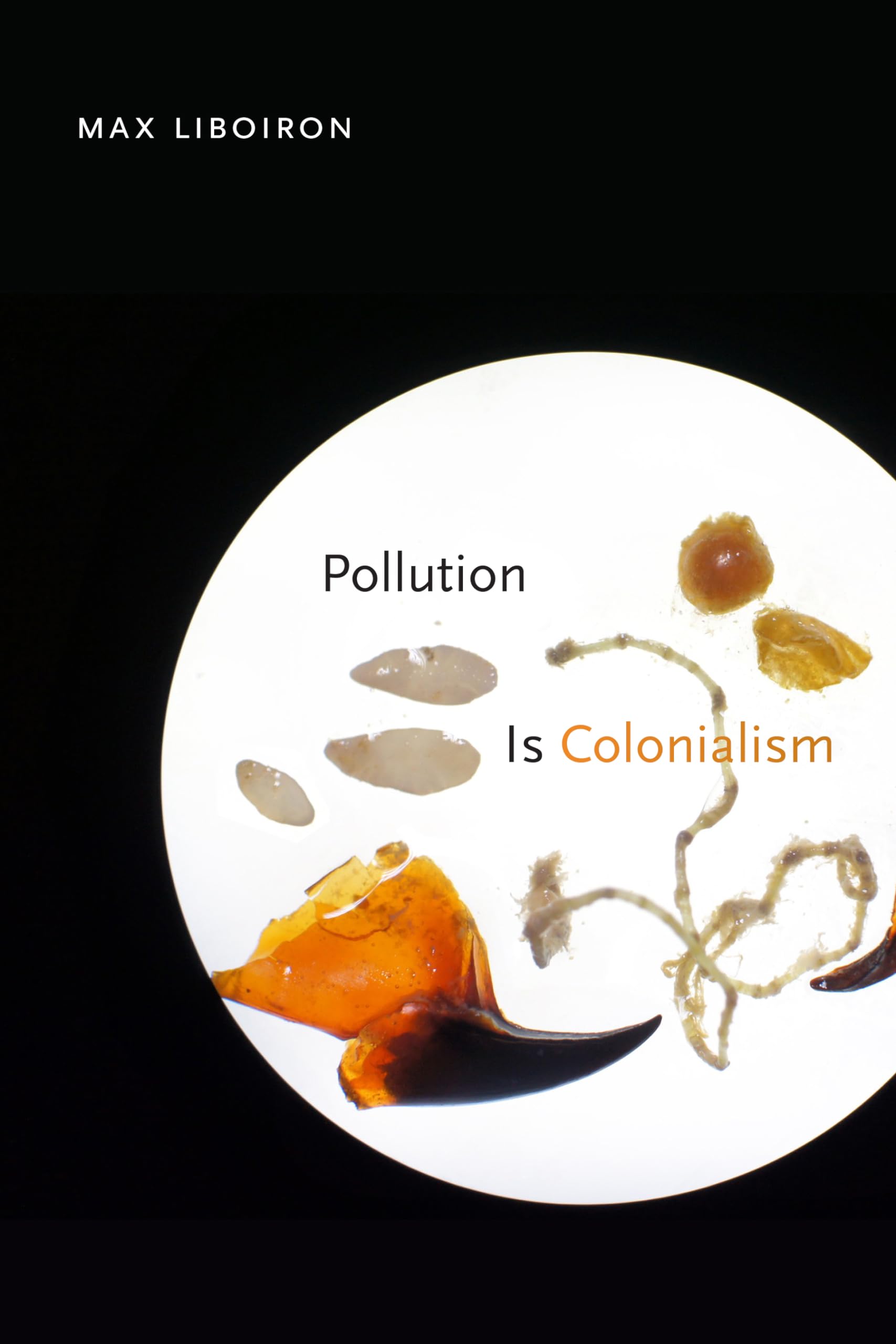
In Pollution Is Colonialism Max Liboiron Presents A Framework For Understanding Scientific Research Methods As Practices That Can Align With Or Against Colonialism. They Point Out That Even When Researchers Are Working Toward Benevolent Goals, Environmental Science And Activism Are Often Premised On A Colonial Worldview And Access To Land. Focusing On Plastic Pollution, The Book Models An Anticolonial Scientific Practice Aligned With Indigenous, Particularly Mtis, Concepts Of Land, Ethics, And Relations. Liboiron Draws On Their Work In The Civic Laboratory For Environmental Action Research (Clear)An Anticolonial Science Laboratory In Newfoundland, Canadato Illuminate How Pollution Is Not A Symptom Of Capitalism But A Violent Enactment Of Colonial Land Relations That Claim Access To Indigenous Land. Liboiron'S Creative, Lively, And Passionate Text Refuses Theories Of Pollution That Make Indigenous Land Available For Settler And Colonial Goals. In This Way, Their Methodology Demonstrates That Anticolonial Science Is Not Only Possible But Is Currently Being Practiced In Ways That Enact More Ethical Modes Of Being In The World.
⚠️ WARNING (California Proposition 65):
This product may contain chemicals known to the State of California to cause cancer, birth defects, or other reproductive harm.
For more information, please visit www.P65Warnings.ca.gov.
- Q: How many pages is 'Pollution Is Colonialism'? A: This book contains two hundred sixteen pages. It provides an in-depth exploration of environmental science through an anticolonial lens.
- Q: What is the binding type of this book? A: The binding type is paperback. This allows for easy handling and reading accessibility.
- Q: What are the dimensions of 'Pollution Is Colonialism'? A: The dimensions are eight point nine four inches in length, zero point seven one inches in width, and eight point nine inches in height.
- Q: Who is the author of 'Pollution Is Colonialism'? A: The author is Max Liboiron. They are known for their work in environmental science and advocacy.
- Q: What category does this book fall under? A: This book is categorized under Environmental Science. It addresses critical themes of pollution and colonialism.
- Q: What themes are explored in 'Pollution Is Colonialism'? A: The book explores themes of anticolonial scientific practices, Indigenous concepts of land, and ethical relations.
- Q: What is the target audience for this book? A: The book is suitable for anyone interested in environmental science and Indigenous rights. It is particularly relevant for students and activists.
- Q: How does this book approach the topic of pollution? A: It presents an anticolonial perspective on pollution, arguing it is a violent enactment of colonial land relations.
- Q: Is this book appropriate for academic use? A: Yes, it is appropriate for academic use. It provides a framework suitable for research and discussions in environmental studies.
- Q: What is the main argument of 'Pollution Is Colonialism'? A: The main argument is that pollution is not just a result of capitalism but is tied to colonial land relations. This challenges conventional environmental narratives.
- Q: How should I store 'Pollution Is Colonialism'? A: Store the book in a cool, dry place away from direct sunlight to prevent damage. Keeping it upright on a shelf is ideal.
- Q: Can this book be used in a classroom setting? A: Yes, it can be effectively used in a classroom setting. The discussions align well with environmental science curricula.
- Q: What if my copy of the book arrives damaged? A: If your copy arrives damaged, you should contact the seller for a return or replacement. Most retailers have customer support for these issues.
- Q: How do I care for this paperback book? A: To care for this paperback book, handle it gently and avoid exposing it to moisture. Keep it clean by wiping off dust regularly.
- Q: Is 'Pollution Is Colonialism' suitable for beginners in environmental studies? A: Yes, it is suitable for beginners. The book provides accessible insights into complex themes in environmental science.
- Q: What makes this book unique compared to other environmental science texts? A: It uniquely combines environmental science with anticolonial perspectives, emphasizing Indigenous relations with land and ethics.