
Title
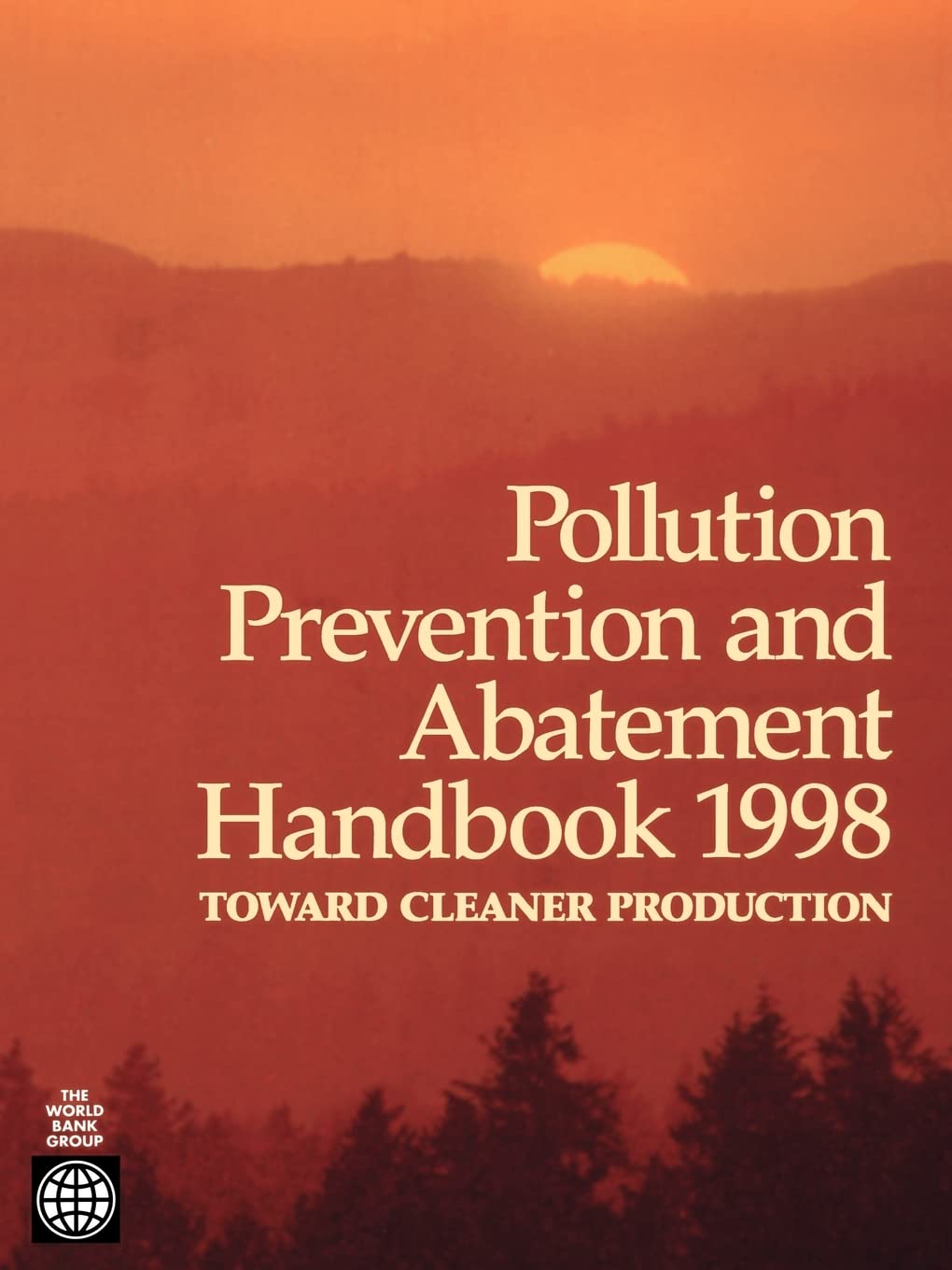
Pollution Prevention and Abatement Handbook 1998: Toward Cleaner Production,Used
Sold by Ergodebooks, an authorized reseller.
Returns accepted within 30 days | support@ergodebooks.com
Shipping Information
- Free Standard Shipping — United States only
- Processing Time: 3–5 business days
- Estimated Delivery: 6–10 business days after dispatch
- Double-boxed, fully insured & discreetly packaged
- Tracking number sent via email once dispatched
Returns & Refund
Returns accepted within 30 days of delivery.
Damaged or Defective Item
Free return shipping + replacement or full refund
Wrong Item Received
Free return shipping + replacement or full refund
Change of Mind
Return shipping at customer's expense · 25% restocking fee applies
Payment Option

Quite often in developing countries, the economy progresses while the environment deteriorates because pollution control measures appear too costly to implement. What the World Bank proposes in the 'Pollution Prevention and Abatement Handbook 1998' is environmental management rather than pollution control. To accomplish this, the book recommends a broad mix of incentives and pressures to achieve sustainable improvements such as setting clear goals and objectives, agreeing on priorities, cooperating on approaches, sharing information, and setting realistic standards. The Handbook comprises three parts: a summary of key policy lessons in pollution management, good practice notes on implementation of policy objectives, and detailed guidelines intended for the preparation of World Bank Group projects. The application of the guidelines set out in Part III can minimize the use of resources as well as reduce the quantity of wastes requiring treatment and disposal. They are designed to protect human health, reduce discharge of pollutants into the environment, use commercially proven and costeffective technologies, follow regulatory trends, and promote good industrial practices. These guidelines represent good environmental management practices, which can be achieved and maintained with the levels of skills and resources typically available in countries in which the World Bank operates. The World Bank Group in collaboration with United Nations Industrial Development Organization and United Nations Environment Programme.
⚠️ WARNING (California Proposition 65):
This product may contain chemicals known to the State of California to cause cancer, birth defects, or other reproductive harm.
For more information, please visit www.P65Warnings.ca.gov.